
In the fight to prevent coastal erosion, breakwaters can cause the very thing they were meant to prevent
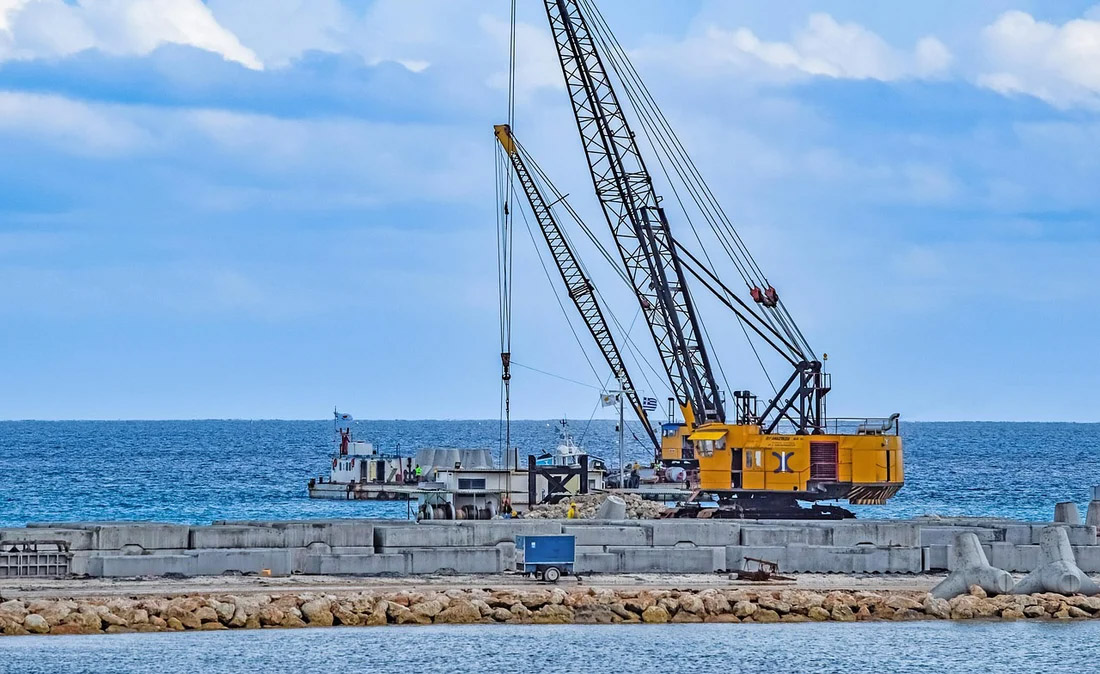
If you have been to Governor’s beach over the past year, you may have wondered about the large tetrahedron-shaped blocks that have been piled up further up on the coast, without any obvious purpose.
Though typically visible inside of the water and not piled on shore, this is one form of breakwaters commonly used in Cyprus.
And with Cyprus’ coastline under increasing threat of erosion, breakwaters have become the go-to, one size fits all solution. Take Paphos district for example where a tender was recently issued for a total of 16 further breakwaters to complement those already in existence.
The sheer number of them proves a point that many environmentalists have long been making. While designed to fight coastal erosion, the increased number of planned breakwater projects can potentially bring more harm than good. For, if you build a breakwater to protect one beach, you can end up endangering a beach further along the coast which means that beach also needs a breakwater to halt erosion, and so it goes on to the next beach, and the next.
Breakwaters as a universal solution to coastal erosion
Around 80 per cent of “soft-coastal” areas – made of natural materials like sand or gravel – in Cyprus are currently under severe human-made erosion, said Xenia Loizidou, civic engineer and United Nations ambassador for coastal protection in the Mediterranean.
This, she says, is primarily due to tourism, sand mining and construction work within the coastal buffer zone. Another ‘guilty’ party is the long-term construction of dams that cut off the river flow and thus minimised the sediment carried by the rivers that “fed” the beach.
“Breakwaters are one of the available technical solutions, but it’s a heavy solution and we cannot just implement it anywhere,” Loizidou said.
She warned that breakwaters have been excessively employed as a measure to combat erosion, without sufficient consideration of alternatives.
Loizidou put it this way: “It’s like having a flu and instead of taking Panadol, you have open-heart surgery.”
She explained that the needs of different coasts can vary significantly, emphasising the necessity of conducting comprehensive studies on which to base solutions to prevent erosion and protect the environment.
“Each coast has its own needs,” Loizidou said, adding that if a solution is effective for a beach in Larnaca, it may not necessarily be applicable to a beach in Paphos.
According to her, one of the reasons for this development is a lack of proper studies.
“Due to the procurement system, there is a tendency to take the cheapest offer, and cheap studies are not necessarily the best ones and that’s why we have studies that don’t necessarily consider the characteristics of the coastal area,” she says, emphasising that coastal areas are dynamic structures that require intensive studying.
How do breakwaters work?
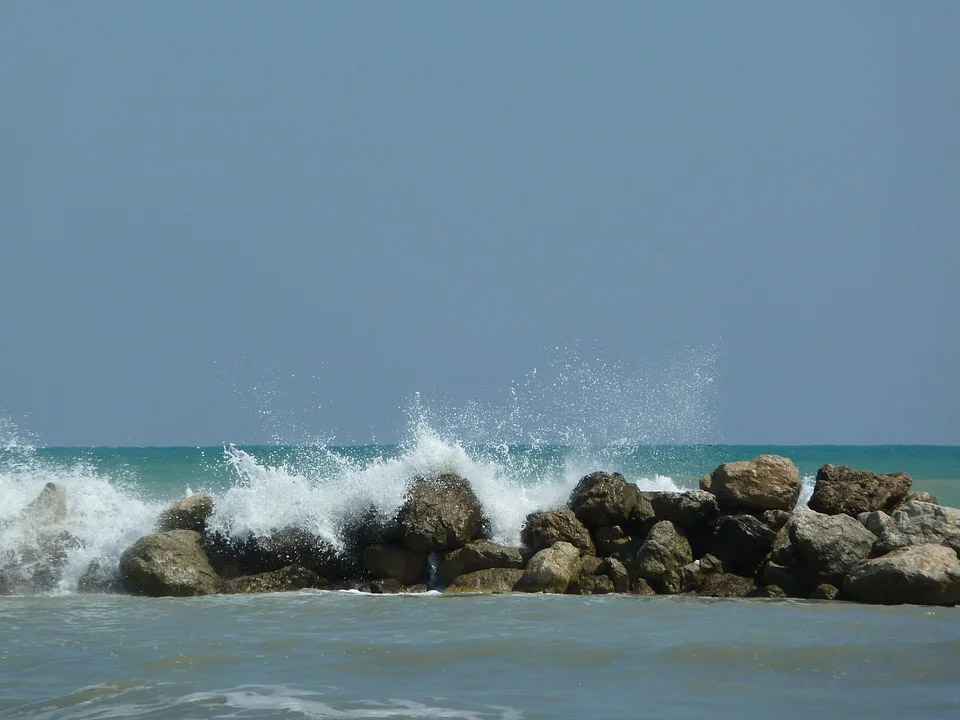
“Breakwaters act as a physical barrier that reduces the energy of incoming waves. This reduction in wave energy helps decrease potential coastal erosion most of the times,” environmental officer Georgios Nikolaides of the environment department told the Cyprus Mail.
“Their primary environmental impact is the alteration of local hydrographic conditions and sediment transport patterns,” the department said. “Additionally, they can act as a physical barrier that disrupts the natural movement of marine animals.”
According to the environment department, breakwaters may reduce erosion and even create shelter for small marine organisms on a specific beach, but at the same time often increase erosion on adjacent coastlines by altering water circulation.
Supposed to protect the coasts, breakwaters therefore inevitably constitute a disruption to the local environment.
How do breakwaters affect the coastal areas?
“Breakwaters are not the solution to protect the coastline from erosion,” Terra Cypria’s head of environment Klitos Papastylianou told the Cyprus Mail.
He explained that part of the problem is that building breakwaters directly affects the coastal zone, shifting the problem of erosion to elsewhere.
Aside from erosion, breakwaters also affect the nearby marine environment, leading to the loss of marine habitats like reefs, sea caves and sandbanks.
Their creation also impacts the environment inland. Breakwaters require large quantities of natural resources like limestone, thereby leading to the expansion of existing or the creation of new quarrying zones. Basically, it’s a case of gouging out the land to ostensibly protect the coast.
According to Papastylianou, the main alternative to the construction of breakwaters is the implementation of nature-based solutions, adjusted to the characteristics of the area in question.
“During the past few years, the department of environment rightly decided to reject several plans and projects for the construction of breakwaters in all districts, by adopting and implementing the guidelines on nature-based solutions for adaptation to climate change in different coastal typologies,” he said.
The environment department confirmed Papastylianou’s statement.
“The department has rejected requests in the past. This occurs when our evaluations indicate that the proposed structures would cause significant harm to the area’s natural environment,” the department told the Cyprus Mail.
Even so, despite growing concerns over their environmental impact and overall effectiveness, breakwaters are expected to remain a key feature of coastal protection efforts.
The Paphos example – where the tender for the creation of a total of 16 breakwaters is set to be issued this year mentioned earlier – proves the point.
The breakwaters – 11 parallel and five transverse – will extend from Yeroskippou to the municipal baths of Paphos, with works expected to begin in spring 2027.
Meanwhile, the mayor of Dromolaxia-Meneou, Kypros Andronikou, recently issued a desperate call to authorities, requesting they immediately proceed with measures to combat erosion along the coastlines of the island, warning that the problem was “constantly worsening”, demonstrating the immediate threat posed by proceeding erosion.
Andronikou’s warning comes two months after Cyprus Institute president, Stavros Malas, speaking at an international conference in Aglandjia, warned that nearly half of the island’s beaches were at risk of extinction by the end of the century, with sea levels expected to rise up to one metre.
With pressure mounting for new coastal protection measures, questions also arise over how such projects are approved and who ultimately decides whether they go ahead.
“Our role is to evaluate projects from a holistic viewpoint to ensure that any proposed coastal protection measure does not negatively impact the local or surrounding environment,” the environment department said.
The final decision, however, is made by the public works department, which rules after evaluating requests submitted by public authorities. The construction of breakwaters is then financed either directly by the public works department or through local administration budgets.
As erosion increasingly threatens parts of the island’s coastline, the debate over breakwaters highlights a question that extends far beyond the island: whether to prioritise rapid intervention or invest the time needed to ensure that today’s solutions do not become tomorrow’s problems.





Click here to change your cookie preferences