
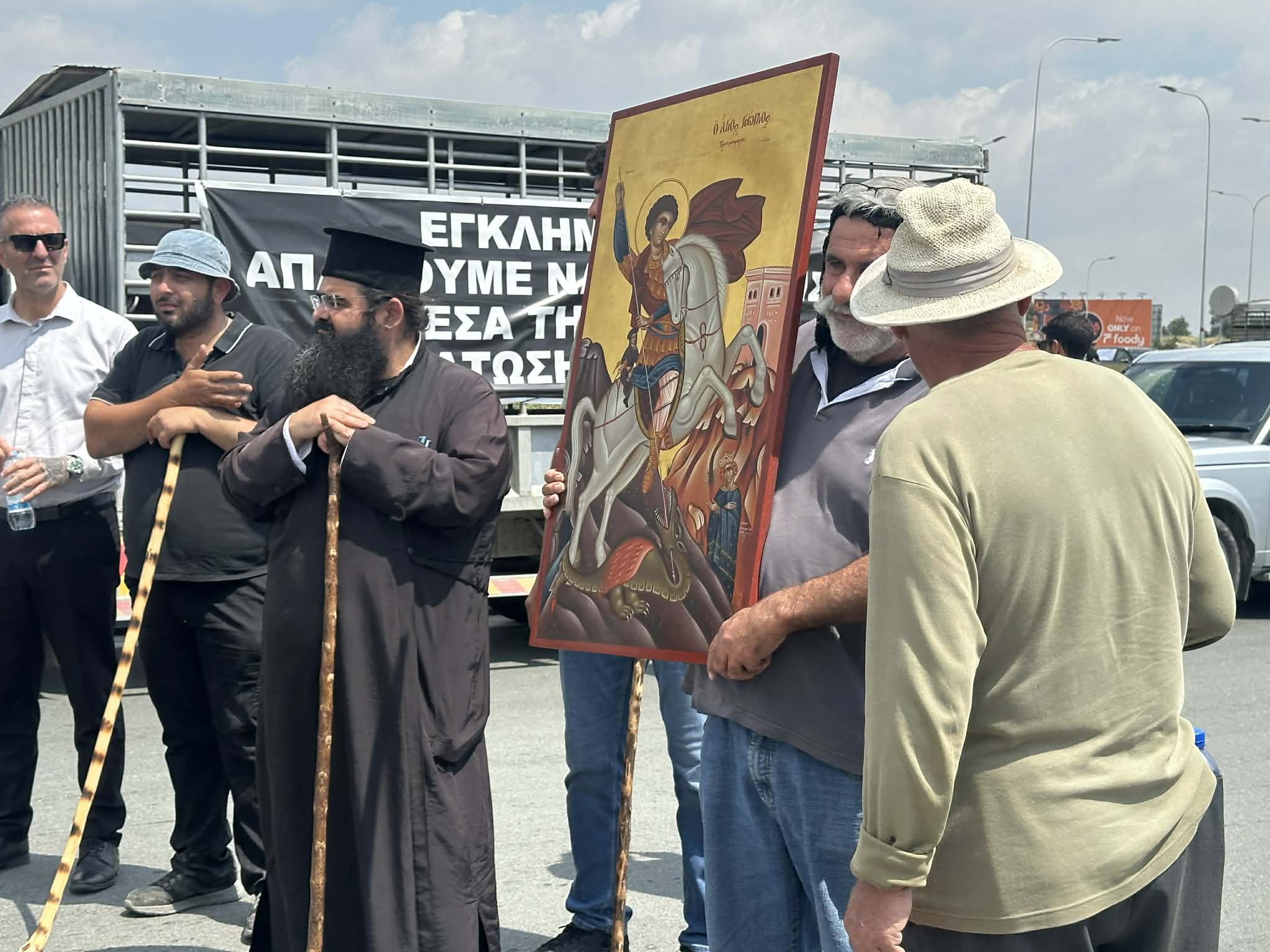
Livestock farmers threatened to shut down Larnaca airport on Thursday as protests escalated following an unsuccessful meeting with Agriculture Minister Maria Panayiotou, intensifying disruption at the Rizoelia roundabout.
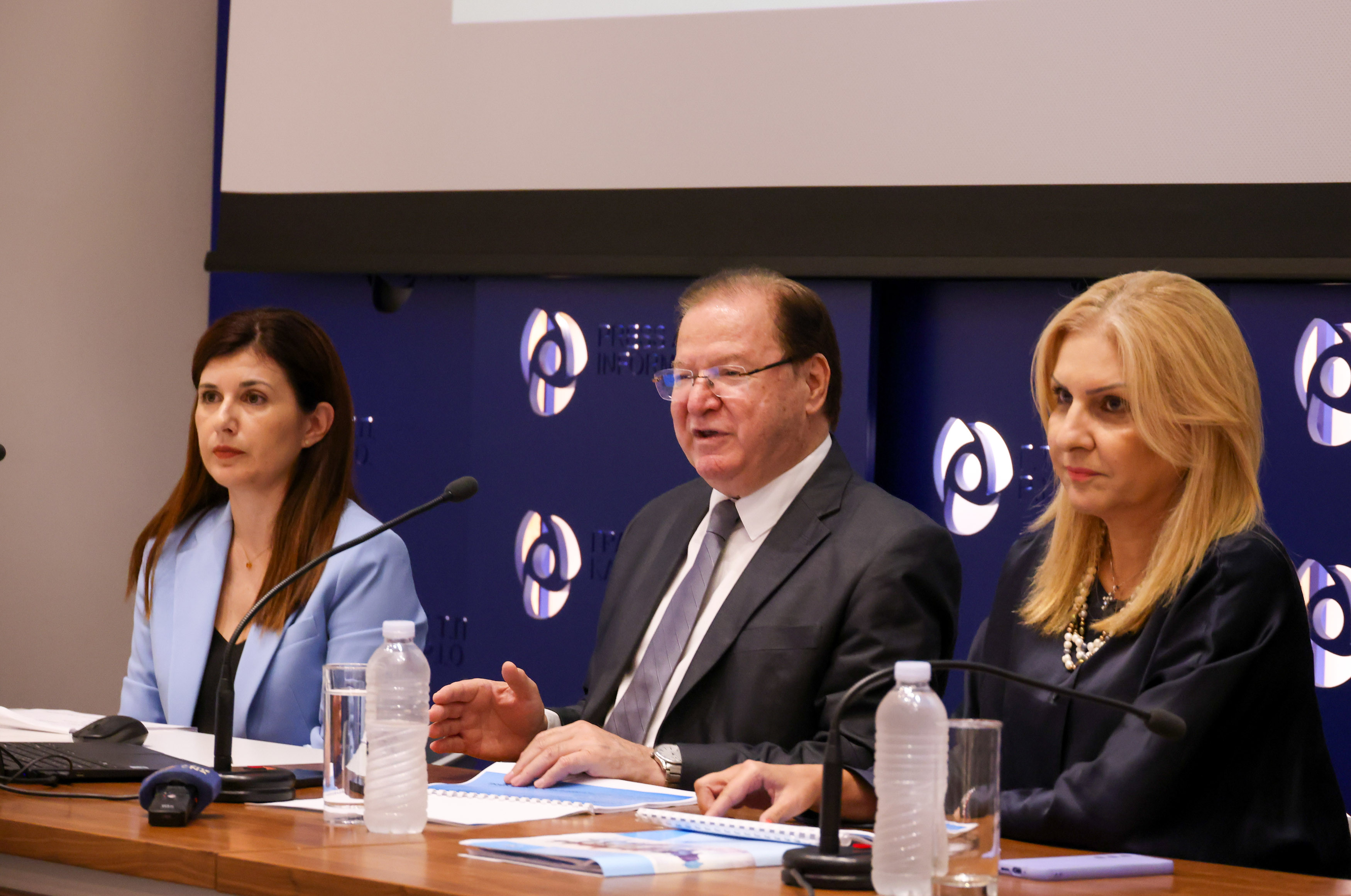
Lasting four hours, the meeting failed to break the deadlock between the government and the farmers on the measures in place to contain the spread of foot-and-mouth disease – specifically the forced mass culling of animals.
“Sadly, there will be an escalation of the measures,” Stella Petrou, representing the farmers, told media.
“We spoke about many issues. The minister asked for the protests to end. Our main demand was for the animal culling to stop. Unfortunately, our demand was not accepted.”
In a sign the farmers meant business, they announced that they’d continue blocking the Rizoelia junction indefinitely – until the government relents.
A senior ministry official later simply reiterated that the slaughter of all animals within infected farming units is a must under EU law. Talks could not go on while the roads were being disrupted.
During the day,the farmers had issued a one-hour ultimatum, warning that if no response was received, they would proceed with further measures including closing the airport and expanding road blockades.
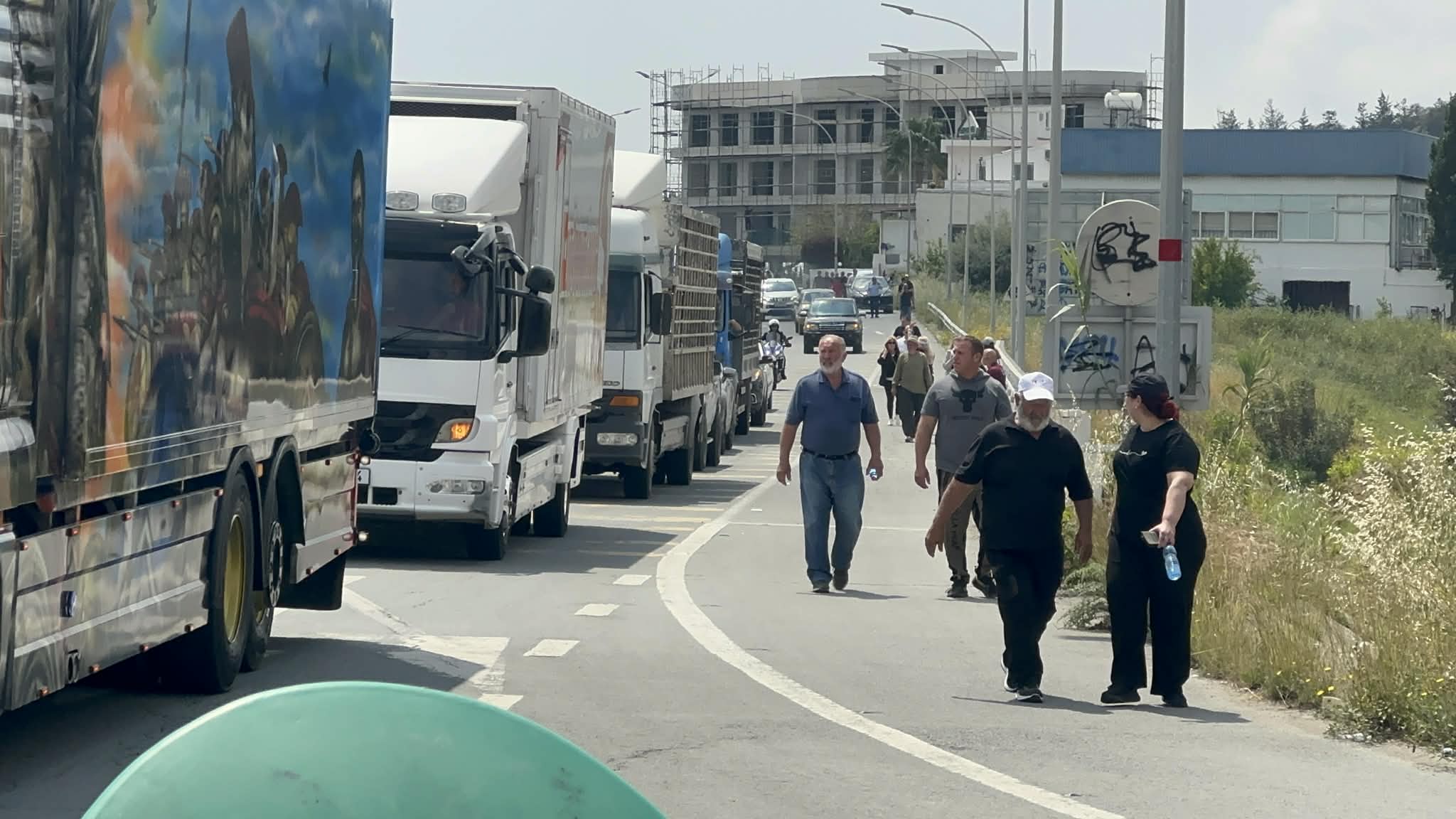
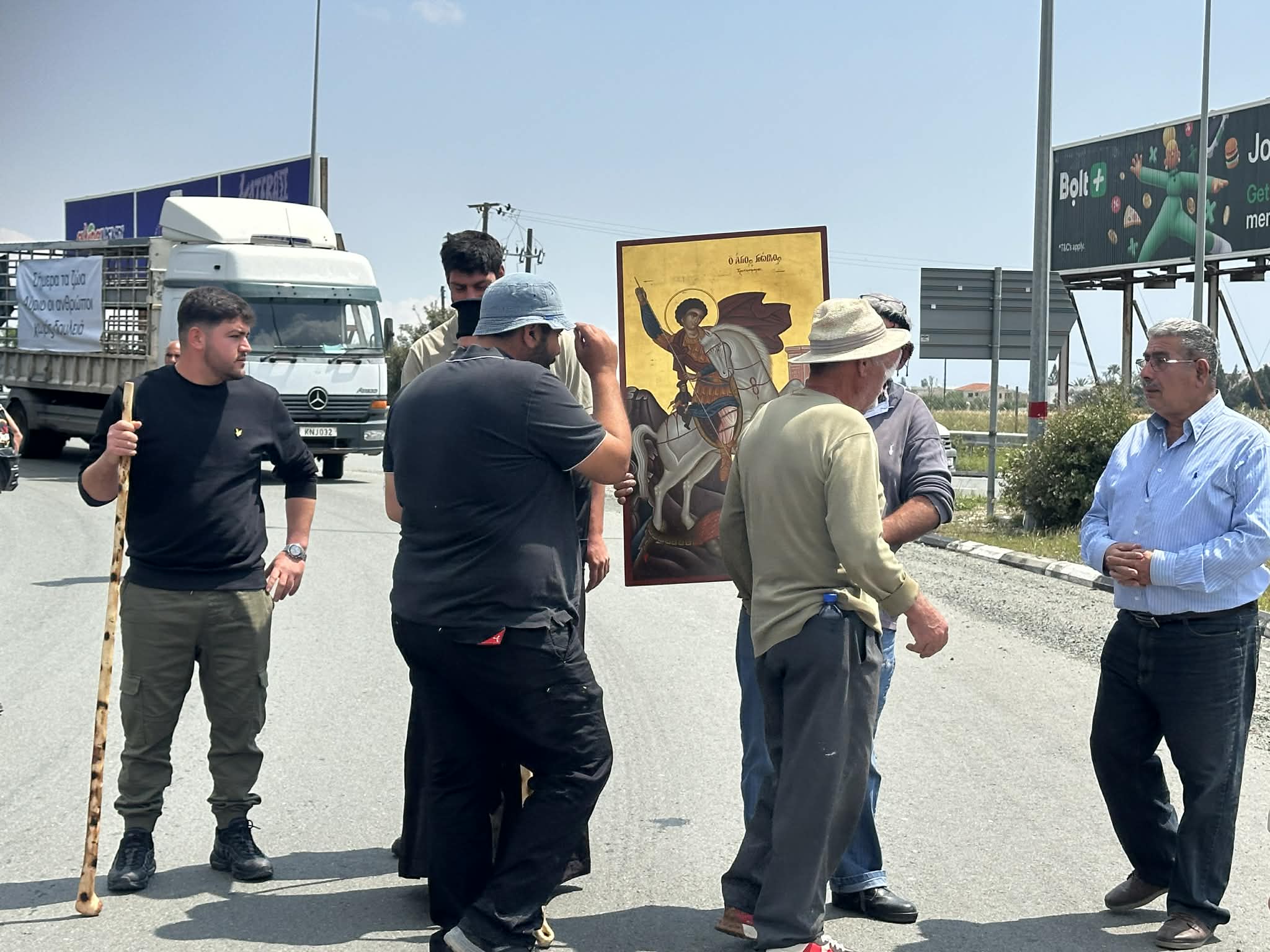
“If the president does not intervene to stop the killings,” organisers said earlier, “we will escalate our measures every two hours.”
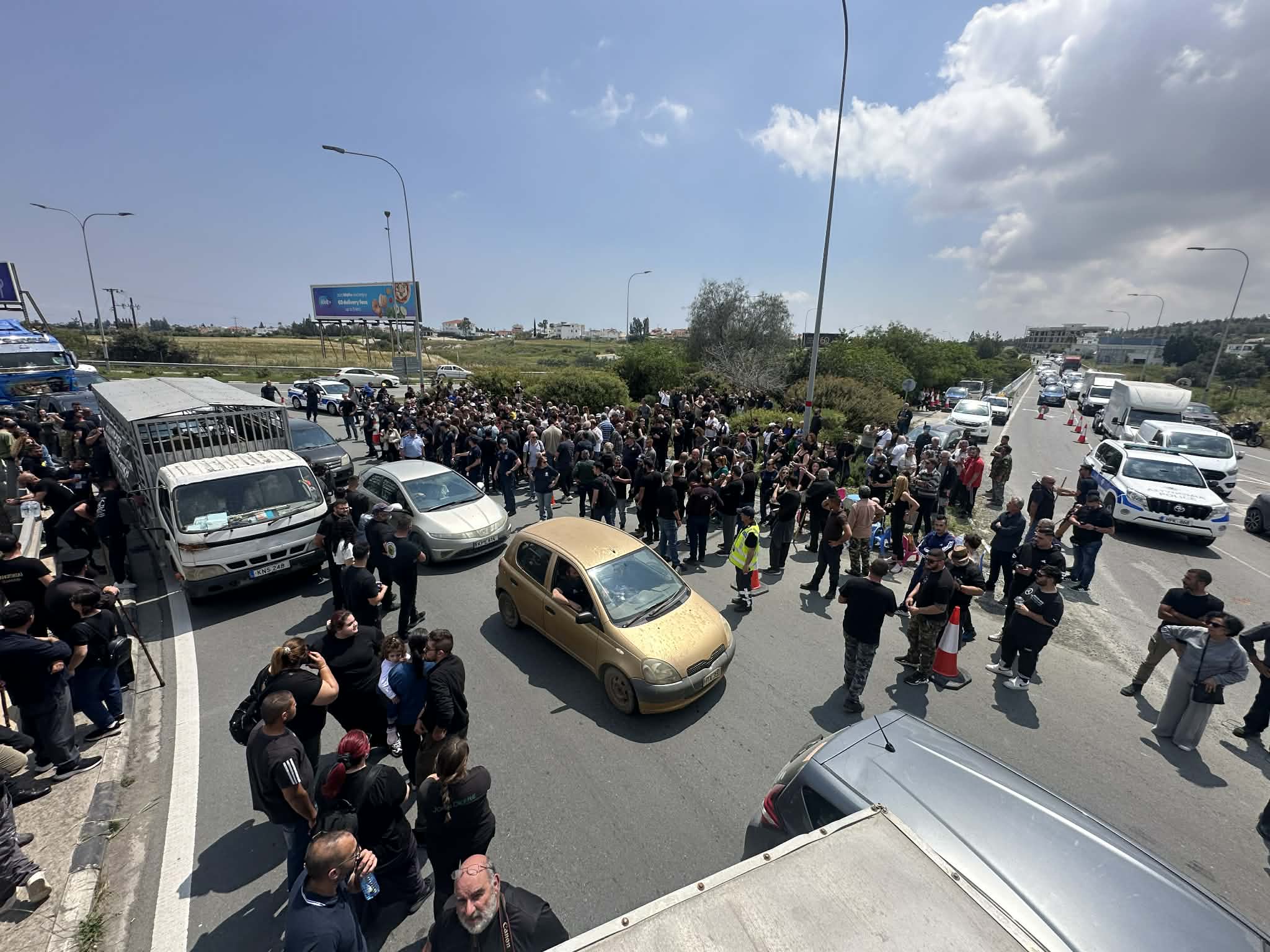
Upon returning to Larnaca, protesters moved to fully close the Rizoelia roundabout, trapping vehicles and halting traffic in all directions.
The protest, which began earlier in the day with partial closures, developed into a complete shutdown of the junction, with farmers positioning vehicles and remaining on site.
Police confirmed that “due to a protest, the Rizoelia roundabout has been closed,” urging drivers to “be especially careful, patient and use alternative routes.”
Authorities issued diversion instructions, directing traffic from Larnaca to Nicosia via Kalo Chorio towards Kofinou, while routes through Oroklini were recommended for those travelling towards Famagusta.
Drivers from Nicosia and Famagusta heading to Larnaca were also advised to follow alternative routes.
Tensions at the scene fluctuated as some protesters allowed trapped motorists to pass following police appeals, while others blocked access, leading to confrontations with drivers.
Earlier, protesters had temporarily closed the port of Larnaca as part of coordinated action, while also warning they could expand disruptions to coincide with the arrival of European leaders for an informal council in Ayia Napa.
At the same time, the agricultural union, Euroagrotikos, appealed directly to Christodoulides to announce immediate financial compensation for livestock farmers affected by disease control measures.
The group acknowledged the strain placed on farmers, many of whom have complied with culling protocols despite the emotional and economic toll.
In its statement, Euroagrotikos emphasised that farmers expect “clear commitments” to ensure they and their families do not face severe financial consequences.
However, it also distanced itself from the protest action, urging restraint and a “responsible stance” given the gravity of the outbreak.
The organisation stressed that containing foot-and-mouth disease requires strict adherence to health measures, including enhanced controls at checkpoints, systematic disinfection procedures and tighter monitoring along the Green Line.
Farmers are calling for an immediate halt to widespread killings in affected units, arguing that alternative measures such as vaccination should be considered where infections are limited.
Livestock farmers at the protest carried banners, a coffin and wreaths.
Slogans displayed at the scene include “We are not ignorant – There are EU protocols that save our animals, as long as you want them to,” alongside messages such as “You are killing the future of our livestock farming” and “We want the government on our side, not against us.”
Petrou had said the group would not withdraw without assurances, stating, “We are not leaving if the killing of animals does not stop,” while emphasising that escalation would continue in the absence of a government response.
She pointed to provisions within EU regulations allowing for vaccination as an alternative.
“Our aim is not to inconvenience the public,” she said, while stressing the urgency of the situation for affected farmers.
The police said contingency plans were in place to ensure public safety and protect key movements linked to official events, adding that authorities would intervene if necessary.


Click here to change your cookie preferences