
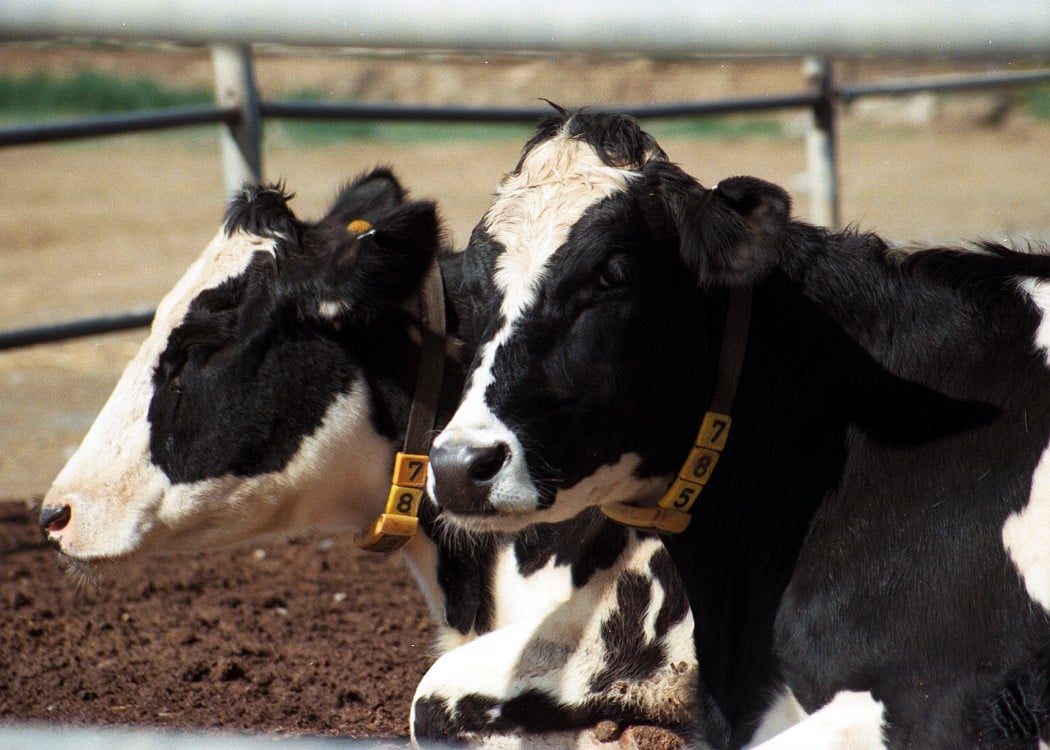
Cyprus has a long way to go until the island gets fully rid of the foot and mouth disease (FMD), president of the Pancyprian pig farmers association, Petros Kailas said on Wednesday.
“The last animal that has been vaccinated may have a lifespan of 4–5 years before it is culled,” he said. “In the best-case scenario, we still have 4–5 years ahead of us during which our country will not be free of the virus.”
Speaking on the occasion of the European Union’s decision to extend restrictions on food and mouth disease until June 15, he said that Cyprus had “a very long road” ahead until the island is freed from the disease.
According to the EU decision, trade in animals must be prohibited for three months after the slaughter or death of the last vaccinated animal.
“We’re still finding cases, and not all of them have been reported yet,” Kailas said.
He warned that efforts to vaccinate all cattle, pigs, goat and sheep were still ongoing and that the process may take “several years”.
“The vaccines may be here to stay,” he said.
Meanwhile, three further FMD cases were detected in goat and sheep units in Athienou, increasing the overall number of infected units to 108.
The veterinary services said that the recent increase in cases was due to ongoing “intensive sampling” efforts, while the number of units with negative laboratory results within the contaminated areas was increasing simultaneously.
The number of currently infected animals corresponds to 9.5 per cent of the total number of adult goat and sheep, 7.9 per cent of the total number of pigs and 2.8 per cent of the total number of cattle.
Meanwhile, culling procedures continue in Nicosia and Larnaca.
According to the veterinary services, the second phase of the vaccination of cattle currently stands at 81 per cent, 64 per cent for goat and sheep and only four units of pig farms in the Larnaca district.
In regard to the rare, indigenous fat-tailed sheep and red cows that have tested positive, the veterinary services said that a decision on how to proceed will be made “on the basis of documentation of their purity in collaboration with the ministry of agriculture and after taking into account the percentage that they constitute in the total population of local breeds”.
“The risk or benefit that will arise from any decision to keep or kill them will be assessed,” the services said.



Click here to change your cookie preferences