
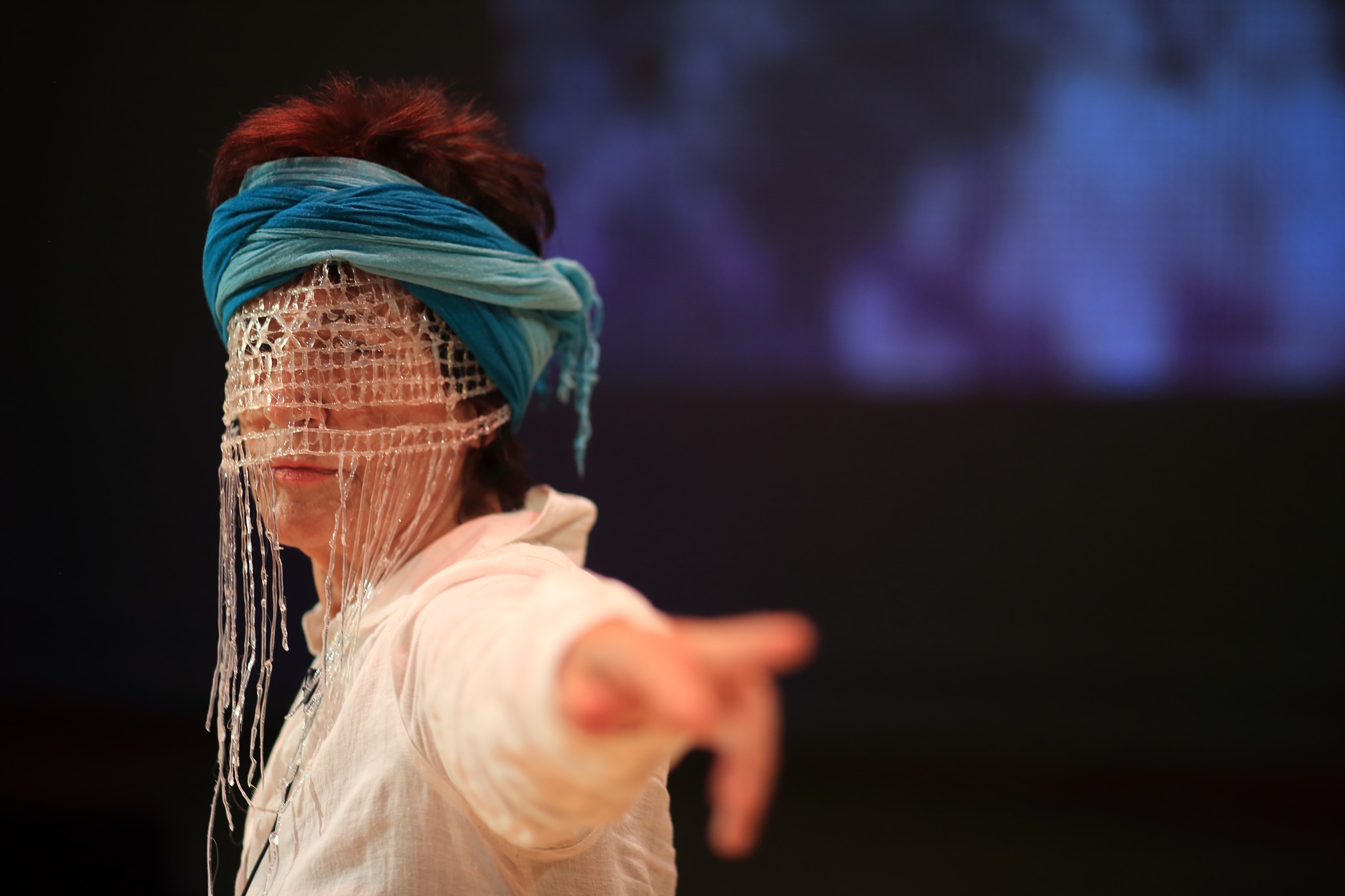
For one local dancer and choreographer, dance is an extension of herself,trusting the body to express all the feelings and ideas piled up within her
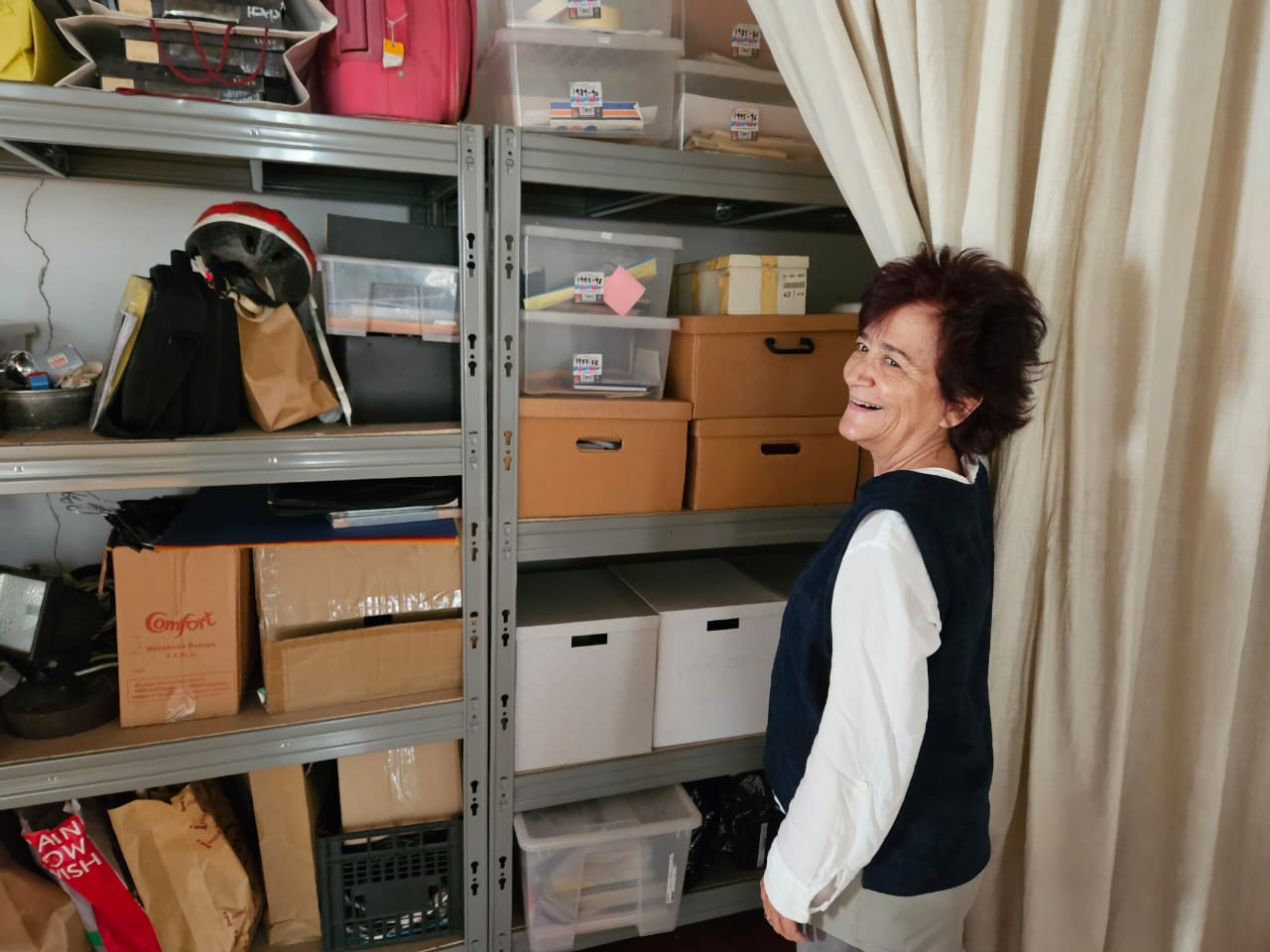
The facts are there, hidden behind a curtain in Arianna Economou’s rehearsal space in old Kaimakli: shelves upon shelves of boxes, the earliest dated ‘1983’. This is her personal archive, the official mementos – videos, photos, flyers – of all the modern-dance pieces she’s performed and choreographed in the past 50 years.
The facts are there, but otherwise elusive. I’m running late, and don’t have time for the usual in-depth research before going to meet her. No harm done, I tell myself, I’ll get a detailed timeline once we start the interview – but in fact a detailed timeline isn’t really Arianna’s way.
She’s prone to tangents and, she admits, bad with dates. Her personal style is impulsive, exploratory – which also, to a large extent, defines her dancing. “Dance,” she explains, “is a very experimental artform. And that’s what I stand for. Experimentation.”
It almost didn’t happen, this career. “I studied dance,” she recalls, sipping ginger and lemon tea as we sit in a corner of the space, “and then I recognised I was not good enough for dance. I was not good at remembering sequences – I was not a good dancer, let’s say. I had lots of difficulties with my body.”
That was in London in the 70s, Ballet Rambert followed by a year at The Place. She’d stood out in Cyprus, coming from a musical family – her mother was a piano teacher; her cousin was Nicolas Economou, one of the greatest of all Cypriot pianists, killed in a road accident in 1993 – but, once in London, realised she didn’t have the technique, or the body, to be a ballerina.
“When I went to Rambert, there were girls there who’d started ballet when they were six or seven. So they had different bodies.” It wasn’t just the body. Arianna didn’t have the temperament for the “violent” teaching style she found in conservative circles.
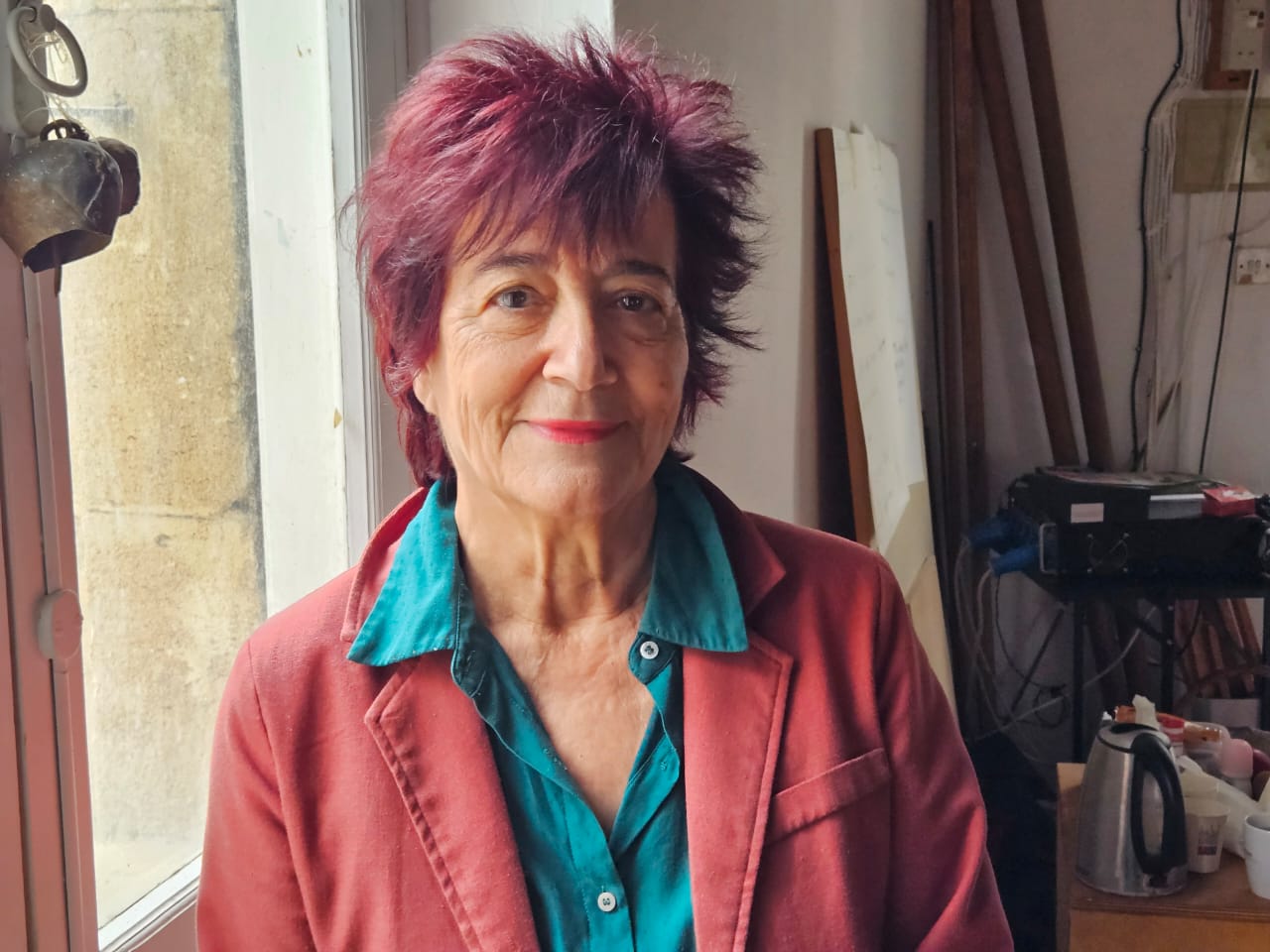
“Those teachers believed in this kind of discipline – as if you were a horse, training a horse. ‘Not that way’, ‘What is this?’, ‘You must lose weight’…” Dartington Hall School in Devon – her true alma mater – was, she recalls, “a beginning of healing, where the first thing I was told was to ‘stand around my centre line’… And that was the beginning of the holistic understanding of dance.”
Dartington was a famously progressive school where she actually went to do theatre studies, having given up on ballet – only to find proponents of the ‘postmodern dance’ that was then being explored in New York by the likes of Anna Halprin.
Arianna learned that the body has axes, and bowls, that “the edges of the body connect to the centre of the body” – above all that dance could be “a healing artform”, a way of expressing not just movement, but the set of feelings which define that movement. “It’s not whether your hand is like this, or like this – it all belongs to one unit… You can dance the architecture of the body, rather than being taught technique. But then I [also] discovered technique.”
This is getting complicated – and we don’t have much time. It’s less than a month till her new project, a performance called Heart’s Sacred Touch (taking place at the Dance Studio in Nicosia on May 28-30), and fellow dramaturg Giorgos Bizios will be arriving soon for three hours of rehearsal. Meanwhile, a table at the back is crammed with books – titles include The Mystic Spiral by Jill Purce – and the floor strewn with large sheets of paper bearing handwritten notes: ‘Then Death began, but so did Art and Music’…
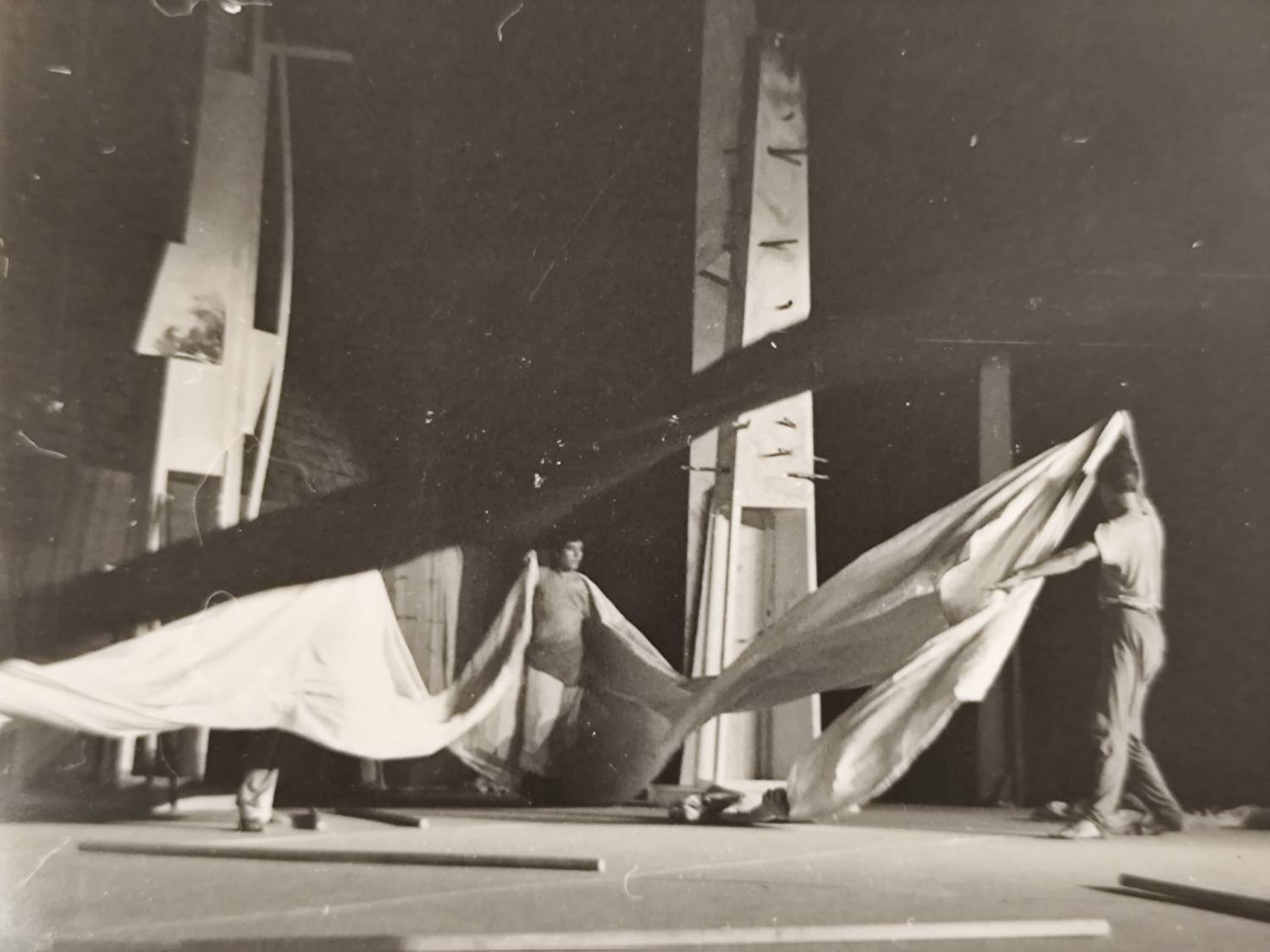
This is how she works, she explains, weeks or months of reading and writing then dance as a kind of creative purge, trusting the body to express all the feelings and ideas piled up within her. Her conversation is studded with cultural references. Richard Long, the famous British ‘land artist’. Joseph Campbell. Rabindranath Tagore. Erich Neumann, the German psychologist and student of Jung. Jung himself, whom she read extensively in preparation for her 2002 performance In a Dark Time, the Eye Begins to See. (“I looked at all these Jungian terminologies, and I made a solo piece on that.”) She talks of her collaborators on Body/Space – which caused a scandal – in 1983, and muses that they worked together “like Rauschenberg and Cunningham”.
Body/Space was controversial – not when it played at the Nicosia festival but a few months later, when it was shown on TV. (Remember when TV had cultural programmes?) ‘That wasn’t art, it was perversion,’ went a headline in Simerini newspaper, quoting the “scores of indignant viewers” who’d apparently contacted the paper to voice their disgust.
“I was too young to be able to deal with it,” she shrugs – though, even now, seems unsure why exactly (some) people were so furious. “They just saw movement that they didn’t recognise,” she offers, or perhaps “they thought dancers rolling on the floor, or women dancing together in a very intimate way because of contact…”
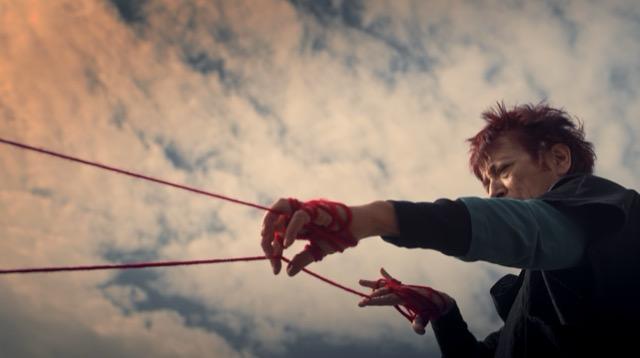
She tails off, as if to say ‘Don’t ask me’ – though her cousin Nicolas Economou did conclude the performance with a jazzed-up rendition of the national anthem, so perhaps politics played a part too. Arianna’s been political over the years, most obviously in the bicommunal One Square Foot project (2003-08) and Walking the Line in 1998 – another solo piece, inspired by the meeting of Io and Prometheus in Greek mythology but actually about the Green Line – which she later performed in Athens and Cairo. Bit by bit, we’re getting closer to a detailed timeline.
Then there’s the new piece, Heart’s Sacred Touch, “a journey to come to terms with death” as the description puts it. It’s acutely personal, not just a collab with musician Helen Chadwick (a classmate from Dartington days) but dedicated to the memory of Arianna’s great friend Ruth Keshishian – owner of the Moufflon bookshop, and among the most beloved figures on the local culture scene – who passed away last year.
It’s about beauty, inspired by the Byzantine frescoes of the little churches in the Troodos mountains – but also, of course, “with Ruth, it’s about the passage from death to life. And what is death? Death is life. Because death is a way of giving room for new things to happen…
“Out of the pain of the heart, and loss, space is created because of separation – and this gap of separation is filled with the creative act. So we create – because of this gap, because of this absence. Art and music is created in the separation.”
‘Separation’ is a key word when it comes to Arianna. Life, like the body, is “one unit”, but composed of parts – different roles, separate identities. “People often ask me, ‘What do you do? Are you a dancer?,” she muses in an excellent recent documentary from the PIO’s Art in the City series. “And I say, ‘A dancer?’. Only when I dance am I a dancer… I mean – when I’m not doing it, who am I?”
Who is she, indeed? Like her friend Ruth – whose loveably gentle, distracted air hid a strong will and keen business sense – Arianna’s rather scattered style belies the fact that she’s worked hard for dance over the years, above all in the creation of the Dance House in Nicosia. She co-founded the House, lobbied successfully for municipal premises (it’s housed in the old municipal market in Ayios Andreas), and worked as its director for over a decade, till 2020.
Dance is an extension of herself, her life writ large, the ‘creative act’ tying everything else together. Dancing is the most selfish art, I suggest – meaning the one where the artist uses themselves, their physical body, most directly, as canvas and text. Arianna laughs – but her work does seem to have been all-consuming. “Do I look like an extrovert?” she wonders when I mention that she seems like a people person. “I can be sociable, it’s true…” But it’s slightly misleading, she adds: “Because at heart I know it’s here” – meaning in herself – “that I find the work”.
She’s the kind of woman who might never have found time for motherhood – but it so happened that in 1979, while still at Dartington, she fell in love with a classmate, a German artist named Horst, and they had a child together and moved to Cyprus soon after, staying married for about 25 years.
“I was a mother for her when I was alone, in bringing her up as a baby,” she says of her daughter Alexandra. “And then, when we came here, it was shared with my mother – because I wanted to get into my career.” Alexandra Waierstall now lives in Dusseldorf, and is a well-known choreographer in her own right. Did Arianna enjoy motherhood?
“I am very grateful to have been a mother of such a wonderful choreographer, and sensitive soul.”
But did she enjoy it?
She smiles: “Very much, yes”.
The timeline keeps filling up, becoming more detailed – but time itself won’t stand still. Arianna doesn’t like to give her precise age, but somewhere in her 60s sounds plausible. How does a dancer deal with ageing, when the body’s so integral to her art?
“As the ageing happens, the dance becomes – less about the act of dancing,” she replies carefully, “more like a ritual of being there in the space.” Her projects have become less physical, more verbal – like for instance Happy Happier Days (2023), a variation on Samuel Beckett.
“I still work with gravity, with touch. I work with listening… I still do the basic vocabulary of walking, standing, sitting, rolling, falling. But I don’t do steps.”
But she never did them anyway.
“That’s it. So I can still dance.”
Is the body just a burden, in the end? After all, it just keeps getting worse, and more decrepit.
“We need to be grateful, that’s what I say,” she replies, laughing. “I’m grateful for this body. Very grateful. And I go like this – I thank the body. I try to remember to thank the body.”
That may be the greatest separation, the one between mind and body – though her own art fuses the two, dealing in the alchemy that transmutes thought (and feeling) into dance. It’s odd, in a way, how dance is the most accessible art – we all, after all, have a body we can dance with – yet the one that so often puzzles people, like that TV audience in the 80s. Then again, it’s also the way Arianna does it: as self-expression and personal healing, moving – and experimenting – to her own inner music, no steps, trusting the audience to catch the emotion behind it.
“The way I do it, it’s do-it-yourself,” she admits. “DIY is the way I feel safe, because I won’t be… You see, when you’re with people it’s easy to be taken down another alley. And then it’s not yours. You are servicing other ideas.”
What she does is ephemeral, she admits in that PIO documentary – but it’s what she’s done for 50 years now, the boxes on the shelves behind the curtain attest to that. I’d like to know more, to ask what she feels in the moment – but now there’s a voice in the street outside. Giorgos Bizios, her collaborator, is here. It’s time to dance.


Click here to change your cookie preferences