
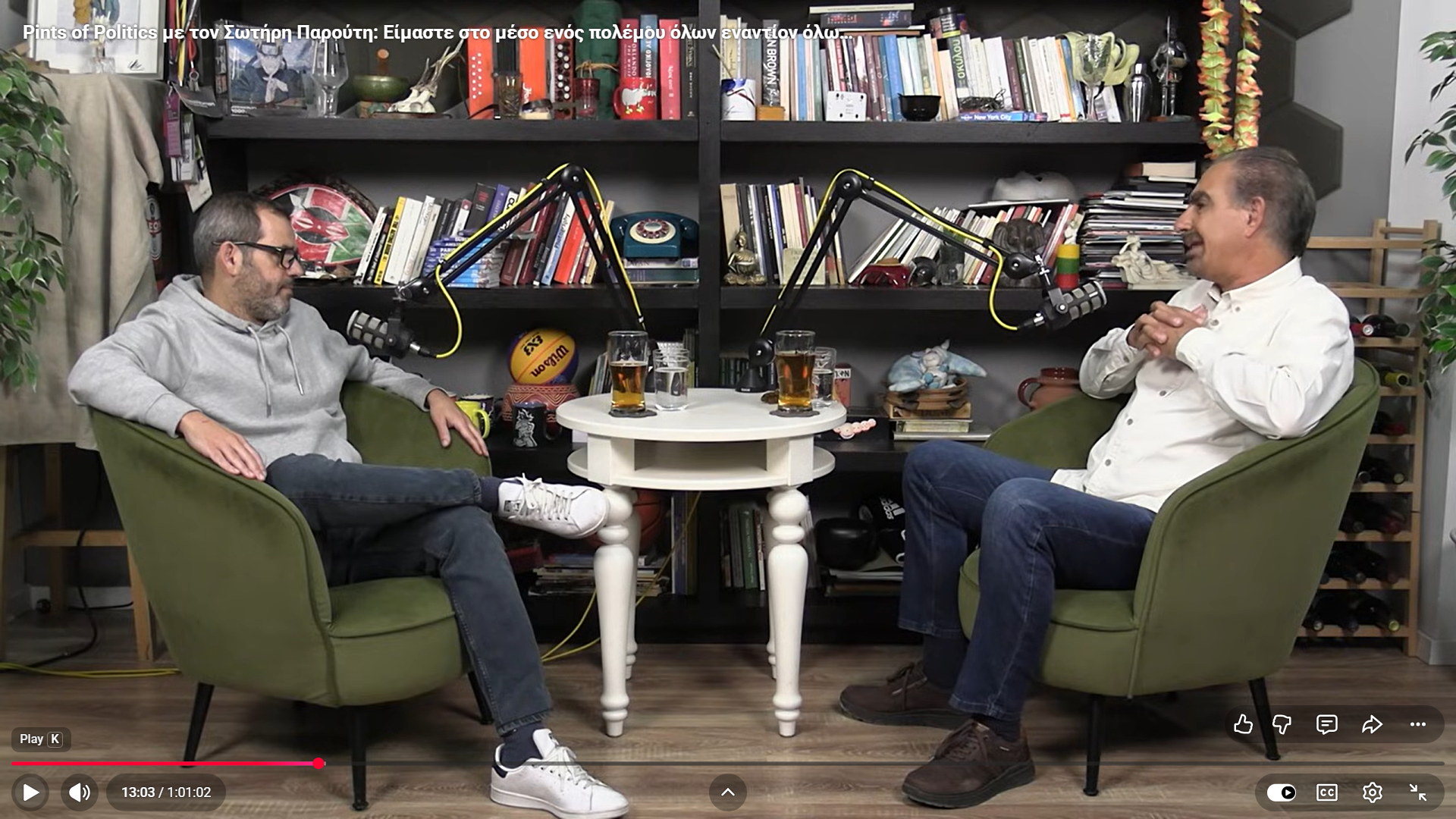
With ‘stuff I’d never heard on TV’, podcasts give people a new way to be informed
It’s a game, of course. We the People vote for MPs every five years – then, once results are in, those politicians can relax.
Voters have very little power to course-correct in between elections – even if the system completely stops functioning, as it did for instance during Covid.
On the other hand, election time is sacred. Party leaders appear on TV, engaging in fiery debates and showing off their bona fides, making sure that voters are ‘well-informed’ before casting their vote. This, too, is part of the game.
It’s unclear how much the rise of podcasts – especially political podcasts, which have proliferated in recent years – has changed the rules of the game. But it’s had an impact.
“I think it’s the new way that people follow politics now,” says Christophoros Christophi, host of Legal Matters, almost certainly the first political podcast in Cyprus (it launched in 2019) and still among the most prominent.
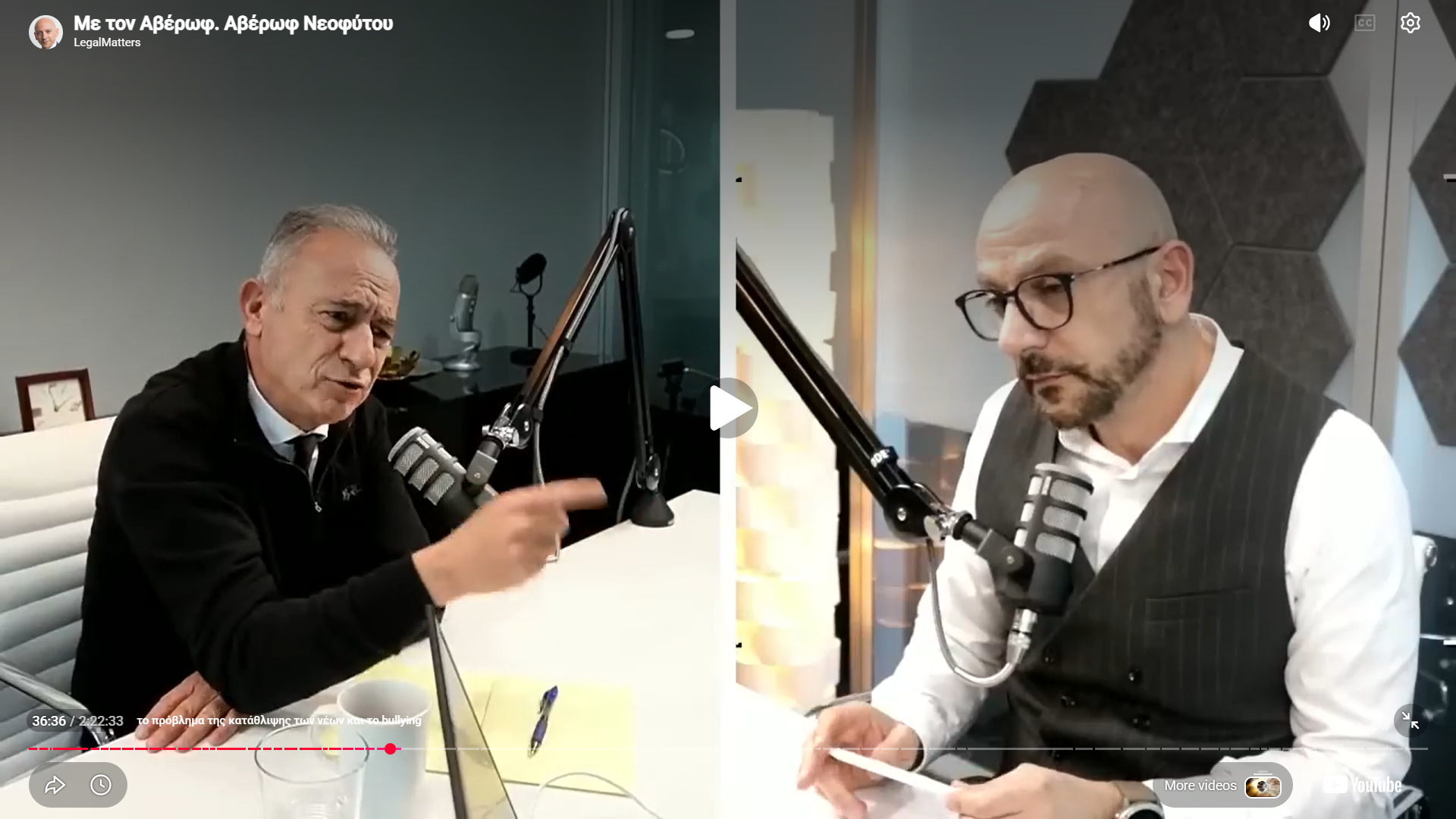
That impact shouldn’t be overstated. Legal Matters, for instance, has around 13,000 subscribers on YouTube (there’s also an app, plus a website with an archive of all seven seasons). Pints of Politics, another big name – hosted by analyst and Politis columnist Antonis Polydorou – amassed nearly 15,000 YouTube views for its most popular interview (with former Disy chief Averof Neofytou) but it’s usually a fraction of that, though admittedly it’s also available on Spotify and Apple Podcasts.
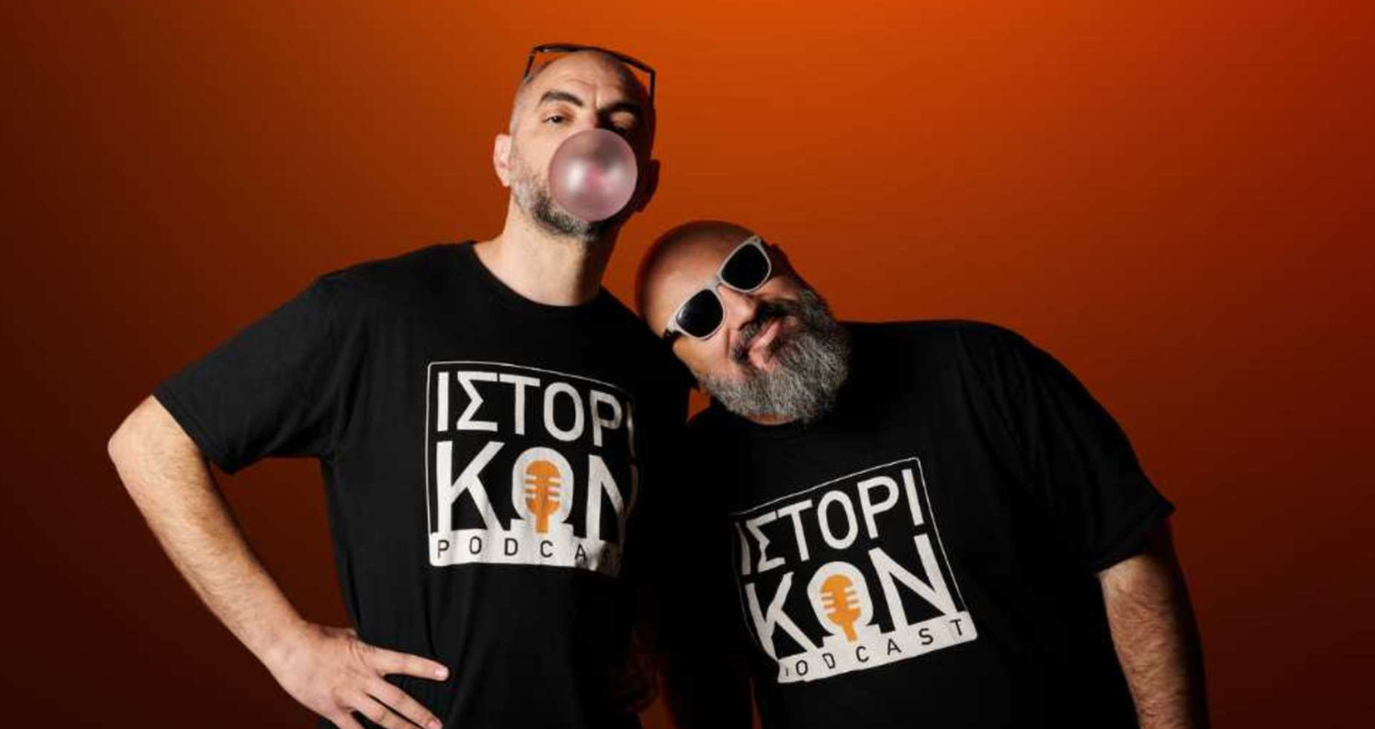
These aren’t really earth-shaking numbers. Then again, “our content is evergreen,” points out Constantinos Psillides, host of the popular HistoriCon podcast (which is unabashedly political, albeit not directly about politics). “I mean, it can get viewing figures for X number of years, because it’s there… Whereas on TV, it’s a one-off – you do it, it’s done, boom, it’s over.”
This also interferes with the rules of the game – because the dirty little secret (not a secret at all, in fact) is that politicians lie, making promises then doing the opposite once in power.
TV, and media in general, is complicit here, since voters don’t have easy access – except their own fuzzy memories – to what was said at election time. The internet, however, doesn’t lie. The rise of podcasts shifts the balance of power in a small but significant way, pinning down politicians during those relaxed in-between days to give voters a more complete picture once the five years are up.
But the real change, of course, comes in the format.
Yes, says Psillides, his audience pales beside the audience that’ll tune in for a party leaders’ debate on CyBC or Sigma – but “what are you going to hear from them, in one hour? They all have their talking points and they’ll get no pushback, or minimal pushback, just because there isn’t enough time.”
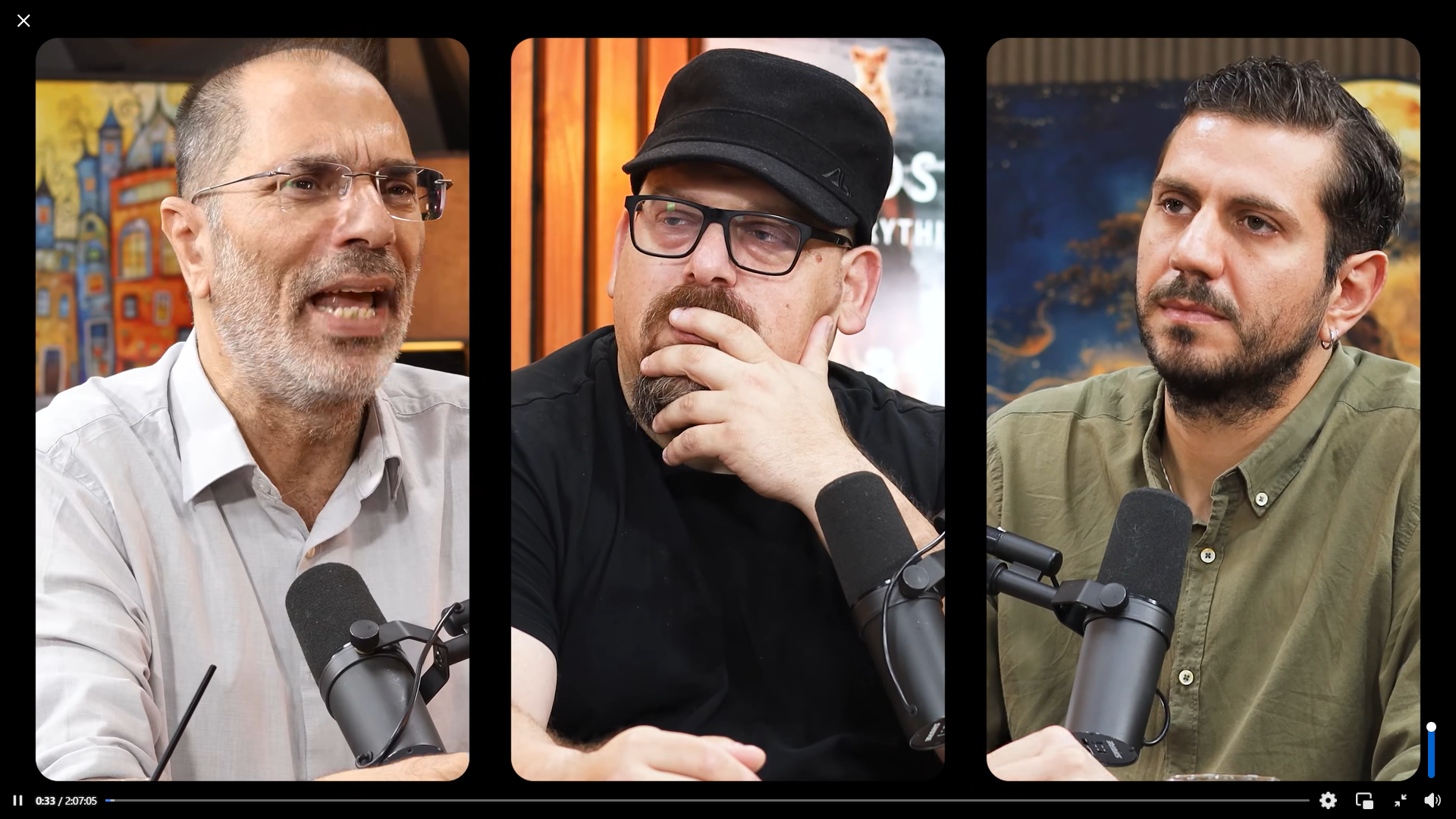
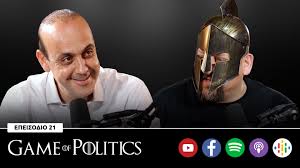
Podcasts are different. The atmosphere is casual – almost like a social occasion – to encourage more honest conversation. Anastasis Charalambous, co-host of Game of Politics, turned up in a helmet to interview Paphos mayor Phedonas Phedonos, a joke at the famously combative mayor. Pints of Politics gets its name from the actual pints of beer placed in front of Polydorou and his guests, though most just take a symbolic sip.
Podcasts also tend to be long-form, lasting anywhere between one and two and a half hours – a long time for any politician to remain tight-lipped. And meanwhile, as a podcaster, “you don’t have someone in your ear from the control room saying ‘OK, we have to go to commercial’ or ‘OK, leave him, don’t say anything here’,” notes Psillides. “So, if you’ve done your homework, you can push back on things.”
That said, the point isn’t usually to antagonise the guest. Any podcaster who became known for hostile interviews would soon run out of guests, in a small place like Cyprus – but the goal, in any case, is usually to make them comfortable, the better to extract the kind of juicy nuggets that would never be divulged on TV.
Christophi recalls, for instance, the episode of Legal Matters when Katie Clerides spoke about her famous message on election day in 2023, alluding to corruption in the Anastasiades government, “and revealed on the show that she’d sent it first to Averof, and he told her, ‘Go ahead, publish it’”.
Then there’s the podcast with Anastasiades himself, when Christophi asked point-blank about the so-called ‘Audi case’ – the rumours “that his daughter had been in an accident in Limassol, and the case was covered up”. (His guest denied it.) Or the episode with Averof, who revealed the existence of a secret meeting between our past and present presidents – Anastasiades and Christodoulides – and Turkish foreign minister Cavusoglu in a New York hotel.
Polydorou also recalls Averof (a popular guest) telling what transpired behind the scenes after the first round of the presidential elections, or – going further back – Michalis Papapetrou testifying on the split within Akel in the early 90s, “stuff I’d never heard on TV”. Then there’s Makarios Droushiotis, whose tell-all books found a ready audience with podcasters when they were being pointedly ignored by the mainstream media.
Some may object that this stuff is of interest only to political junkies – and they have a point. If the question is whether podcasts have an effect on elections (like our current parliamentary elections), the answer may be ‘No’, since only those with an interest in the subject are likely to watch in the first place – unlike TV, which attracts a general audience.
Maybe. But that also overlooks an important point – namely, the demographic that listens to podcasts.
“For myself,” says Polydorou, “70 per cent of my audience is between 25 and 40. So it’s opened up that whole sector.” TV is for older generations, but “these days a 25-year-old doesn’t even own a TV set…
“So I think podcasts give an opportunity to people who previously weren’t being informed, weren’t watching political shows, to start watching them.”
This could be a very big deal – because the conventional wisdom, in Cyprus and elsewhere, has long been that younger people don’t vote, mostly because they never get invested in the process to begin with. They tend to feel bored by rigid political lines, and alienated by the empty sloganeering they see on TV – if they even watch TV.
That might be about to change – and it’s no coincidence, says Christophi, that the rise of podcasts has arrived simultaneously with the collapse (or at least decline) of the old political order.
“It has to do with two things. First, and most importantly, social media has given people a new way of being informed and entertained. So now anyone can become a presenter, and create content and put it out there…
“And the second reason is that, yes, traditional media did create a feeling that they’re biased, that they serve special interests or they have agendas, or they control the flow of information – which they did control.” Twenty years ago, he says, it was something of an open secret that the three or four TV channels (which were all that was available) favoured some candidates over others. Now, on the other hand, “any candidate can grab a phone and start making videos”.
Appeal to the young, DIY philosophy, talking honestly without the traditional gatekeepers… Sounds familiar, no? Yes indeed. Podcasts, one could say, are the media equivalent of Fidias Panayiotou (a podcaster himself) and his new party – only now it’s direct information, rather than direct democracy.
Political podcasts are a sign of the times, also in the sense of the online sphere being more intimate than the ‘real’ world – another change one associates with the younger generation.
Christophi recalls how it was Covid that really put his show on the map – a time when staying at home became more socially acceptable than going out with people. That’s the slightly weird thing about podcasts, the fact that politicians open up to an unseen audience – through their stand-in, the humble podcaster – when they might’ve stuck to slogans in an actual, flesh-and-blood rally.
Politics, from ‘polis’ or ‘city’, is now best experienced watched alone, on your computer – or not even watched, often just providing background noise in the car, or on the treadmill.
It’s a new world – yet it may also be a simpler one. “It simplifies politics,” says Charalambous of Game of Politics, “because it’s ordinary people, not journalists, asking the questions that ordinary people have. Not what the politicians themselves want to say through sometimes rigged questions.”
It’s win-win – especially now, at election time. The candidate gets more time to be themselves and talk about their positions, without the limits imposed by TV, while the voter gets a more unfiltered view – and a more unbiased one, since podcasts don’t depend on advertisers or sponsors. Legal Matters is especially impartial in that respect, since Christophi is a full-time, quite prominent lawyer and doesn’t even have to “chase Likes”, inviting whoever he feels like chatting to.
Podcasts are chatty, gossipy – “These things already existed as gossip, but hadn’t been officially stated,” says Polydorou, speaking of Averof’s revelations on Pints of Politics – casual, unpretentious. They’re the opposite of the usual game where candidates court votes from on high, with talking points and scripted speeches.
Will this huge archive of candid, in-depth conversations make voters more informed as they head to the polls? Theoretically, yes – at least if they choose to be informed.
“I mean… You have in your hand a piece of machinery that has all the information ever recorded in human history – and you use it to watch porn and tag memes!” laughs Psillides. “So they should be more knowledgeable. But they have to want to learn.”
Still, he adds, “a podcast is more honest. Because you don’t depend on advertisers, and you’re not hung up on time – and if you want to do a good job, you can do it… I have more trust in a good podcaster than a good TV reporter.”
Will the podcast revolution end up having an actual, measurable effect at the ballot box? I suppose we’ll find out.





Click here to change your cookie preferences