
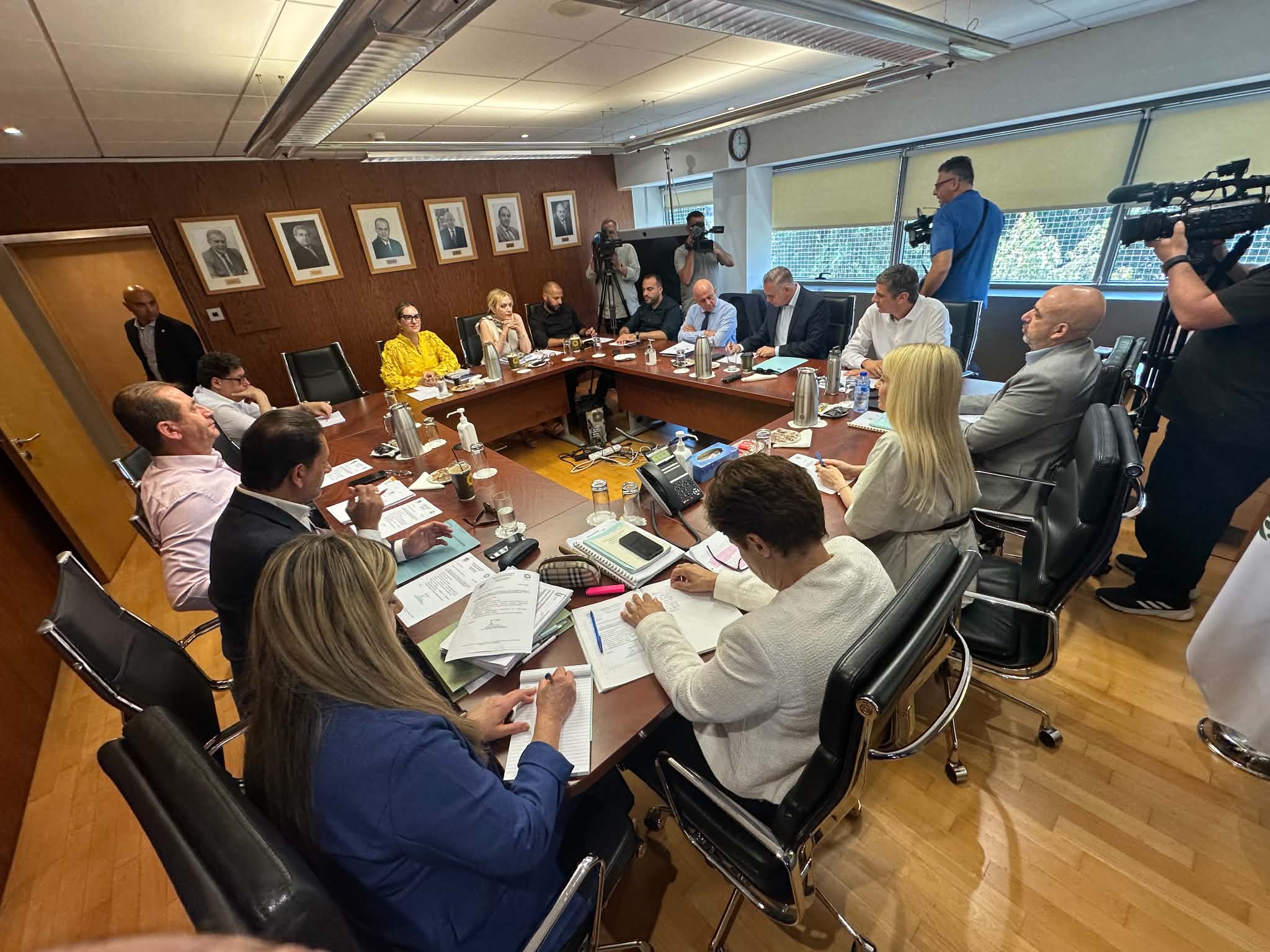
Parliament advanced plans on Tuesday to allocate around €640,000 in state funding and provide police escorts to the newly established parliamentary parties Alma and Direct Democracy.
Under the current framework, each of the two parties is expected to receive approximately €320,000 in advance funding as part of a mechanism allowing newly elected parliamentary parties to draw forward a portion of their annual state subsidy.
The arrangement is based on provisions which permit parties that secure parliamentary representation to request early payment of funding proportional to their electoral performance, to be later deducted from future annual allocations.
Alma leader Odysseas Michaelides has formally requested the advance payment, with a corresponding request from Direct Democracy leader Fidias Panayiotou likewise expected.
Parliamentary accounting services have already initiated procedures to process the payments in line with the statutory framework.
The total state subsidy for political parties in 2026 was set at €7 million and distributed earlier in the year, while the new advance mechanism is intended to support operational costs of parties that enter parliament between electoral cycles.
The funds are expected to be directed primarily towards staffing and the establishment of party offices nationwide in preparation for future electoral contests, including the 2028 presidential election cycle.
According to the relevant legal provision, a party that transitions to parliamentary status may request funding for the period following the election until the end of the year, with the advance subsequently recovered through five equal annual deductions from future entitlements.
Parliamentary officials said the mechanism is being applied in line with established budgetary procedures and fiscal responsibility rules governing political financing.
Alongside the financial arrangements, a parallel process is underway regarding security provisions for the leaders of both parties.
Police are examining whether each leader should be assigned police protection consisting of officers who would also serve as drivers, a practice previously applied to several party leaders and state officials.
The issue is being handled through the security committee process, which assesses protection levels for political figures and makes recommendations to the police leadership and the justice ministry before final approval by cabinet.
The committee is chaired by deputy police chief Panikos Stavrou, while final operational responsibility rests with police chief Themistos Arnaoutis.
The expected arrangement for Alma and Direct Democracy leaders is for each to be assigned two police officers who would also function as drivers.
In the case of Panayiotou, officials have said that periods spent abroad in his capacity as an MEP would be taken into account in the deployment of personnel.
Among those currently under review is ELAM leader Christos Christou, whose security detail could be adjusted depending on updated risk assessments.
Leaders of the largest parties typically receive the highest level of protection, with the number of assigned officers often reflecting parliamentary representation.
The issue has been subject to periodic review, including an audit office report that raised concerns that protection levels may be linked more closely to electoral strength than specific threat assessments.




Click here to change your cookie preferences