
And England should definitely ban ‘It’s Coming Home’
When Arsenal football club lost 4-3 on penalties to Paris Saint Germain (PSG) in the European Champions final in Budapest two weeks ago the question no England fan dared ask was if it was a harbinger of the shape of things to come for England in the World Cup in North America.
A penalty shootout is a pragmatic way of deciding drawn matches after extra time. It is exciting to spectators on its own merits, and for obvious reasons it is better than having a rematch and infinitely more rewarding than tossing a coin – Italy made the right call and won against the Soviet Union in 1968. But does it do harm to the footballers who have to take penalties?
The purpose of a penalty, as its name suggests, is as a sanction for a foul or handball by the defending side in its penalty area to deter conduct unfairly prejudicial to goal scoring possibilities of the attacking side, just like the off-side rule is designed to deter unfair play by the attacking side.
A penalty in normal play affords the attacking side the goal scoring possibility it lost by the foul or handball in the penalty area. It is rough and ready justice that is intentionally unfair to the goalkeeper, but its unfairness is tempered by its purpose which is to penalise and deter foul play in the penalty area.
That reasoning, however, does not apply to penalty shootouts because teams that remain drawn after extra time do not deserve to be penalised. Its purpose in a shootout is to get a result. It does happen sometimes that a form of punishment has a dual purpose and there is nothing wrong with this in principle.
But unlike goalkeepers who are not expected to save penalties, those who take penalties are expected to score and this makes them extremely nervous – most take deep breaths to calm their nerves before they shoot.
In the German film the Goalkeeper’s Fear of the Penalty (1974) the keeper’s unjust predicament is used metaphorically in the film, but the predicament of the football kickers fear of the penalty was unknown at the time – penalty shootouts became the norm later in the 1970s and 1980s.
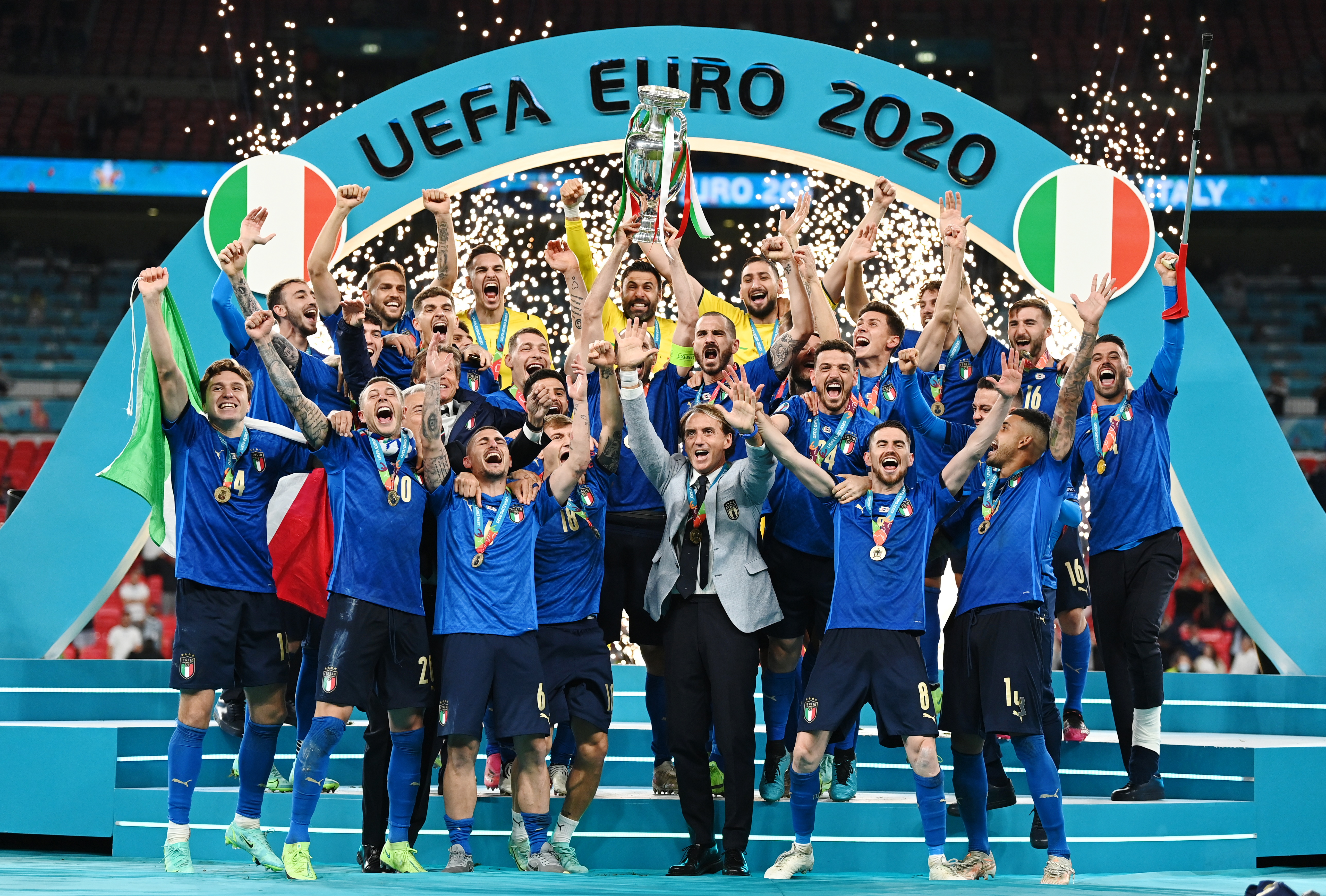
England’s problem with penalties began in the match against Germany in 1996 when Gareth Southgate famously missed a decisive penalty in the semi-final that Germany won on penalties. It haunted him for many years if the TV series Dear England about his time as England manager is to be believed – although it also enabled him to empathise with his players when they lost to Italy on penalties in the European Cup final in 2021.
England has lost on penalties in five major tournaments since 1996, and fans of a superstitious disposition would be forgiven surmising that perhaps England’s performance in penalty shootouts is jinxed.
If England is jinxed, the song “Football’s Coming Home” is the likely culprit as it is based on a hubristic sense of entitlement as if there is a link between being the game’s founding nation and winning competitions.
The English Football Association (FA) had commissioned the song to boost England’s prospects in the 1996 European Cup, but it had the opposite effect and has seemingly jinxed England ever since.
Like many games, football started in England in the 19th century but the World Cup was championed by Jules Rimet a French lawyer who was the first president of FIFA – the international federation of association football – and is the reason it is also called the Jules Rimet Trophy.
It was Rimet’s idea to set up a free-standing international competition separate from the Olympic Games and the first competition was held in Uruguay in 1930. Interestingly, the founding nations of FIFA were France, Belgium, Denmark, the Netherlands, Spain, Sweden and Switzerland. England stayed aloof and only began taking part as a member of FIFA in earnest in 1950 when it was knocked out by the US but won it in 1966 when it beat West Germany 4-2 in extra-time.
England fans feel very disappointed their team lacks the confidence to win after so many years in the doldrums, especially when Brazil, Argentina, Germany, Italy and France have all won it more than once since then.
On the other hand other great footballing nations like the Netherlands have never won the World Cup and Italy failed to qualify for the last three tournaments including the current one – for some a World Cup without Italy is like the Olympics without Greece. Unfortunately, Italy was knocked out in the play offs by Bosnia-Herzegovina in a penalty shootout.
In anticipation of the World Cup the English FA appointed a German manager who apparently chose a team with an emphasis on players that gel the best as a team which meant that necessarily he left out some top English players.
If I were England manager the first thing I would do is declare that the song “it’s Coming Home” is jinxed and should not be heard anywhere near England. In any case it does not lend itself to terrace chanting like “You Never Walk Alone” and “Sweet Caroline” which sound great when sung by football fans in spontaneous harmony. “It’s Coming Home” just doesn’t cut it for me at all.
Also now that Scotland is in the World Cup competition it is inappropriate for England to sing the UK national anthem “God Save the King”, because it shows Scotland up as less British for singing its own anthem “The Flower of Scotland”. The national anthem is good for Team GB but not for the nations that comprise it.
So the other thing I would do after removing the jinxed song is to persuade the English FA and the players to sing the inspiring and rousing unofficial English anthem “Jerusalem” as the English national anthem.




Click here to change your cookie preferences