
A time to be bold and move forward
A lot has been written about the parliamentary election that took place here in Cyprus three weeks ago. I will not attempt to add to that as I have nothing fresh to contribute. Instead, I would like to draw attention to another parliamentary election in a country that may stand as an example of making peace with the past and daring to move forward.
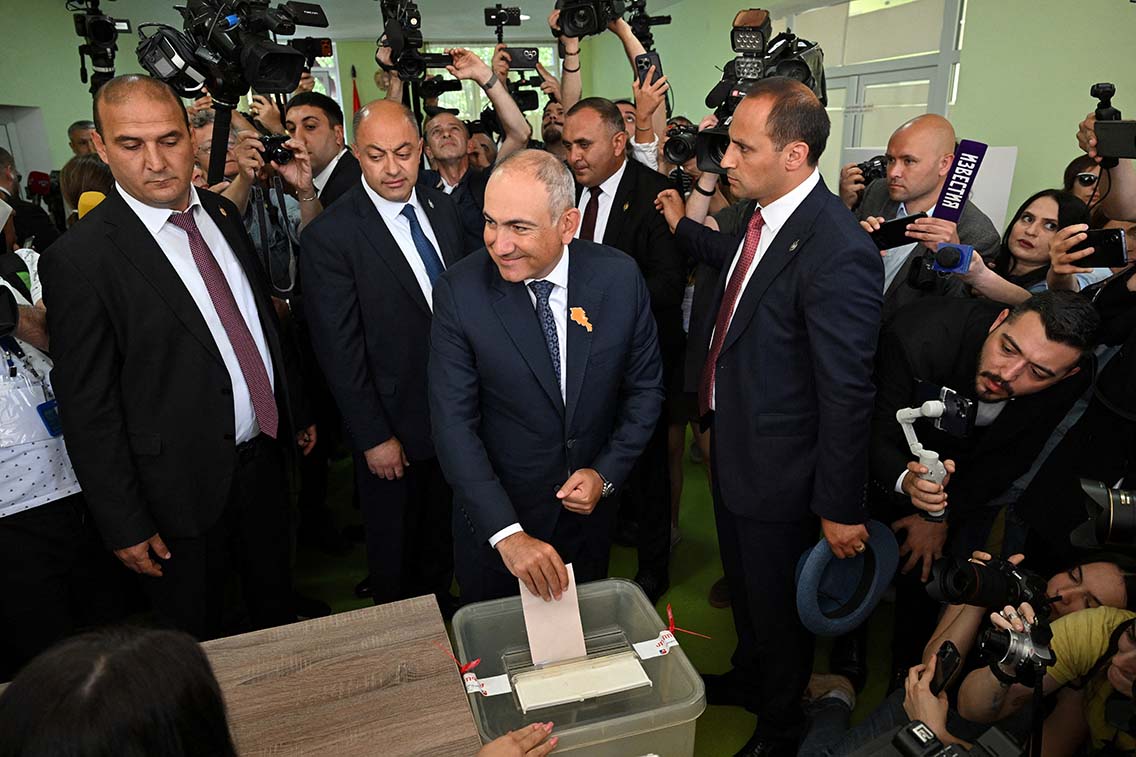
Armenia’s election results last Sunday gave Prime Minister Nikol Pashinyan, a parliamentary majority ensuring he held on to power. The win cemented Armenia’s push to diversify away from its dependence on Russia and gave impetus to closer EU ties as well as bolster Pashinyan’s efforts to improve Armenia’s ties with its neighbours, Azerbaijan and Turkey.
Despite the evident attempts by Russian President Vladimir Putin to influence the election against Pashinyan, Armenians decided to risk relations with their biggest trading partner and embrace new openings for their country. Perhaps the perceived security guarantees that Russia was supposed to offer Armenia in 2023, when Nagorno-Karabakh was lost to Azerbaijan drove the point home that Russia could not be trusted as an ally.
Or maybe, the distant prospect of being able to join the European family also holds an alluring appeal. Whatever the motivation, Pashinyan has had to balance his country’s aspirations with the realities of geography and power politics, particularly as Putin said that Armenia, which has not formally applied to EU membership, was heading down the same path as Ukraine.
The Armenian pivot away from Russia, however, is not what I want to focus on today. Rather I’d like to highlight the efforts to come to terms with the past and improve relations with Azerbaijan and Turkey in what the Financial Times called “a delicate process of diplomatic rapprochement”.
Pashinyan was instrumental in agreeing a peace accord with Azerbaijan that American President Donald Trump brokered last year. So much so that Trump, in a rare glimpse of western unity, endorsed Pashinyan in the elections last week, describing him as “a great friend and leader”.
As for Turkey, for more than a century, relations between Armenia and Turkey have been almost non-existent, overshadowed by the mass killings of Armenians in 1915 – events that Armenia and many countries recognise as genocide, a characterisation that Turkey continues to reject.
Nevertheless, recent efforts have sought to look beyond historical grievances. Among them has been the proposal to reopen border crossings near the Turkish city of Kars, which have remained closed for more than a century, barring a two-year interlude between 1991 and 1993.
That does not mean that Armenians have forgotten or indeed forgiven what has happened in the past. But they have made a conscious effort to see beyond history and look ahead in the future in the hope of building a better tomorrow for both Armenians and Turks.
I hope this example is not lost on us in Cyprus, and particularly on President Nikos Christodoulides, who recently acknowledged that a long summer of diplomatic efforts lies ahead following his meeting with the UN envoy for Cyprus, Maria Angela Holguín. Having himself attended the European Political Community summit in Yerevan only a month ago, he can hardly have failed to notice Armenia’s attempts to move forward.
Holguín’s visit to Cyprus this week was part of a renewed effort to generate momentum for restarting negotiations on the Cyprus problem. I will not repeat the familiar refrain that this is our “last chance” to reach an agreement, or that the Cyprus issue stands at the most critical moment in its history. Such claims tend to reappear whenever a new diplomatic initiative emerges.
What is clear, however, is that the longer we remain unable to find common ground, the longer both Greek Cypriots and Turkish Cypriots face uncertainty and miss opportunities to build a better future together.
Reaching an agreement will require political courage, statesmanship and a willingness to lead where others fear to tread. Ex-president Nicos Anastasiades seemed to lack these traits last time we reached a critical juncture. Let us hope that the current president does not follow in his footsteps. After all, the international arena is widely regarded as Christodoulides’ strongest political domain. To be successful he will require moving beyond short-term political calculations and embracing a broader, more (to use one of the president’s favourite words) holistic vision of Cyprus and its future.
In 1974, 59 years had passed since the Armenian genocide and this year we have 52 years since Turkey’s invasion in Cyprus. Surely we do not want another half-century to pass before recognising that, ultimately, we must find a way to live together.
I am not advocating that we forget the past. As a student of history, I would be the last person to suggest such a thing. Forgetting is neither possible nor wise. To quote George Santayana’s famous phrase “those who cannot remember the past are condemned to repeat it”.
But we should strive to find ways to move beyond the past, however painful that process may be. Otherwise, we risk remaining trapped by history while the world moves on without us.





Click here to change your cookie preferences