
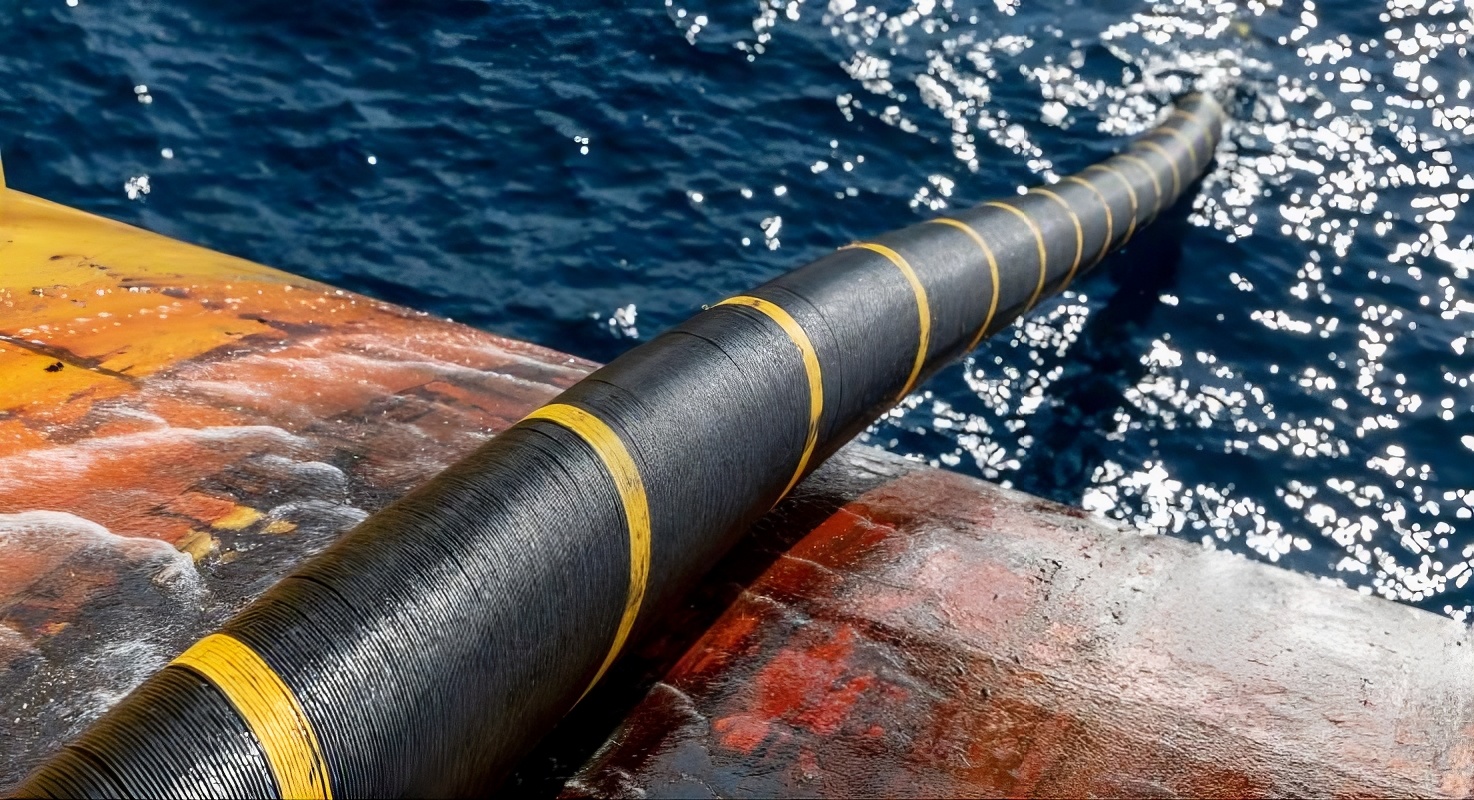
The Cyprus-Greece great sea interconnector project (GSI) remains a strategic priority and has not been suspended, Energy Minister Michalis Damianos asserted on Tuesday, while stressing that the government will make future decisions based on updated economic data expected later this year.
Speaking on Omega, Damianos said the GSI remains important for Cyprus’ energy security and electricity supply, particularly given the island’s status as the only EU member state without an electricity connection to another country.
“At the moment, the GSI is very important for the adequacy of the system,” he said, while remarking that an electrical link with neighbouring countries would ensure Cyprus could continue to access power when required.
The minister said a due diligence study commissioned by the project promoter and submitted to the European Commission is expected to be completed before the end of the year.
The study is intended to establish the project’s actual cost and provide updated data on its economic viability.
Damianos said the project had initially been estimated at €1.9 billion, supported by €658 million in EU funding.
The remaining €1.25 billion would be shared between Cyprus and Greece, with Cyprus expected to bear 63 per cent of the cost because it stands to gain the greatest benefit from the interconnection.
He warned that the financial burden would ultimately be reflected in electricity bills over several decades and said key questions remained unanswered.
“The question that arises is whether the GSI will indeed cost only €1.9 billion and we should also know how much the price of electricity will increase,” he said.
Damianos explained that the decision to seek a fresh assessment followed discussions between President Nikos Christodoulides and Greek Prime Minister Kyriakos Mitsotakis.
Once the findings are available, the government will be required to determine how any additional funding requirements could be met.
He indicated that placing further costs directly on consumers was not necessarily the preferred option, arguing that any final decision should be taken “soberly and based on economic data”.
His comments come after former energy minister and current energy regulatory authority chairman George Papanastasiou described the interconnector as an energy security project rather than a purely commercial investment.
Speaking to Sigma, Papanastasiou argued that Cyprus could not remain energy isolated and said the debate should not focus solely on financial sustainability.
“It is not a matter of a project being sustainable. It is a matter of energy survival and autonomy of a member state of the European Union,” he said.
He added that several energy commitments agreed with the EU are linked to the completion of the interconnection and questioned whether those targets could be achieved by 2029 without the project.


Click here to change your cookie preferences