
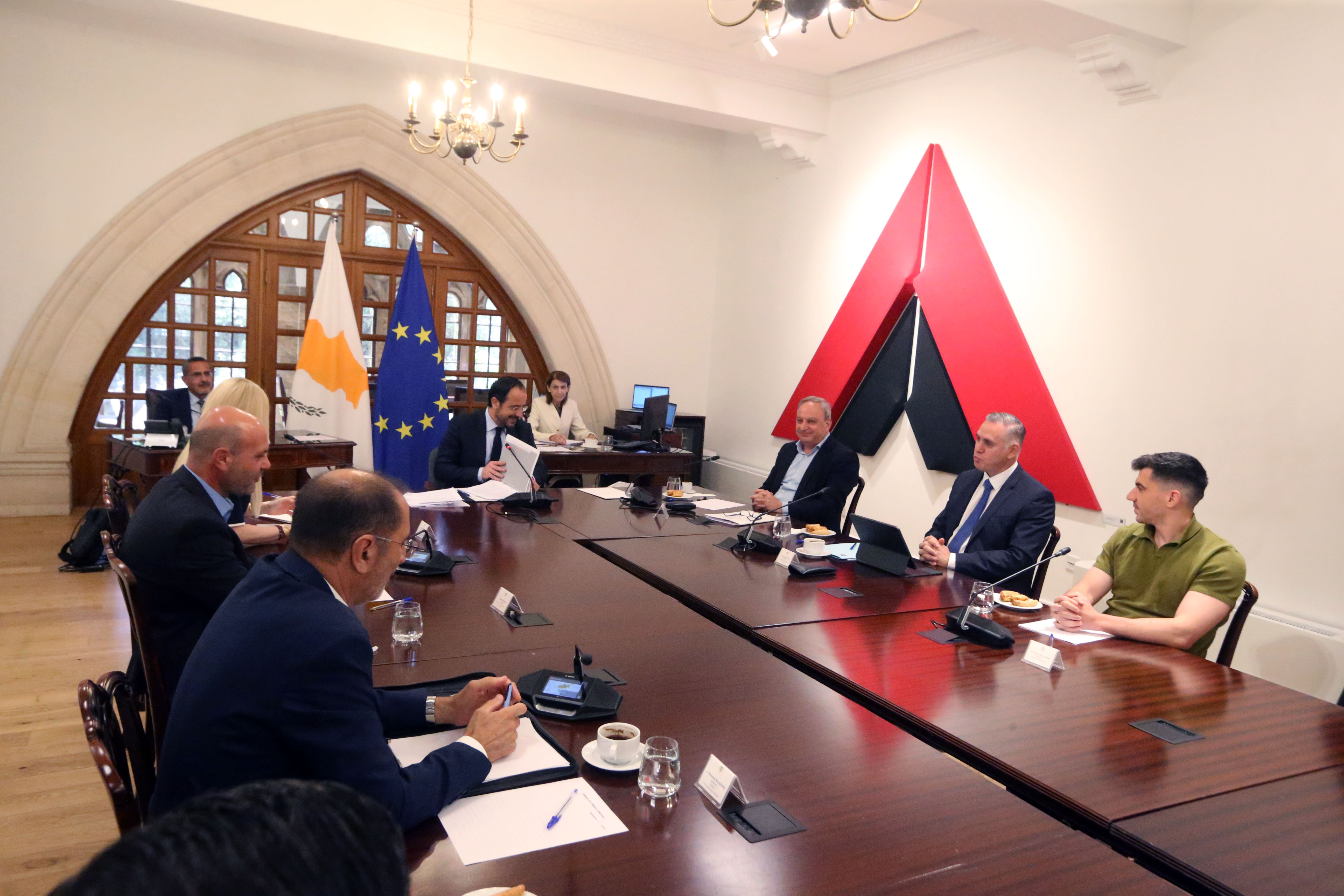
Another National Council meeting was held on Monday so that President Nikos Christodoulides could inform the leaders of the parliamentary parties about the latest peace initiative undertaken by the UN. It is a streamlined national council as it now consists of just six leaders, two of whom – Odysseas Michaelides and Fidias Panayiotou – were attending for the first time.
There were more representatives of the government than actual party leaders at Monday’s meeting which was attended by three spokesmen, the foreign minister, the Greek Cypriot negotiator, the head of the secret service Kyp and head of the president’s diplomatic office. Why these officials were needed considering we are still nowhere near a resumption of talks, nobody knows.
Perhaps it was the president’s way of giving some credibility to a body that ceased being taken seriously by most of the population, including many politicians, a long time ago. There do not even appear to be any disagreements among the participants, nowadays, which would indicate that there is not much debate taking place, primarily because expectations of the latest UN initiative are low.
The national council does produce platitudes, the most common being the need for unity, which has never really existed. After Monday’s meeting spokesman Konstantinos Letymbiotis said, “times could be critical and what is dictated by the critical times is unity.” He explained that unity “does not necessarily mean sharing the same views, but means responsibility, coordination, shared goals, shared perspectives, shared assessment of the challenges….”
What unity and shared goals could there be with Elam, which has made no secret of its opposition to a federal settlement, a point repeated by its leader Christos Christou after Monday’s meeting? Diko, although a government backer, has always had major reservations about a bizonal, bicommunal federation.
It was bizarre that the leader of Disy, Annita Demetriou, also called for unity. What was needed, she said, echoing Letymbiotis, “was neither exaggeration nor complacency, but unity, solidarity and hard work.” The “national interest is above parties or other agendas,” she added competing with Letymbiotis on the platitudes front. She did not explain what the national interest actually is because that might have exposed the disagreement about its definition and exposed the hollowness of the unity rhetoric.
The national council has long been an integral part of the Cyprus problem, even though its contribution has rarely been constructive. In fact, if Christodoulides is genuinely interested in pursuing a settlement, he should not call another national council meeting. He could brief each party leader about what is happening in the talks, occasionally and separately, by phone. The national council meeting could be held when he is in range of an agreement – if that ever happened – and will require broad political support. This is the only time that a degree of unity, practical; rather than theoretical, will be needed.





Click here to change your cookie preferences