
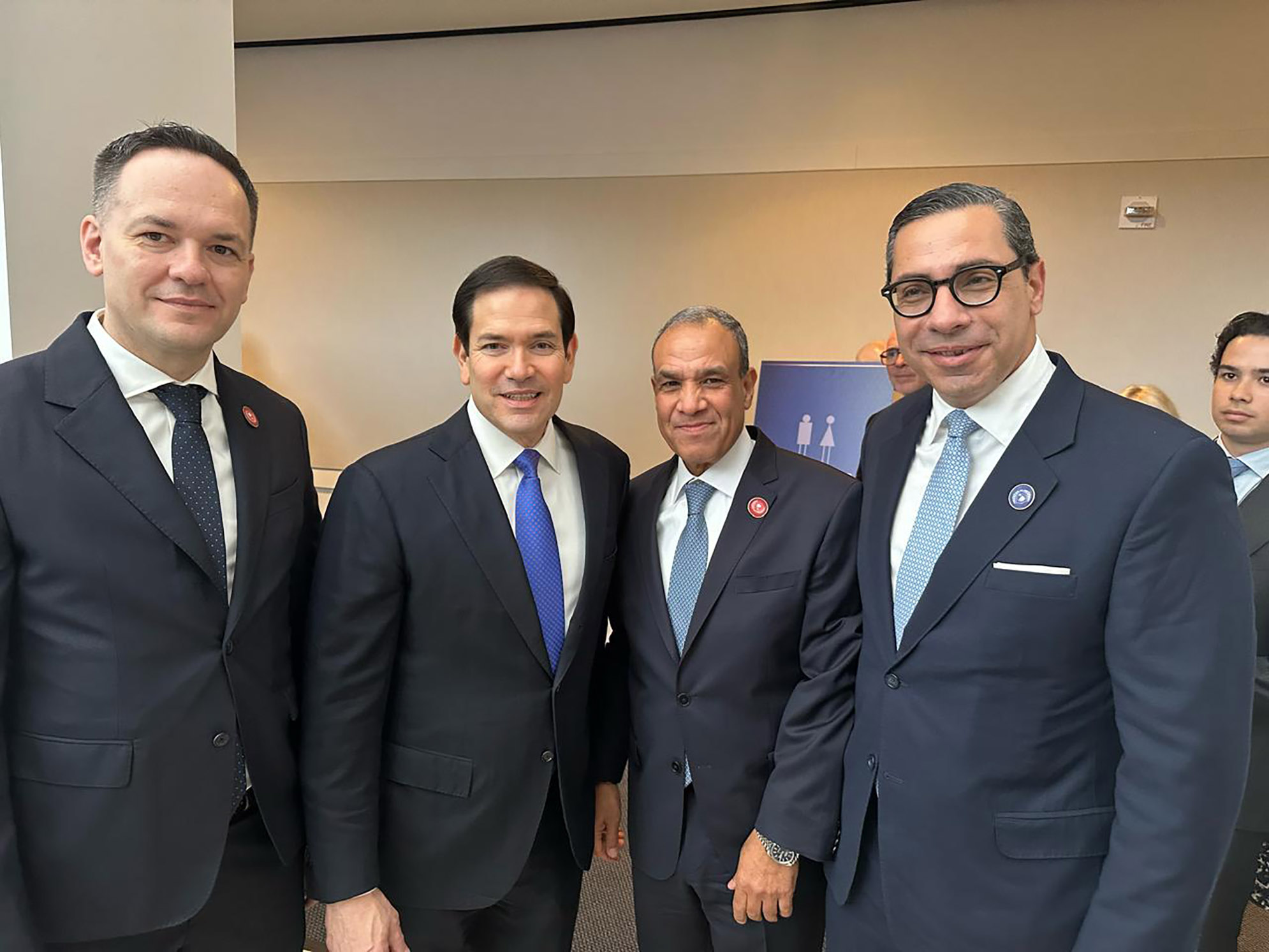
The Gaza Board of Peace will hold a two-day summit in Cyprus on June 30 and July 1, Cypriot government spokesman Konstantinos Letymbiotis confirmed on Wednesday, though he was keen to stress that the government remains on the board’s periphery.
“The Republic of Cyprus is neither an organiser, nor a co-organiser of the event, of course,” he said, while also saying that the board’s decision to convene in Cyprus constitutes evidence of the importance of Cyprus on the international stage.
“The fact that this board’s administrative arm … has chosen our country, a country which has proven in practice how beneficial it is and how many initiatives it has undertaken, as well as the efficiency of those initiatives in terms of humanitarian support for the civilian population in Gaza, has its own high importance,” he said.
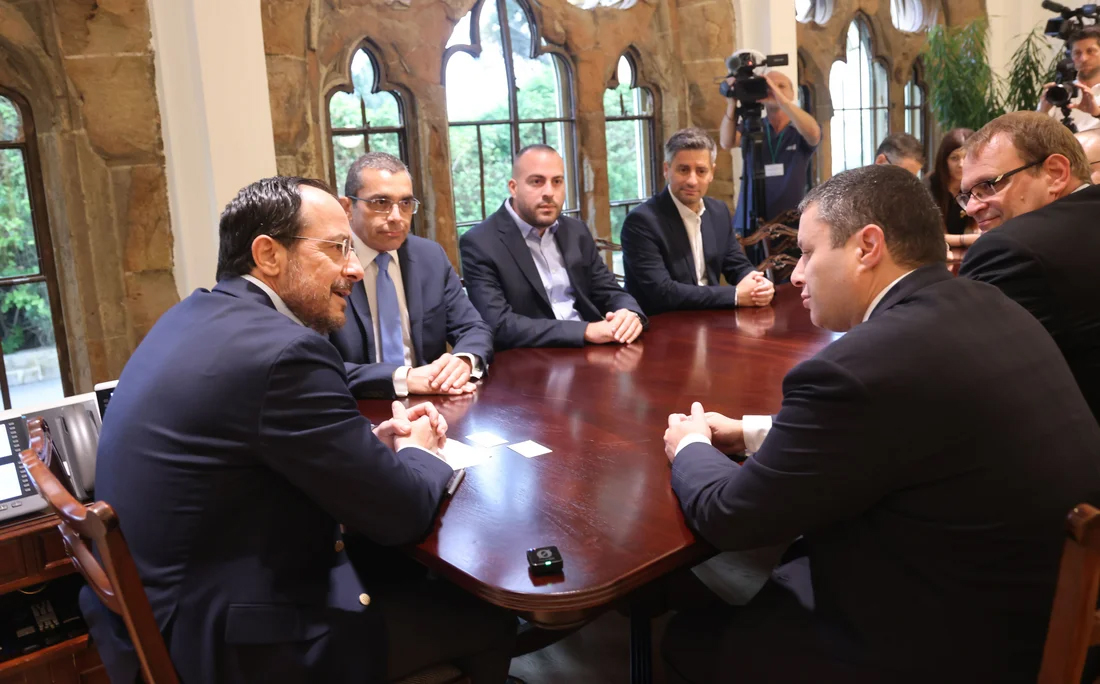
Asked who may participate in the summit, he said that “officials” will be there, some of whom have “already requested meetings” with Cypriot Foreign Minister Constantinos Kombos while in Cyprus.
On the matter of Trump’s Gaza peace plan, he said that “we, as the Republic of Cyprus, not only welcomed [it], but supported [it] from the very beginning”.
“I remind you that [President Nikos Christodoulides] participated in the first conference announcing this plan and had submitted a proposal of eight specific points based on [United States] President [Donald] Trump’s plan for the faster implementation of the reconstruction of Gaza,” he said.
While the exact composition of the summit has not yet been published, Israeli newspaper the Times of Israel reported that the gathering in Cyprus will include representatives from the Board of Peace’s executive board, the Palestinian-run committee for the administration of Gaza, and the office of Nikolay Mladenov, the Bulgarian diplomat appointed by Trump as his high representative for Gaza.
High-profile members of the executive board include US Secretary of State Marco Rubio, former British prime minister Sir Tony Blair, and World Bank group president Ajay Banga.
Cyprus was one of dozens of countries invited to join the Board of Peace, with Kombos saying on the day of the board’s inauguration that the island was waiting for the European Union to form a common position on the matter before taking a decision.
EU members Bulgaria and Hungary did join the board as full members, while Cyprus, in line with the EU’s broad position, in the end decided to attend meetings as an observer.
Since the formation of the Board of Peace in January and the opening of the Rafah border crossing in February, little has happened in the way of progress, though there have been multiple recorded incidences of Israeli Defence Forces soldiers killing Palestinian civilians in the intervening months.
On Tuesday, the Times of Israel reported that an “Arab diplomat” from “one of the mediating countries” and a “Palestinian official familiar with the matter” had said that the meeting in Cyprus will constitute a “reset”, which will allow stakeholders to “recalibrate” and “get on the same page”.
However, it also reported that some members of the Board of Peace had “expressed discomfort with the optics of holding a meeting at a Cyprus resort amid the ongoing suffering in Gaza”, and that as such, “a decision was accordingly made to scale back the guest list”.
The Board of Peace formed the effective second phase of Trump’s plan for the future of Gaza, with the first phase being enacted following the convening of an international summit in the Egyptian city of Sharm El-Sheikh in October last year.
Christodoulides returned from that summit speaking of “six initiatives the Republic of Cyprus can undertake” based on Trump’s then 20-point plan for Gaza’s future.
Shortly afterwards, presidential press office director Victor Papadopoulos had said that Cyprus would seek to offer “operational support” for international efforts to ensure peace in and reconstruct Gaza.
The government, he said, had “proposed an applied contribution model which has already been codified in six operational pillars, building on the successful implementation of the Amalthea plan,” Cyprus’ humanitarian aid corridor to the strip.
On this point, he highlighted the fact that the Amalthea plan “operates through a bilateral security mechanism and in cooperation with the United Arab Emirates and the United Nations office for project services (Unops)”.
With the Board of Peace having been formed in January, European Affairs Deputy Minister Marilena Raouna had in April demanded that progress be made, warning that a lack of progress may allow Palestinian insurgent group Hamas to “consolidate control” of the strip.
“There needs to be progress on the implementation of the Gaza peace plan, in the absence of which there is a risk of undermining the fragile political momentum, with all that entails, including providing Hamas with the opportunity to consolidate control,” she said at a European Parliament plenary session.

Click here to change your cookie preferences