
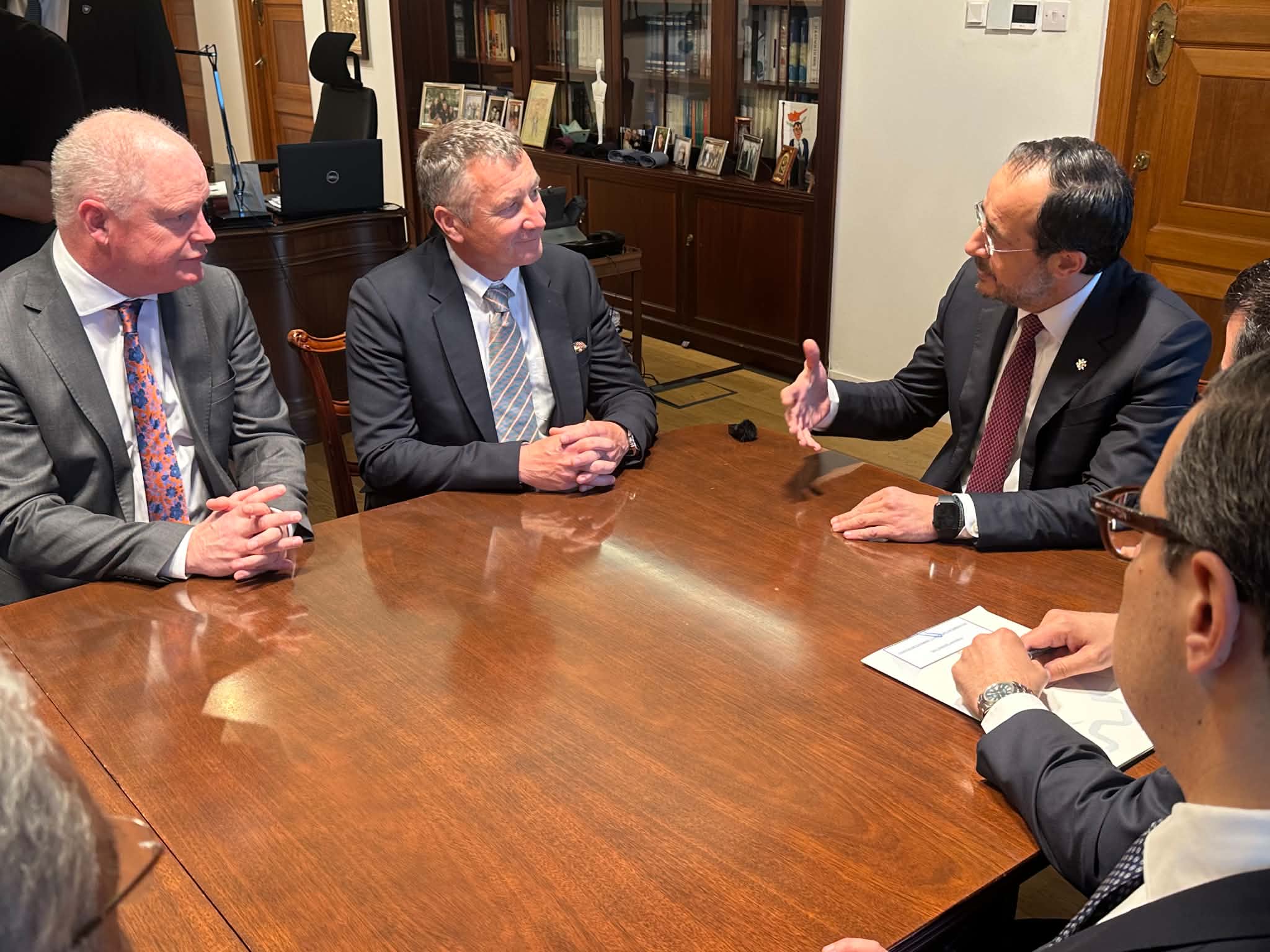
Two gas fields located in Cyprus exclusive economic zone (EEZ) were on Tuesday declared “marketable” by multinational energy corporations ExxonMobil and QatarEnergy.
Both fields, the ‘Pegasus’ field and the ‘Glaucus’ field, are located in Block 10 of Cyprus’ EEZ, with ExxonMobil and QatarEnergy having already jointly acquired the rights to the natural gas in that block.
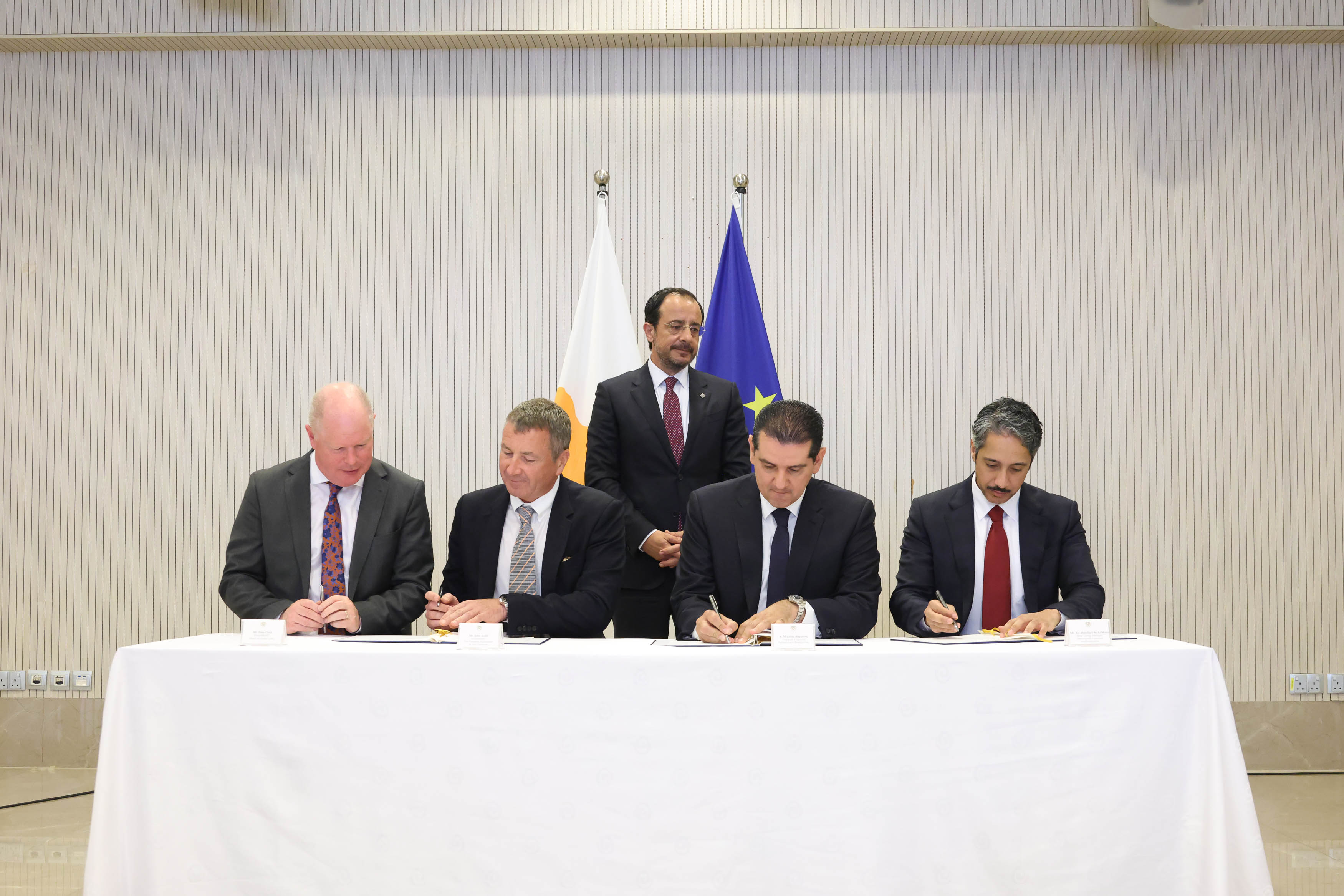
The fields’ status as “marketable” was the subject of a joint declaration signed by executives from both corporations and the Cypriot government at the presidential palace, with President Nikos Christodoulides saying that the government was “excited” about the declarations.
“It is clear evidence and a vote of confidence in the prospects of Cyprus’ EEZ, but also in the prospects of the eastern Mediterranean to develop as a potential energy corridor for Europe. We look forward to even more positive announcements in the near future,” he said.
On this front, he said that “we are discussing more blocks in detail” and that to this end, “I hope we will soon be in a position to make announcements”.
“For us, the fact that ExxonMobil and QatarEnergy are active in our EEZ is one of the most important developments, and I must publicly commend [their] work, professionalism, [and] leadership in the energy sector, and we are very happy and excited to be working with [them],” he said.
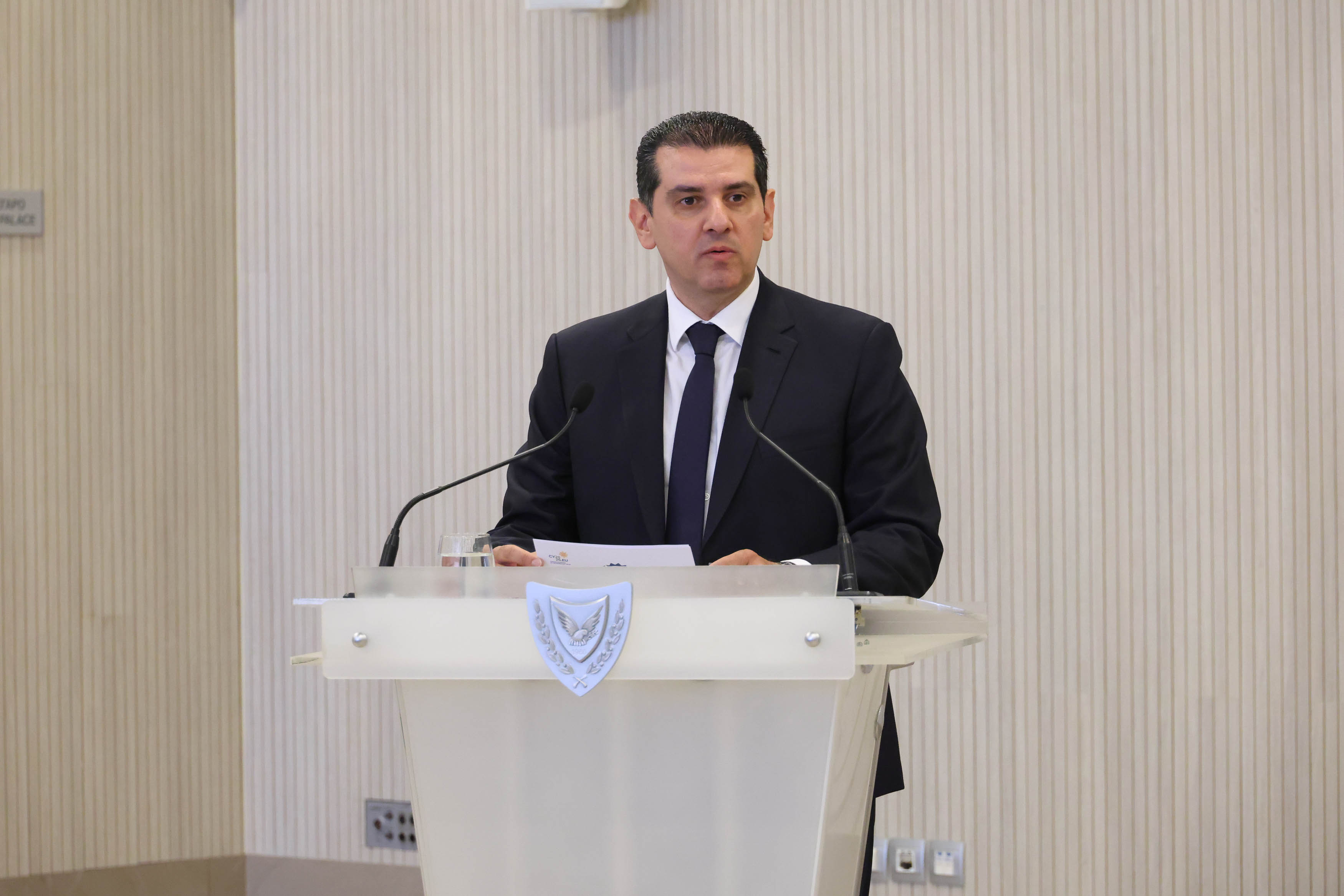
ExxonMobil’s vice president for global exploration John Ardill, meanwhile, described the signing of Tuesday’s joint declaration as “the culmination of eight years of work”, following on from “the award of the blocks in 2017, the discovery in 2019, the second discovery last year”.
“So, with all of that under our belt, we now reach the second milestone. It is very important to recognise the success of the exploration and this milestone of declaring marketability. This really takes us from energy exploration to energy development, which is a fundamentally different step, and we have the whole team here to help make that happen,” he said.
He added that the corporation “has a presence” in Cyprus, Egypt, and Greece, and is “drilling in all three countries”, saying that with this in mind, “looking to the near future, we will be drilling at the end of this year as part of the ‘Pegasus’ appraisal programme”.
“We will expand the extent of the exploration areas to include Block 4 and Block 10A and we will continue to look for additional resources,” he said, with Block 4 located at the southwestern extremity of Cyprus’ EEZ, and Block 10A located south of Block 10, towards Egypt.
On Tuesday’s signing, he said that “we are very proud of this milestone, as well as our very strong partnership with QatarEnergy”.
“We discovered the ‘Glaucus’ deposit in 2019, and ‘Pegasus’ last year, and we are carrying out exploratory drilling to understand the subsoil, which now allows us to move with sufficient confidence towards declaring marketability. This is an important milestone,” he said.
He added that Tuesday’s declaration “puts us on a path, with some additional drilling at the end of this year, to gather the latest information”.
“Then, we will move into what is called the initial engineering and design phase, where we will design the facility, and the next step is the final investment decision, which we anticipate will be made in 2029,” he said.
Following on from this, he said, the matter now finds itself in “a critical stage for carrying out the subsoil modelling, the engineering work, and then making the investment decision and constructing the facility”.
He said that with all this in the metaphorical pipeline, he expects for production of natural gas from the field to be underway in 2033.
“We are committed to 2033, but we hope to move faster,” he said.
Asked whether ExxonMobil is considering constructing an onshore liquefaction facility in Cyprus or utilising existing infrastructure in Egypt, he said that the corporation is “currently looking at all the different ways” in which the deposit could be extracted.
“We are also considering different proposals which include a facility in Cyprus with a connecting pipeline to Egypt. There are also existing liquefied natural gas facilities … which we can utilise. An alternative proposal is floating LNG, where all the processes are carried out on a floating vessel,” he said.
However, he added, the idea of a floating vessel is “usually more demanding in terms of cost”.
On this front, he said that “if you have very large resources, you can build onshore LNG plants, as they currently have in Qatar, but that requires larger resources than we have identified here to date”.
“So, the prevailing idea is probably a pipeline connection to Egypt, given the infrastructure and everything you have seen between the Cypriot and Egyptian governments, which gives us great confidence that there is a good level of coordination between the two governments,” he said.
In this, he was referring to existing agreements signed by the Cypriot and Egyptian governments, as well as the consortium comprising French multinational corporation Total and Italian energy company Eni, over Block 6 of Cyprus’ EEZ, which is located immediately to the north of Block 10.
That agreement will eventually see Eni use its own infrastructure to take the Cypriot natural gas to the Segas LNG terminal in the Egyptian port city of Damietta, and export the gas to Europe and, if required, elsewhere from there.
Ardill was on Tuesday asked when he believes drilling will begin in Block 4 and Block 10A, and said in response that the “first step” will be to “reprocess some existing seismic data to improve the picture”.
However, he said, “we still have work to do before we are ready to proceed with drilling in these blocks”.




Click here to change your cookie preferences