
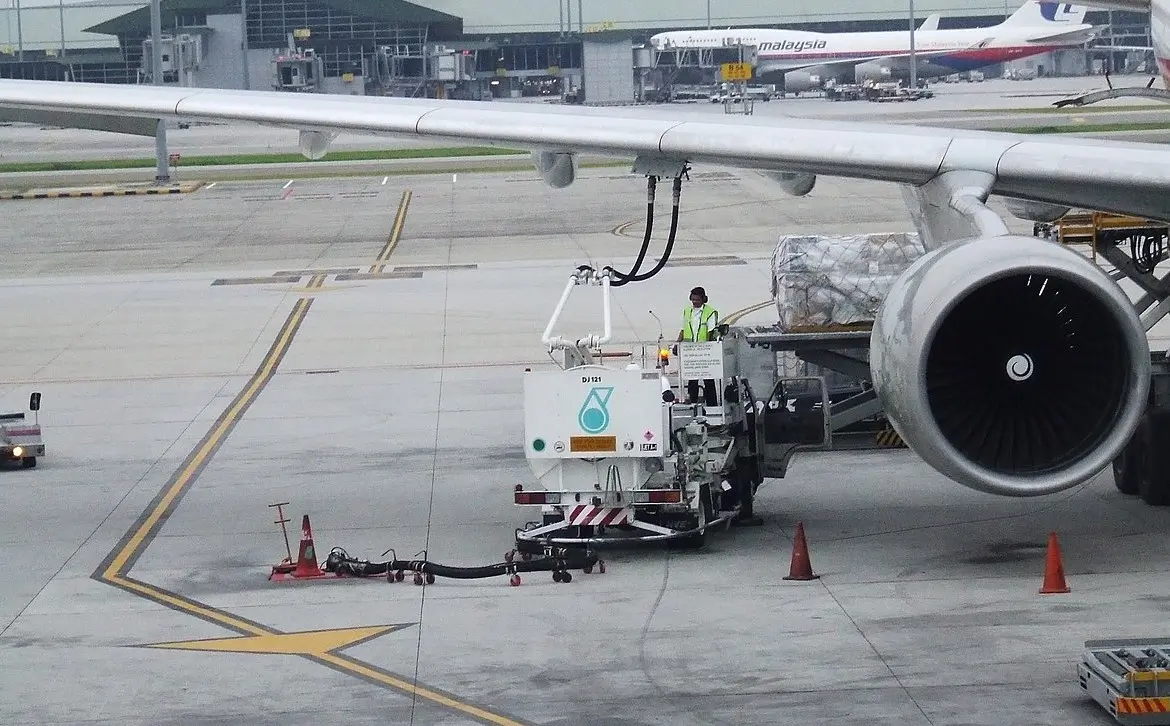
Global air cargo demand rose 6 per cent year-on-year in May, supported by stronger trade and manufacturing activity, although disruption linked to the war in the Middle East continued to weigh heavily on carriers in the region, according to the International Air Transport Association (IATA).
Total demand, measured in cargo tonne-kilometres (CTK), increased by 6 per cent compared with May 2025, while international operations rose by 6.5 per cent. Capacity, measured in available cargo tonne-kilometres (ACTK), grew at a slower pace of 1.9 per cent, or 2.8 per cent for international operations.
The figures point to a stronger month for air freight, with demand growth outpacing capacity and helping lift the global cargo load factor by 1.8 percentage points to 46.3 per cent.
IATA director general Willie Walsh said air cargo demand had grown “6 per cent year-on-year in May”, with Africa, Asia-Pacific, Europe and North America all reporting above-trend growth.
However, he said Middle East carriers recorded a combined contraction of 8.9 per cent year-on-year, as war-related effects continued to disrupt parts of the industry.
“May’s strong performance coupled with macro-economic factors give cautious optimism for air cargo’s prospects over the remainder of the year,” Walsh said, adding that trade and manufacturing output were both growing, while airlines had adjusted operations to match shifting demand patterns and supply chain needs.
He also said yield growth and higher load factors were helping carriers absorb higher fuel costs, although he cautioned that “it’s still a tough year”, particularly as Middle East uncertainty continued to affect parts of the sector.
The strongest regional performance came from Africa, where airlines recorded a 13.3 per cent increase in air cargo demand in May, while capacity rose by just 1.3 per cent. This pushed the region’s cargo load factor up by 5 percentage points to 46.9 per cent.
North American carriers also posted a strong month, with demand rising 10.5 per cent year-on-year and capacity increasing by 2.4 per cent. The region’s cargo load factor climbed by 3 percentage points to 41 per cent.
In Asia-Pacific, the world’s largest air cargo region by market share, demand rose 8 per cent, while capacity increased by 5.1 per cent. The region accounted for 35.8 per cent of global industry CTKs in 2025.
European carriers saw demand increase by 6.7 per cent in May, with capacity up 2.2 per cent. Europe also recorded the highest regional cargo load factor, at 53.9 per cent, after an annual increase of 2.3 percentage points.
By contrast, Middle East carriers recorded the weakest performance, with demand falling 8.9 per cent and capacity down 9.2 per cent. The region’s cargo load factor remained broadly stable, rising by 0.2 percentage points to 46.5 per cent.
Latin American and Caribbean carriers reported more modest growth, with demand up 1.9 per cent and capacity rising 5.6 per cent, pushing the cargo load factor down by 1.2 percentage points to 34.8 per cent.
IATA said the wider operating environment remained mixed. Global trade rose 5 per cent year-on-year, marking 25 consecutive months of annual growth, while manufacturing activity remained supportive.
The Global Manufacturing Output Purchasing Managers’ Index rose to 53.5 in May, remaining above the 50 mark that separates expansion from contraction. However, the New Export Orders Index stayed below that threshold, at 49.6.
Fuel also remained a pressure point. Jet fuel prices fell by 16.3 per cent month-on-month in May, but were still 93.5 per cent higher than a year earlier.
Performance also varied sharply across major trade lanes. The Asia-North America corridor led growth, with demand up 19.9 per cent, marking a fourth consecutive month of expansion. Africa-Asia rose 14.1 per cent, extending its growth streak to 11 months.
The Europe-Asia route grew by 10 per cent, continuing a run of 39 consecutive months of expansion, while intra-European air cargo increased by 11.5 per cent.
However, Gulf-linked corridors remained under severe pressure. Demand on the Europe-Middle East trade lane fell 19.8 per cent, while Middle East-Asia declined 16.5 per cent, with both routes recording a third consecutive month of contraction.
The Europe-North America corridor was broadly flat, rising by just 0.4 per cent, while intra-Asia traffic increased by 5.5 per cent, extending its growth streak to 31 months.





Click here to change your cookie preferences