
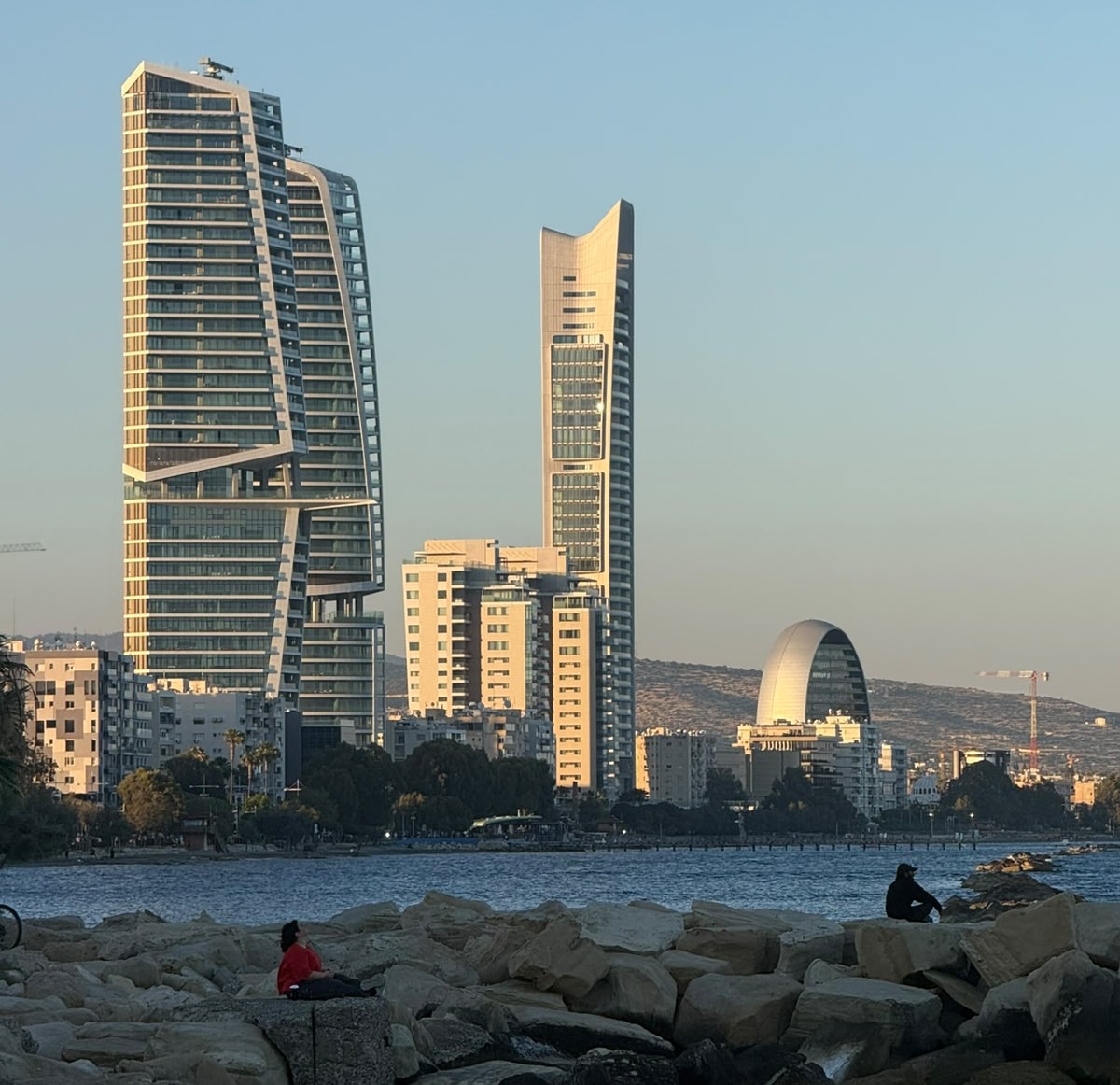
Coordinated efforts to solve problems facing the wider urban area of Limassol were at the centre of a meeting at the Limassol municipal council and district members of parliament on Friday.
During the meeting, the attendees raised broader and specific problems faced by the municipalities under the leadership of Limassol mayor Yiannis Armeftis, Amathus mayor Kyriakos Xydias, Kourion mayor Pantelis Georgiou and Polemidia mayor Andros Theodorou.
Speaking at the meeting, Limassol mayor Yiannis Armeftis stressed that Limassol was the city with the greatest development potential in Cyprus, which he said continued to generate “wealth, jobs and host significant investments” which contributed “decisively” to the country’s economy, while at the same time facing daily challenges that required decision-making, political will and the close cooperation of all institutions.
“For this reason, we consider it particularly important to have continuous and institutionalised communication with all of you. Many of the issues facing Limassol pass through the House of Representatives, through the parliamentary committees, parliamentary oversight, legislative initiatives and the promotion of decisions that can accelerate projects and reforms,” he said.
Armeftis cited the city’s priorities, saying these included the reform of the local government itself, the ongoing traffic problem, and the need to increase state funding and expressed opposition to what he described as the state’s “urge to increase taxes”.
“The implementation of the Sustainable Urban Mobility Plan, the strengthening of public transport, bus lanes, transfer stations, cycling infrastructure and green routes are no longer options, but a necessity,” he said.
He emphasised the need for a speedy continuation with mayor state infrastructure projects including the northern bypass from Ypsonas to Yermasoyia, the connection of the coastal road with the Franklin Roosevelt street and highlighted the need to create affordable housing and the development of the western part of the city.
“[These] are projects that will determine the functioning of the city for the coming decades,” he said.
Amathus mayor Kyriakos Xydias described the meeting as the foundation of a joint effort to address the city’s problems and provide solutions to improve the quality of life for residents.
Denouncing the lack of administrative and financial autonomy of the local municipalities, he spoke of attempts to “strangle” the local government, saying that the local government reform had shifted responsibilities whilst failing to transfer resources.
“Those who really want to modernise a state must give the state’s best ally the ability to help it and not treat it in the worst way,” he said.
Xydias demanded that city planning be transferred to the responsibility of the municipality, saying the latter could “no longer tolerate each government department being imposed on us and millions being lost in failures”.
Mayor of Kourion, Pantelis Georgiou, made special reference to the issue of the British bases in Akrotiri. He announced that the municipality had decided to take legal action, which he said would “open a new chapter for Cyprus”.
“We have experienced processes and seen confrontations that have clearly proven that no one cares about the safety of citizens. A system that has a huge area paralysed and administratively cannot respond,” he said, referring to the drone attack that occurred in the region during the US’ war on Iran in March.
The mayor of Polemidia, Andros Theodorou, referred to the problems faced by the municipalities after the local government reform, as well as the planning of his municipality, and called on MPs to contribute constructively.
“You can support the claims of the municipalities to the competent ministries, promote the necessary legislative regulations, contribute to the acceleration of procedures and claim more state and European resources for projects that have a real impact on society,” he said.
Limassol, he emphasised, did not need “fragmented solutions” but joint planning, cooperation and consistency.
“What we need is a strong alliance between local government, parliament and government, so that we can turn challenges into opportunities and create a more modern, more humane and more sustainable Limassol,” he said.
Limassol Chamber of Commerce and Industry president, Andreas Tsouloftas, said that there was “a feeling that Limassol is the most neglected district in Cyprus”, highlighting that of the 2026 budget amounting to €1.1 billion, only €28 million had been allocated to the city.
“If we take into account the city’s contribution to the country’s GDP, which is close to 50 per cent, we should have received €500 million; and if we take into account the city’s population, Limassol should have received €300 million,” he said.
Tsouloftas emphasised that the city had succeeded in attracting major companies in the tech sector which currently accounted for 16 per cent of Cyprus’ GDP, warning that if the conditions that brought the companies to Limassol were not maintained, they might reconsider their location, adding that two tech companies had already left to Poland and Romania.
“If they start to feel that they are living in a city that is not functional, then they will have second thoughts,” he said.
Among other things, Tsouloftas addressed the issue of establishing a technology park, lamenting the fact that progress has been stalled for 24 years, and urged the government and relevant ministries to set deadlines for the projects announced during President Nikos Christodoulides’ visit in the previous year.





Click here to change your cookie preferences