
THE WAY THINGS ARE
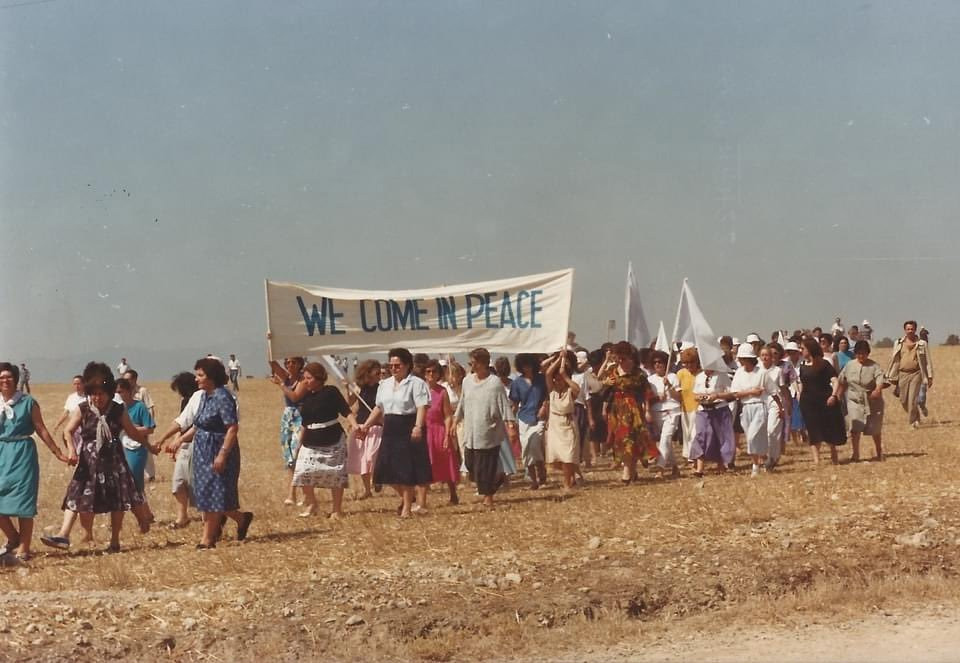
A blue and white bus grumbled its heavy body through a warm spring Sunday in March 1989, blessed as our springs are with fields as green as the skin of an avocado. Bursts of yellow daisies raised bright heads and bold red poppies waved fragile petals in the soft breeze. Unremarkable fruit trees gained new-beauty status with a froth of delicate blossoms shaken free, floating down to the fertile earth like the softest of snowflakes. Deep orange marigolds waggled their heads in gardens as we passed, glorious nature everywhere, renewing its timeless cycle as a bus filled with women trying to outrun detection passed by, anticipating with mixed feelings, their approaching target.
‘I’m from Lymbia!’ the road sweeper told me. He battles high winds that leave cascades of dry leaves from untrimmed trees; undefeatable dust; humid heat and bitter cold. Lymbia! The word brought memories. It was the most successful of the Women Walk Home peace protest endeavours, and often, the role of foreign women with ties to Cyprus who joined the Walks, is overlooked.
Four thousand women assembled at meeting points on the island, those of us who had walked before under the WWH banner, knew what to bring, what to wear. I wrote later, ‘We came back in a bus hollowed out with a silent sense of longing for Cyprus as it used to be, sadness for what it now was.’
The realistic ones knew the problem would not be easily solved. None of us had envisioned it dragging on for 15 years, let alone imagine another half century of stagnation. Perhaps because my son was in the army, a young Turkish lad stayed with me. As we scrambled to the top of the hill surprising soldiers stationed at Lymbia church, he kept repeating, ‘Lady, please go back.’ I thought, his mother worries about her son’s safety when unease erupts, as I worry about mine when the Cyprus army stands on alert.
Everybody who went through and were affected by the coup and the invasion wanted return to normality. The freedom to enjoy the whole island was gone, people had suffered, died, lost everything, especially loved ones. Older now, wiser with time, knowing my own island went through murder and mayhem in an effort to unite Ireland at the cost of innocent lives there and in the UK, we should never allow our innocent future generations on both sides here to endure the same 1974 fate.
Cyprus Mail commentator Loukis Scaliotis wrote earlier in June of Armenia seeking a way forward with Azerbaijan and Turkey, ‘Whatever the motivation, Pashinyan has had to balance his country’s aspirations with the realities of geography and power politics …’ Cyprus could do well to follow this practical example.
A second Cyprus Mail commentator, Dina-Perla Portnaar in Paphos wrote of unexpected problems in her new home. She’s from the Netherlands. Ask Cypriot students who study there about it: ‘A well-run, well-organised, clean country.’ ‘It has great youth support programmes.’ ‘I’m thinking of staying here to work.’
Dina is discovering as many newcomers do, that below our wonderful old historical, friendly face and natural loveliness, our new visage of tech advancement and enlarging political friendships hides an old body of ignored ailments the government needs to systematically fix as wealth surges.
Like Cyprus, Ireland has hemorrhaged young brains due to procrastination over similar problems. Not enough social/affordable housing for young people, obscene rents, prevailing poverty thresholds despite wealth improvement, old ways in need of new assessment. A stable economy, working for the common good not just for some sectors, creates a satisfied populace and acts as a buffer against outside interference that dissent and discontent readily accommodate.




Click here to change your cookie preferences