
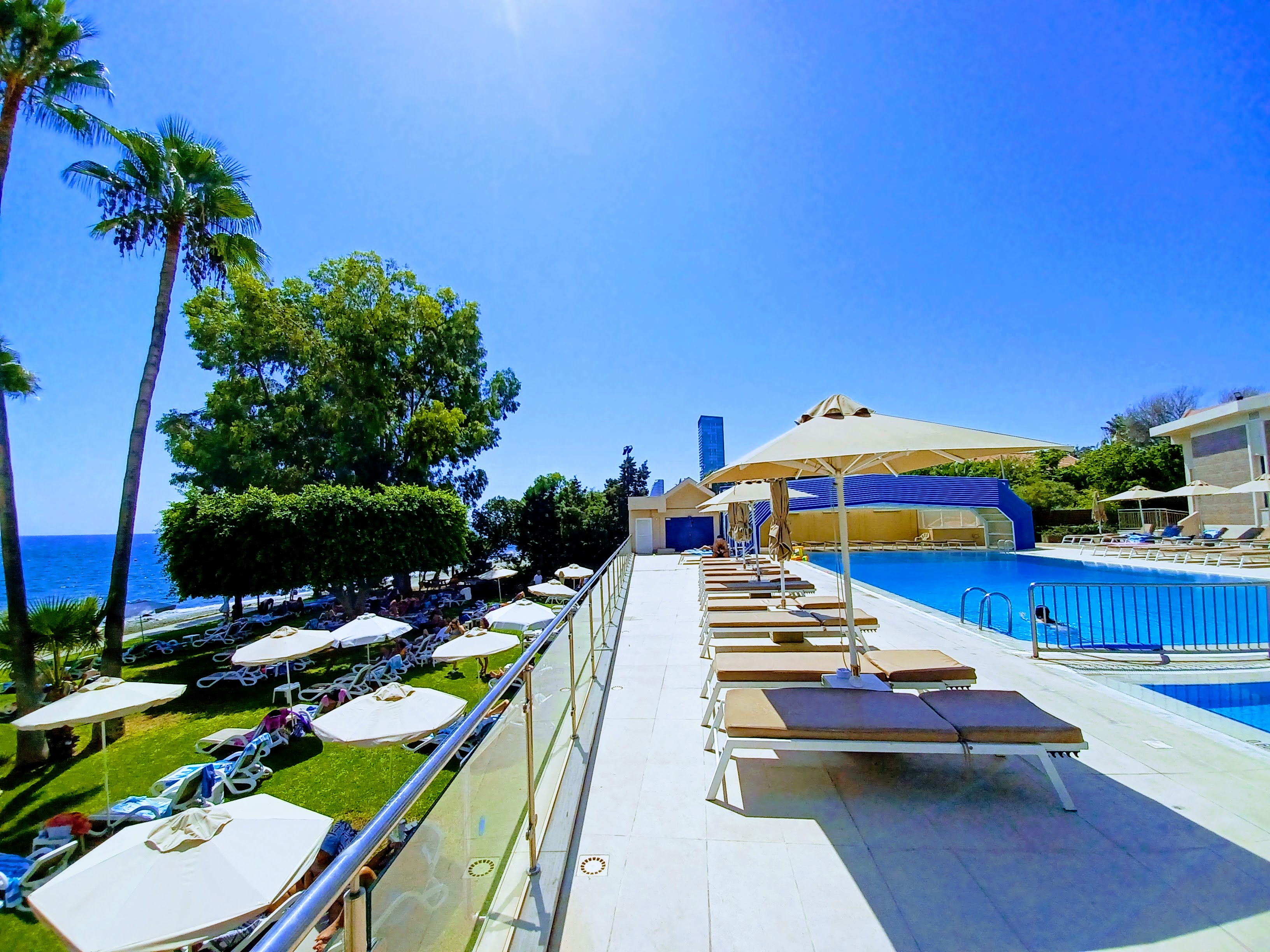
Cyprus sees nearly 3 million overnight stays in August
Cyprus’ tourism industry remained heavily concentrated in the summer months during 2025, with Eurostat figures showing that August and July were by far the busiest periods for overnight stays in tourist accommodation across the island.
According to the European statistical office, August and July were the two busiest months in every European Union member state, reflecting the combined influence of weather conditions, geography and school holiday periods.
In Cyprus, tourist accommodation establishments recorded 2,953,148 overnight stays in August, making it the busiest month of the year.
This was followed by 2,627,725 overnight stays in July, meaning the two peak summer months together generated 5,580,873 overnight stays.
Based on the full-year total of 18,704,653 overnight stays, July and August accounted for approximately 29.8 per cent of all nights spent in tourist accommodation in Cyprus during 2025.
Although this was slightly below the European Union average of 31.1 per cent, it nevertheless highlights the importance of the summer season to Cyprus’ tourism industry.
The figures also show that tourism activity remained exceptionally strong beyond the peak months.
September recorded 2,484,732 overnight stays, while October followed closely with 2,382,970, demonstrating that Cyprus continued attracting large numbers of visitors well into the autumn.
Activity also remained robust during late spring, with 2,251,377 overnight stays recorded in June and 1,992,850 in May.
By comparison, the winter months attracted significantly fewer visitors.
January was the quietest month of the year, with 325,400 overnight stays, followed by 381,100 in February and 504,843 in December.
March saw activity increase to 661,549 overnight stays, before rising sharply to 1,279,023 in April, reflecting the start of the main tourism season.
Overall, August generated just over nine times as many overnight stays as January, illustrating the pronounced seasonal nature of Cyprus’ tourism sector, although the gap was considerably smaller than in some of the European Union’s most seasonal destinations.
Across the EU, August recorded 3.6 times more overnight stays than January, making it the busiest month of 2025 by a considerable margin.
Eurostat found that Croatia recorded the strongest seasonality, with 54.5 per cent of all overnight stays taking place during July and August.
It was followed by Bulgaria, where the two summer months accounted for 43.4 per cent of annual overnight stays, and Greece with 41.6 per cent.
Croatia also recorded the widest gap between peak and low seasons, with overnight stays in August reaching 41.1 times the level recorded in January.
In Greece, August generated 20.5 times more overnight stays than January, underlining the country’s strong dependence on peak summer tourism.
At the opposite end of the spectrum, Malta recorded the least seasonal tourism pattern in the EU, with July and August accounting for 21.9 per cent of annual overnight stays.
It was followed by Germany, where the two busiest months represented 24.0 per cent of the yearly total, and Finland with 24.1 per cent.
The figures suggest that while Cyprus remains strongly dependent on the summer season, its tourism demand is spread more evenly across the shoulder months than in several competing Mediterranean destinations, with high visitor numbers continuing through September and October.





Click here to change your cookie preferences