
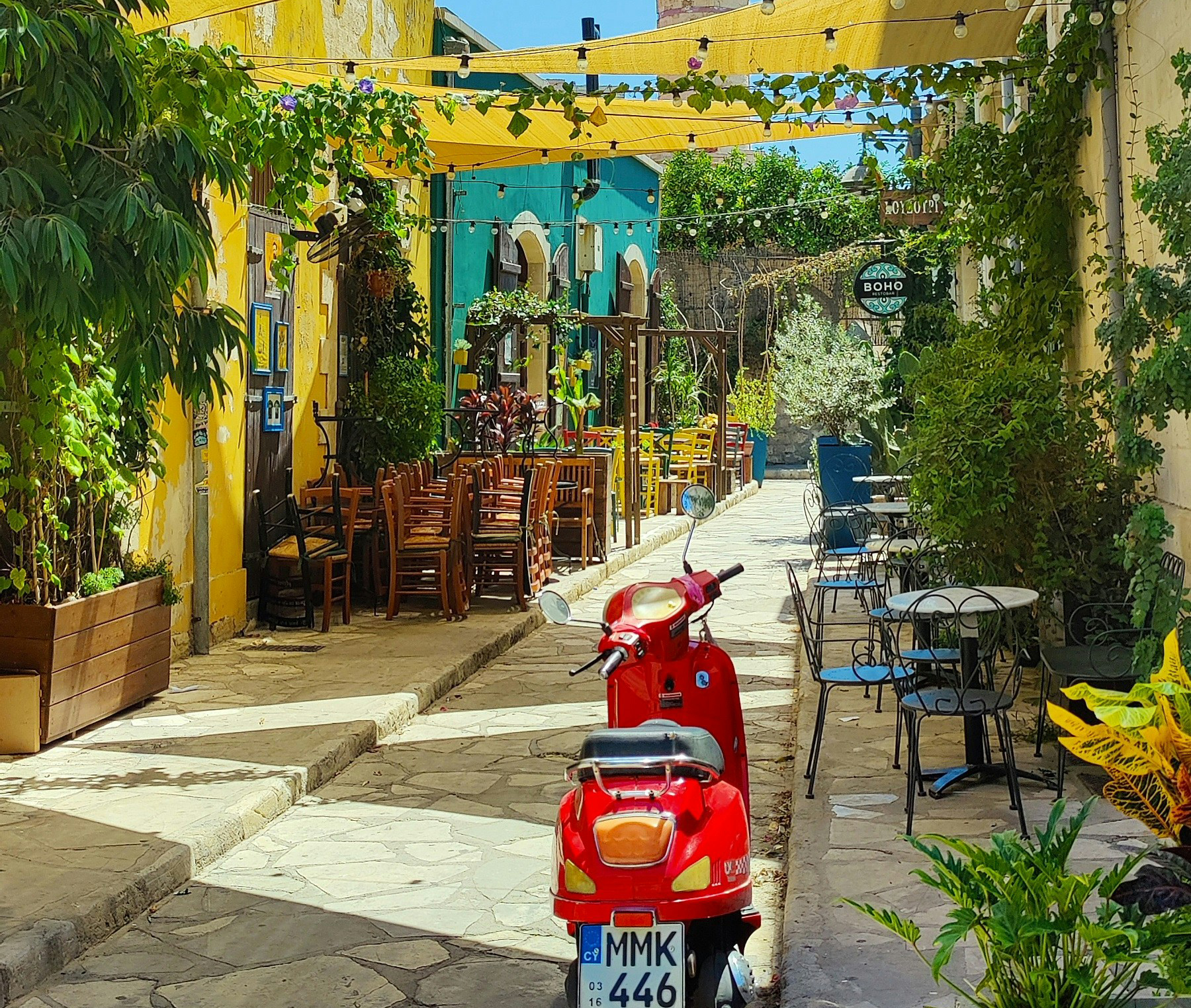
From colourful courtyards to grey apartments, residential areas look different than they used to
Not so long ago, the people of Cyprus lived surrounded by colour. Balconies overflowing with plants, shutters painted in bright shades, tiled courtyards, and homes decorated with personal touches all contributed to the island’s unique look.
Today, however, a walk through most recently constructed buildings will paint a very different picture. The use of neutral colour palettes, minimalist lines and plain apartment buildings is becoming common practice, reflecting an architectural style that has become noticeably more reserved.
Cyprus is not the only one experiencing these changes. Researchers at the Science Museum Group in the United Kingdom have studied thousands of everyday objects and detected a trend of increasing prevalence of neutral colours – grey, black and white – dubbed the ‘greying’ of modern life. According to researchers, the trend toward achromatic colour schemes has increased steadily over time.
For architect Christiana Karagiorgi, the developments taking place in Cyprus can be linked to other social and economic developments. “Cyprus has undergone a remarkably rapid process of development in recent decades,” she says.
Over that time, she explains, the island transformed from a predominantly rural society to a more urbanised one, and architectural styles were affected by trends and patterns of development on an international level.
“The architectural language has become increasingly international, reflecting global patterns of development rather than local characteristics,” she says. “As a result, architectural expression has become detached from local references.”
Part of the shift is linked to the increasing commercialisation of minimalist design. “Minimalism has been commercialised on a great scale in Cyprus, as well as globally,” says Karagiorgi.
Architecture, she explains is increasingly driven by the market-based mechanism, which dictates that certain styles are easier to market. The use of neutral pallets and straight lines has created what she calls “commercialised minimalism,” that is readily accepted by consumers.
“The norm, the commonly accepted, corresponds to a safe investment in architecture for the masses,” she says. “Anything more experimental or innovative in terms of aesthetics and architectural language is considered a financial risk”.
A parallel idea is put forward by architects Christiana Ioannou and Christos Papastergiou of Draftworks Architects. According to them, contemporary design is greatly affected by prevailing trends and beliefs regarding the appearance of modern dwellings.
“Today, by contrast, we may be more ‘disciplined’ by what we call ‘styles’, following them as a way of gaining social approval or seeking to belong to a particular social group,” they say.
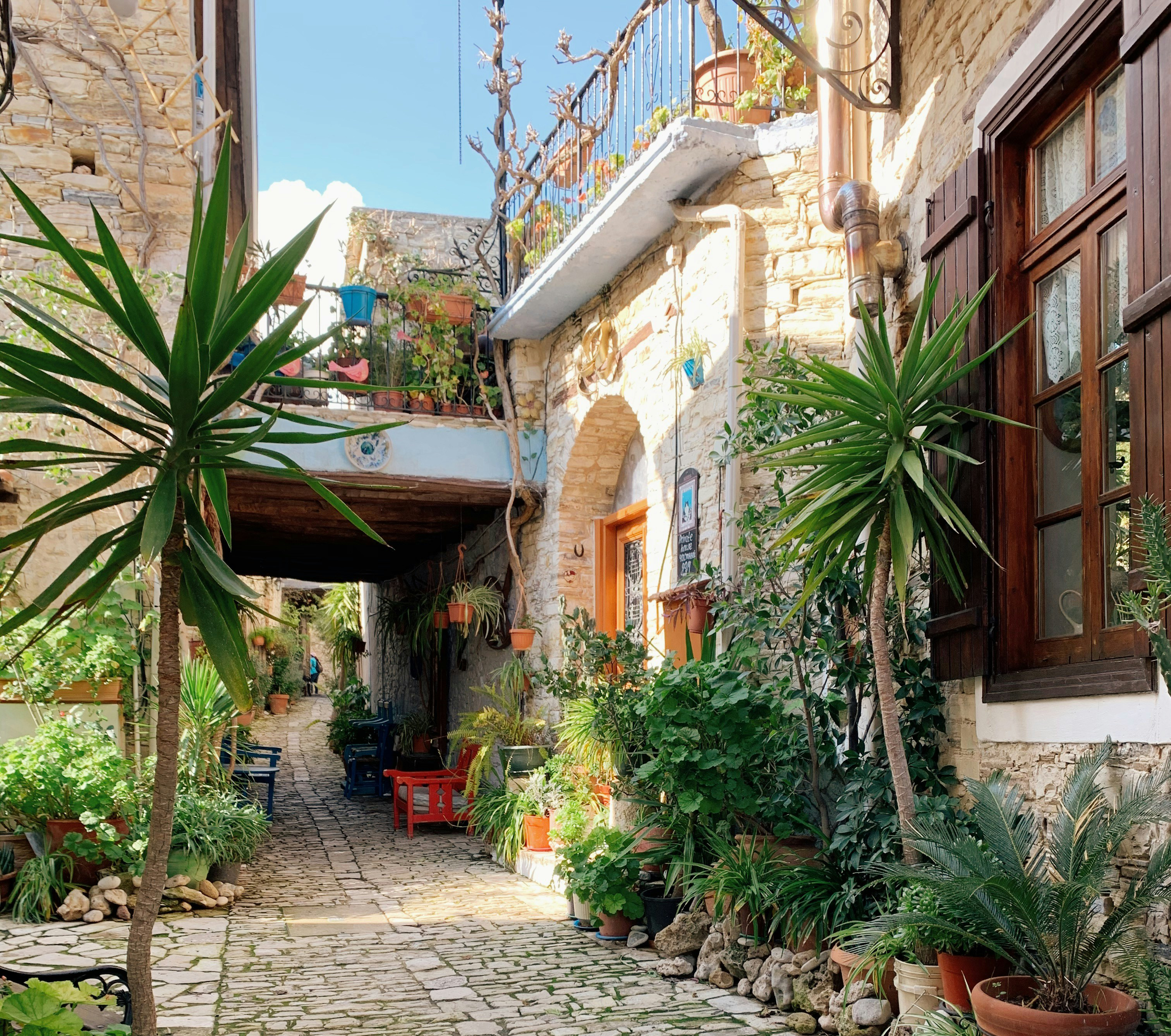
This leads to practices that could otherwise have been expressed in homes and communities being considered old fashioned.
“The fact that such expressiveness is more commonly found in older buildings and settlements suggests that people in the past were more inclined to personalise and express themselves through space by using colours, plants and several other means of personal expressiveness,” they say.
Change has been particularly noticeable when it comes to balconies. For generations, outside areas were a key component of life in Cyprus. The balcony, garden and shaded terrace extended the dwelling as a place where people met and gardened, as well as a sanctuary from the sun.
“Outdoor living in Cyprus was traditionally experienced as a crucial extension of living space,” says Karagiorgi.
She points out that the typical home life of those days was very much linked to the outdoors, whether it was through courtyards, vine pergolas, or shady places in which the family would spend time together during the course of the day.
“The intimate enclosures of the yard, the courtyard, the vine-covered pergolas, and a central tree for morning coffee, the shaded threshold between inside and out gradually lost their central role as modern lifestyles changed dramatically,” she says.
However, despite the appreciation of contemporary minimalist aesthetics, all three architects also question what may be lost with the increasing separation of architecture from its context.
According to Karagiorgi, traditional Cypriot architecture does not merely reflect an aesthetic, but rather is very much connected to the climatic, environmental and cultural conditions of the island.
“When we look at a contemporary single family house in Cyprus, we could easily imagine that same house standing in Los Angeles,” she says.
She argues that architecture in Cyprus has grown more internationalised, diminishing the link between buildings and their surroundings.
“I believe, therefore, that something vital is being lost; our identity, not as a rigid national identity, but as a relationship with ‘topos’ (the place), our climate, the weather, the landscape, our history, and our culture”.
The concern is reiterated by Ioannou and Papastergiou, who warn that the impact of globalization, though inevitable, must still take into consideration local needs and traditions.
“There is today an increasing need to find a balance between the global and the local,” they say.
For both practices, the solution is not to replicate the past but to reconsider what made these spaces meaningful. Rather than copying their forms, contemporary architecture can draw on the values they embodied: a connection to nature, a culture of outdoor living and a strong sense of place.



Click here to change your cookie preferences