
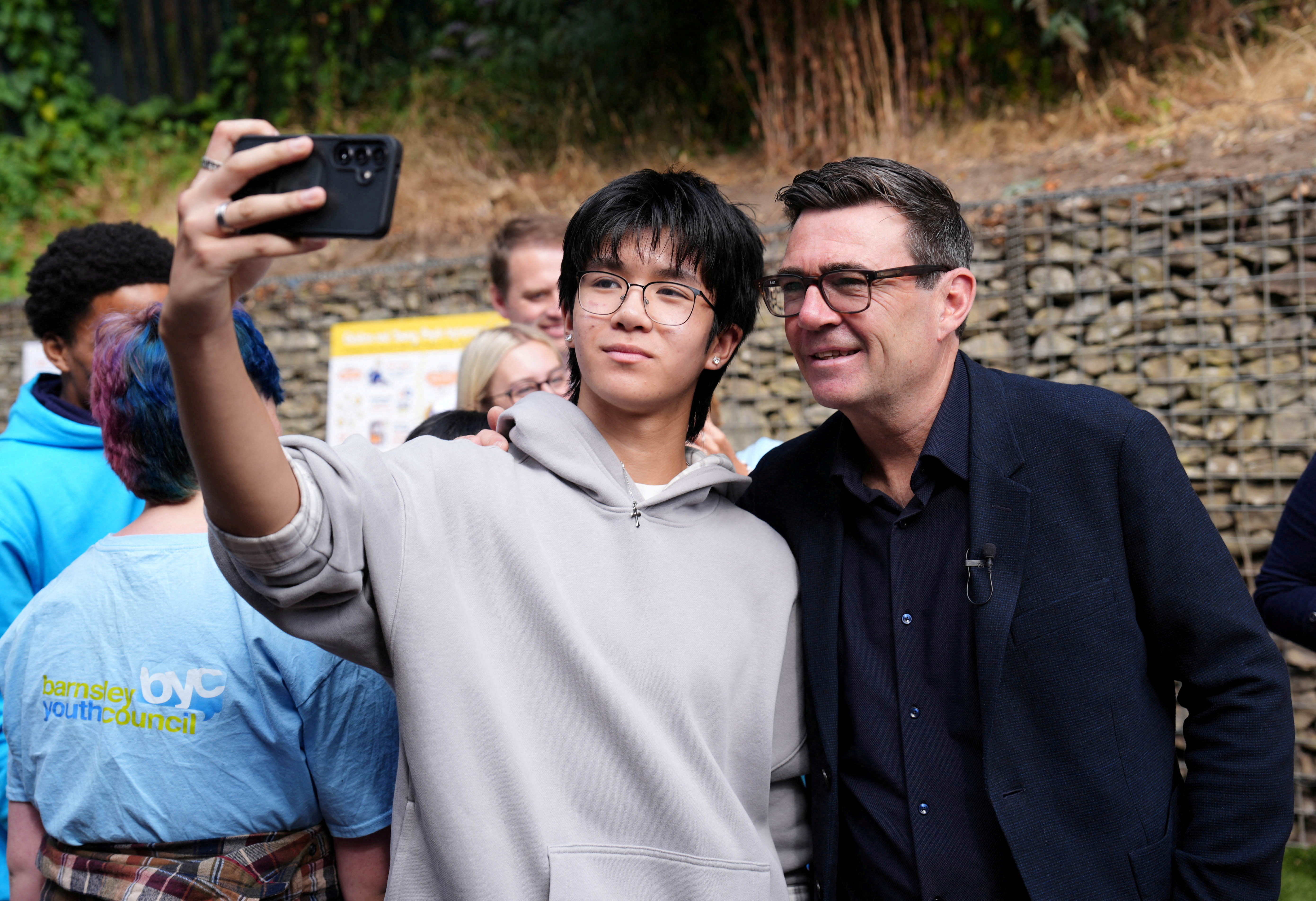
From discussing the merits of various pub snacks to making fun of his own appearance, Britain’s new prime minister is taking on populist parties such as Reform UK on the social media platforms where they have built a huge following.
Andy Burnham’s natural ease in communicating with voters was one of the main reasons why his Labour Party unceremoniously dumped its previous leader and prime minister, ex-lawyer Keir Starmer, and replaced him with the mayor of Greater Manchester.
After just two weeks, Burnham’s quirky posts are getting millions of views on TikTok, X and Instagram, with a message designed to be positive, rather than polarising click-bait, experts say.
While it does not in itself address the immense challenges of kickstarting a stagnant economy and improving living standards, they say he has seized the opportunity to build up a following, knowing that soon enough his messages may have to be more uncomfortable.
BURNHAM MAKING SOCIAL MEDIA POSTS INCLUSIVE, NOT DIVISIVE
James Lyons, former director of strategic communications for Burnham’s predecessor Keir Starmer, who also used to work for TikTok, said Burnham was taking a different approach from the left-wing Greens or Reform UK.
“Instead of being polarising, he’s just seeking to be popular and inclusive,” said Lyons, now at the corporate advisory firm Penta Group.
“He’s pulling off the very, very difficult trick of being very serious about what he’s doing as prime minister, but not taking himself too seriously.”
That gives him hope of being able to better take on Reform UK, whose leader Nigel Farage has spent years delivering arresting videos on immigration, crime and social issues to his 2.3 million followers on X, 1.5 million on TikTok and 1 million on Instagram.
Winning the communication battle against Starmer helped give Reform a significant lead in opinion polls, though initial surveys after Burnham became PM show Labour has closed that gap, albeit around three years before the next election is due.
Famously, Farage is often shown pulling or drinking pints of beer in a pub. But Burnham showed he too could master the genre.
A video with finance minister John Healey in a pub highlighted the announcement of a tax cut for hospitality venues, and got 4.7 million views on X, with millions more on other platforms.
In the relaxed segment, in which prime minister and finance minister ranked various snacks, Burnham confessed to a weakness for the less-than-mainstream pickled-onion flavour “Monster Munch”, and wondered aloud whether anyone outside northern England put crisps – ‘chips’, in North America – into their ‘butties’ – a northern term for sandwiches.
When opposition Conservative party leader Kemi Badenoch dismissed Burnham as “a pair of eyelashes and a black T-shirt”, he posted a video of himself blinking hard, looking down and saying, “It’s dark blue, actually”.
Burnham’s return after nine years out of parliament and 16 out of government is giving him “a second chance at a first impression”, Lyons said.
LABOUR NEEDS TO COMPETE IN SOCIAL MEDIA SPACE
Academics said Burnham’s ability to communicate online – as relaxed as his predecessor Starmer was stilted – was vital for Labour, which has been heavily criticised for failing to communicate its strategy and the promises it has fulfilled since it won a landslide election victory in 2024.
Rosalynd Southern, senior lecturer in political communication at the University of Liverpool, said where Labour had previously produced “fairly random memes” on TikTok and some interesting policy posts, Burnham had delivered a “more coordinated and integrated strategy”.
Burnham is still far short of Farage, with about 730,000 followers on X, 450,000 on TikTok and 600,000 on Instagram, but he has been gaining rapidly, adding 50,000 on TikTok and Instagram on one day alone last week.
Katy Parry, professor of media and politics at the University of Leeds, said Burnham had recognised “a disconnect between politicians and the public” but had managed to find a different approach from Farage:
“He’s not anti-politics in the way that some right-wing populist politicians are.”
The videos not only help Burnham to reach voters where they spend much of their time – staring at their phones – but have also been covered positively by traditional media, amplifying the impact.
Some videos have tapped into online trends, such as a montage in the style of the American version of the TV comedy series The Office. But even a straightforward summary of five achievements in his first week got 5 million views on TikTok.
Burnham has a team around him producing digital content and the government was last week recruiting for roles in social content creation, production and strategy, with salaries ranging from £40,000 to £80,000 ($55,000 to $110,000).
The operation is run by Abby Tomlinson, who as a teenage student made her name by spearheading a viral meme in support of then-Labour leader Ed Miliband’s bid to become prime minister in 2015.
Although social media have already enabled Burnham to project government messaging, Keiran Pedley, UK director of politics at the pollster Ipsos, said his longer-term fortunes would still depend on delivering voters’ priorities and showing resilience in adversity.
“He has set the agenda … it’s a pretty positive start,” Pedley said. “The question is, when there are bumps in the road, how does he manage those?” ($1 = 0.7440 pounds)





Click here to change your cookie preferences