
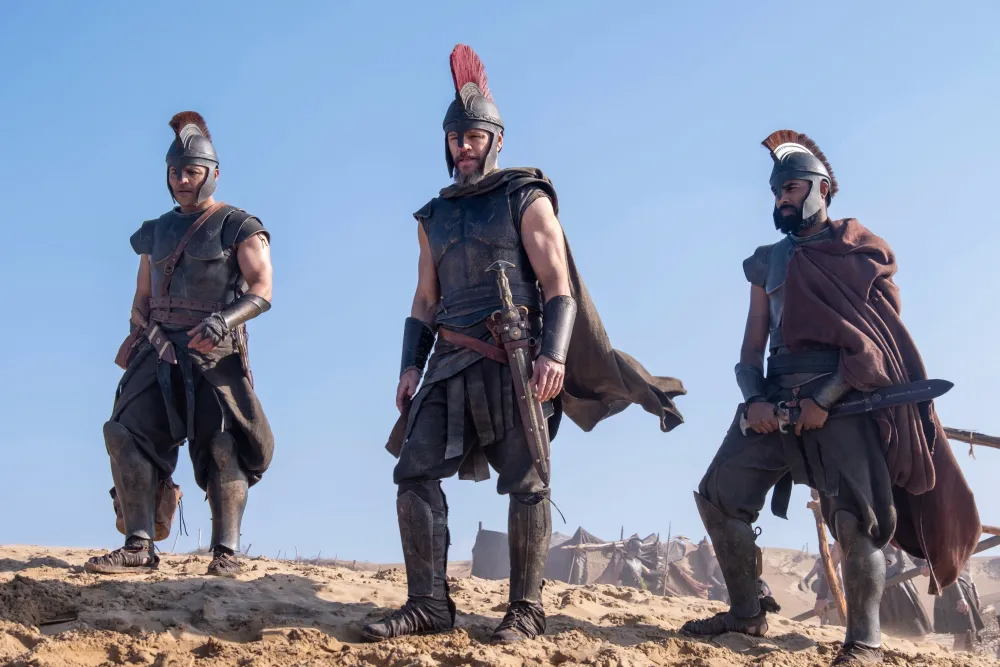
As The Odyssey launches, a look back at the previous lengths the director has gone to
Christopher Nolan’s magnum opus The Odyssey hits cinemas this week amid a promotional campaign blitz and some criticism. Moviegoers jumped at the opportunity to bash Nolan for having the audacity to cast Lupita Nyong’o, a black actress, as Helen of Troy because… to be perfectly honest, I have no idea, and I will most certainly not be going down that rabbit hole.
Instead, we’re taking a trip through Nolan’s movies to learn some interesting facts about them!
Following (1998): no lights, no equipment, no money
Following was Nolan’s debut film and tells the story of a man who follows people through the streets of London and ends up getting mixed up in the city’s criminal underworld.
As he had no budget, Nolan didn’t bother with fancy things such as lighting or sets, instead filming in the apartments of friends and relatives on Saturdays. The only real expense was the 16mm film, which Nolan paid for out of his own pocket. To avoid wasting it, he instructed the actors to rehearse scenes extensively beforehand.
Hey, you’ve got to start somewhere, right? It can’t all be planes crashing into buildings.
Memento (2000): Nolan really wanted the audience to lose its mind
Memento tells the story of a man who wakes up covered in strange tattoos and has no idea who he is. In trademark Nolan fashion, the timeline is all jumbled up and progresses on two levels: a black-and-white story moving backwards and a colour story moving forwards until the two meet. It is a very confusing movie centred around an unreliable narrator.
Nolan stated in interviews that this was the goal from the start: the protagonist couldn’t trust his memories, and neither should the audience. This is a convoluted movie for the sake of being convoluted.
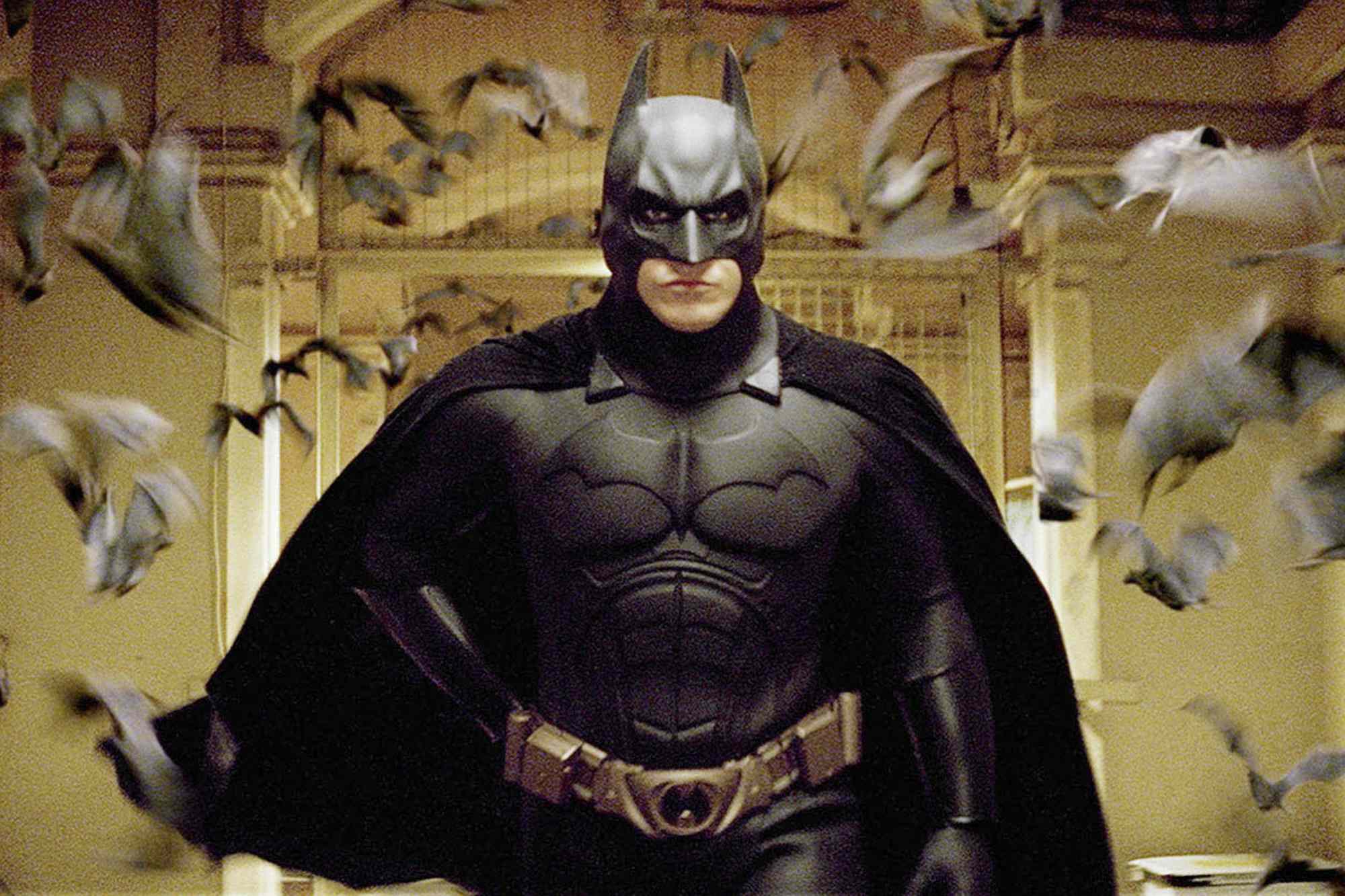
Batman Begins (2005): Nolan built the tumbler in his garage
Even if he had made no other movie after this, Nolan could easily be credited as the director who reinvented the superhero genre, taking it from colourful and kid-friendly to gritty and more mature. Batman Begins is the movie that kick-started a trend that continues today, two decades later.
One aspect of the movie was, of course, the iconic Batmobile, which, in previous iterations of the character, had been more cartoonish and extravagant. Wanting to give a more realistic feel to a major component of the movie, Nolan and his team worked in his garage, piecing together bits and pieces from other cars, military vehicles and even aircraft. The end result was what is now known as the Tumbler, a vehicle that actually looked like something Wayne Enterprises would sell to the American military.
The Prestige (2006): Nolan refused to accept David Bowie’s rejection
Nolan believed that Nikola Tesla needed to possess an almost supernatural presence in The Prestige, and hedecided David Bowie was the only person who could give the character the necessary aura, so he offered him the role, which Bowie turned down.
In an unusual move, Nolan visited Bowie to try to convince him to appear in the movie. He eventually succeeded.
Inception (2010): The spinning corridor is not CGI
If you want to have your mind blown, be my guest and look for backstage footage of this on YouTube. Highly averse to CGI, Nolan decided to construct an actual spinning corridor for the movie’s dream sequence.
The set functioned like an enormous rotisserie. The camera could be attached to the corridor so that, from its perspective, the hallway appeared stationary while the actors crashed against the walls and ceiling. The actors had to learn the exact rhythm of the machinery, jumping and falling at carefully calculated moments as the set moved beneath them.
Mayhem ensued.
Before we move on to the final point, an honourable mention goes to Interstellar, for which Nolan planted fields of corn instead of using CGI, and to Oppenheimer, for which Kodak created a new type of film so he could shoot in black and white.
The Odyssey (2026): IMAX had to redesign its cameras
IMAX cameras are usually used for selected parts of a movie, but Nolan had a grander plan: he wanted to shoot the whole thing in IMAX.
Traditional IMAX cameras are extremely heavy, and their mechanical noise makes them difficult to place close to actors during dialogue scenes. A standard film magazine also contains only a few minutes of film.
IMAX therefore developed new and improved camera technology that was lighter and quieter. The Odyssey became the first commercial feature filmed entirely using IMAX film cameras.
Will that translate into box-office success? That remains to be seen.





Click here to change your cookie preferences