
By Tom Cleaver
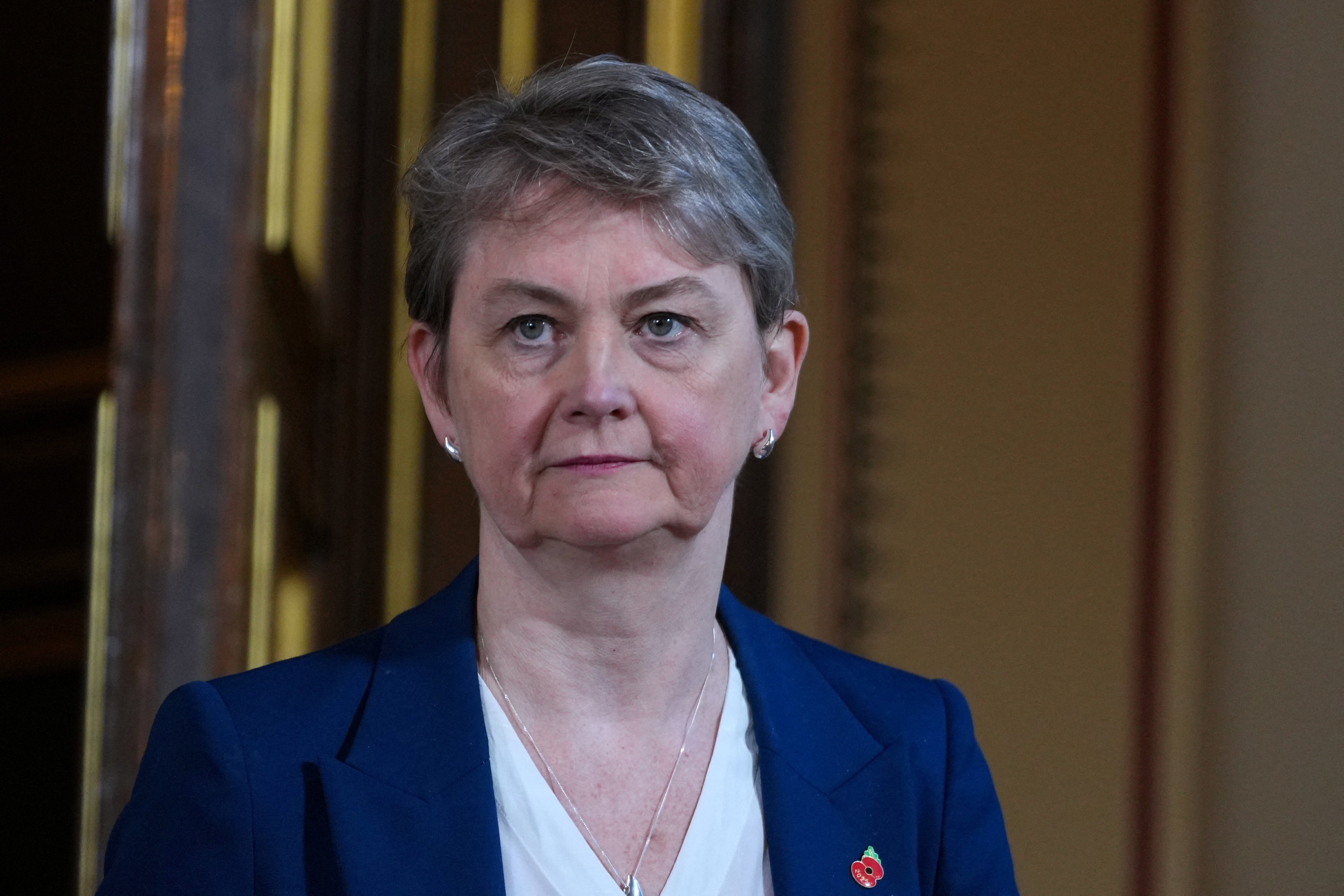
British Foreign Secretary Yvette Cooper on Wednesday said that the United Kingdom takes Cyprus’ security “seriously”, as she welcomed her Cypriot counterpart Constantinos Kombos to Whitehall.
She pointed out that the pair had been together in Brussels on Monday for the launch of the Palestine donor group, and said that she had also contacted him to “express our appalling shock and horror” after a Cypriot-flagged ship had been hit by a missile while attempting to traverse the Strait of Hormuz on Sunday.
“That, I think, shows how much we have in common and how much we have to discuss on the issues of shared foreign policy … and how seriously we take the security of Cyprus and Cyprus’ role in the region,” she said.
She also congratulated the Cypriot government on its “very successful” six-month term as the holder of the Council of the European Union’s rotating presidency, before adding that “perhaps, most important of all, we will be discussing our bilateral relationships”.
On this front, she said that “we have 300,000 Cypriots living in the UK and 1.4 million Brits who visit Cyprus each year”, while also making reference to “those close people-to-people partnerships between our countries and our commitment to ensuring that we can deepen our relationships”.
Kombos, meanwhile, said that “we are living in a very difficult period” and that “transformation is happening everywhere”, and added as such that “every country is trying to recalibrate their relationships”.
“For us, for the Republic of Cyprus, there is ambition, there is a will, there is intention to put more substance into our strategic partnership with the United Kingdom,” he said.
He added that this will include the “strengthening our institutional frameworks, structuring and improving the structure of our communication on various issues related to security and elsewhere”.
“In addition, we believe that we need to have a comprehensive and meaningful dialogue on a range of issues. The whole approach is in the direction of finding answers and solutions to problems, not to create new ones,” he said.
He added that there is a “long history” between Cyprus and the UK, and that “sometimes it’s complicated”, but sad that in modern times, “the whole approach, I believe, is about moving forward in a positive trajectory, so comprehensive, meaningful, results-oriented dialogue – this is our vision, this is our ambition, this is our position”.
One matter which was notably absent from the pair’s remarks was the issue of the British sovereign bases in Cyprus, with the Cypriot government having made extensive efforts in its attempts to bring about a “conversation” regarding a potential future change in their status after the Akrotiri base was hit by an Iranian-made drone in March.
President Nikos Christodoulides, for example, had described the bases as a “colonial remnant”, before going on to promise upon his arrival at a European Council summit that “we are going to have an open and frank discussion with the British government” over them.
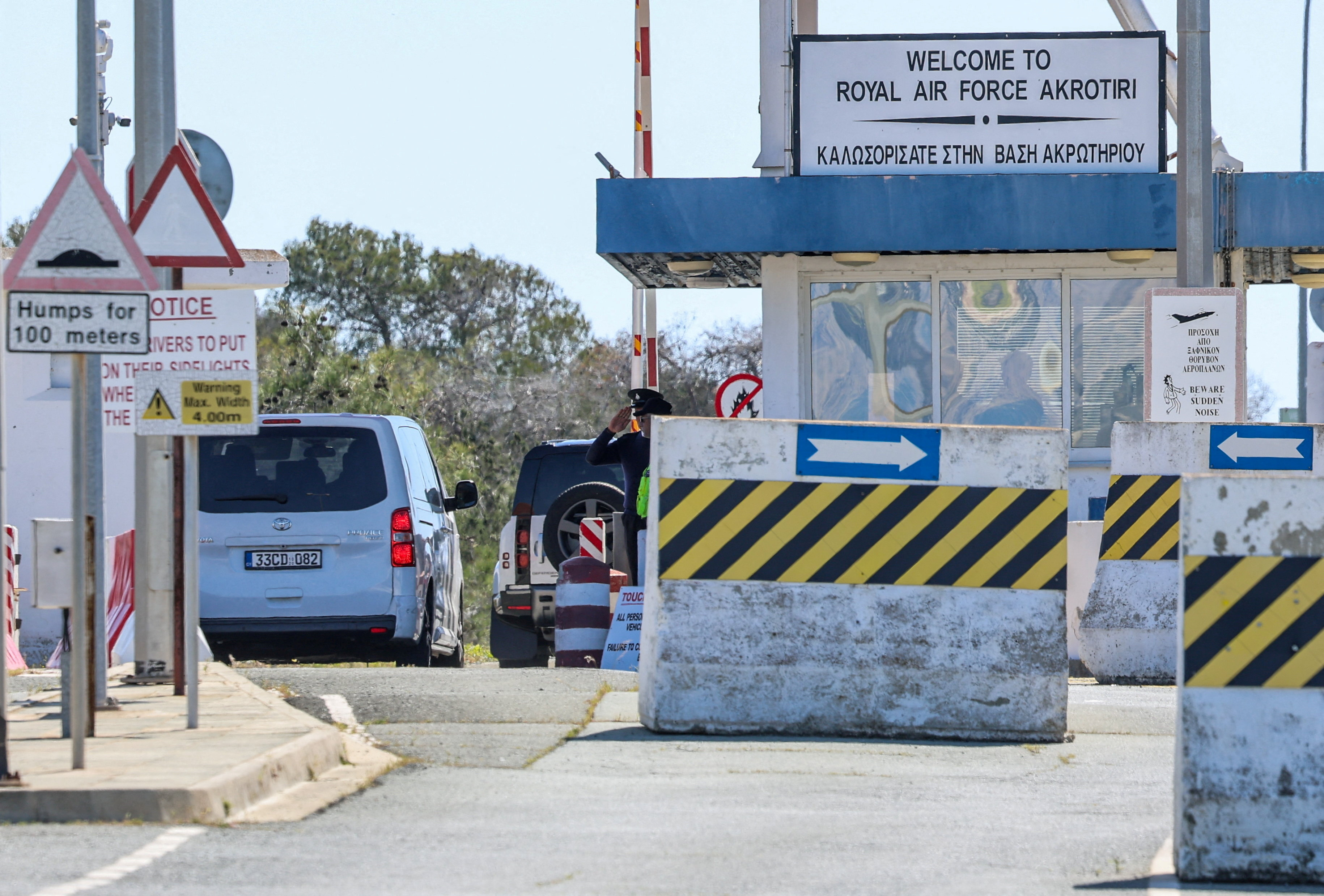
Following that summit, the European Council itself declared that it “stands ready to assist” the Cypriot government in discussions regarding the bases’ future and stating that it “acknowledges the intention of Cyprus to initiate a discussion with the UK” on the matter.
Later, deputy government spokesman Yiannis Antoniou said that the government had sought and received legal advice regarding the treaty which established the bases, adding that “the issue of security is complex and will be the subject of discussion with the British side”.
The UK itself had appeared to be in no mood for such a discussion, however, with country’s then parliamentary undersecretary of state for the armed forces Al Carns saying that the bases’ future is “not in question”. Carns then resigned from the government last month, saying that insufficient funds had been allocated to defence.
Nonetheless, since April, the Cypriot government has been less fervent in its pursuit of a conversation regarding the bases’ future.
Only Kourion mayor Pantelis Georgiou continuing to publicly make the case in recent weeks, accusing the bases’ administration of “lying” to his municipality over the placement of communications antennae near Akrotiri.
The current UK government will likely be out of office on Monday, with Prime Minister Sir Keir Starmer set to resign and be replaced by former Manchester mayor Andy Burnham.




Click here to change your cookie preferences