
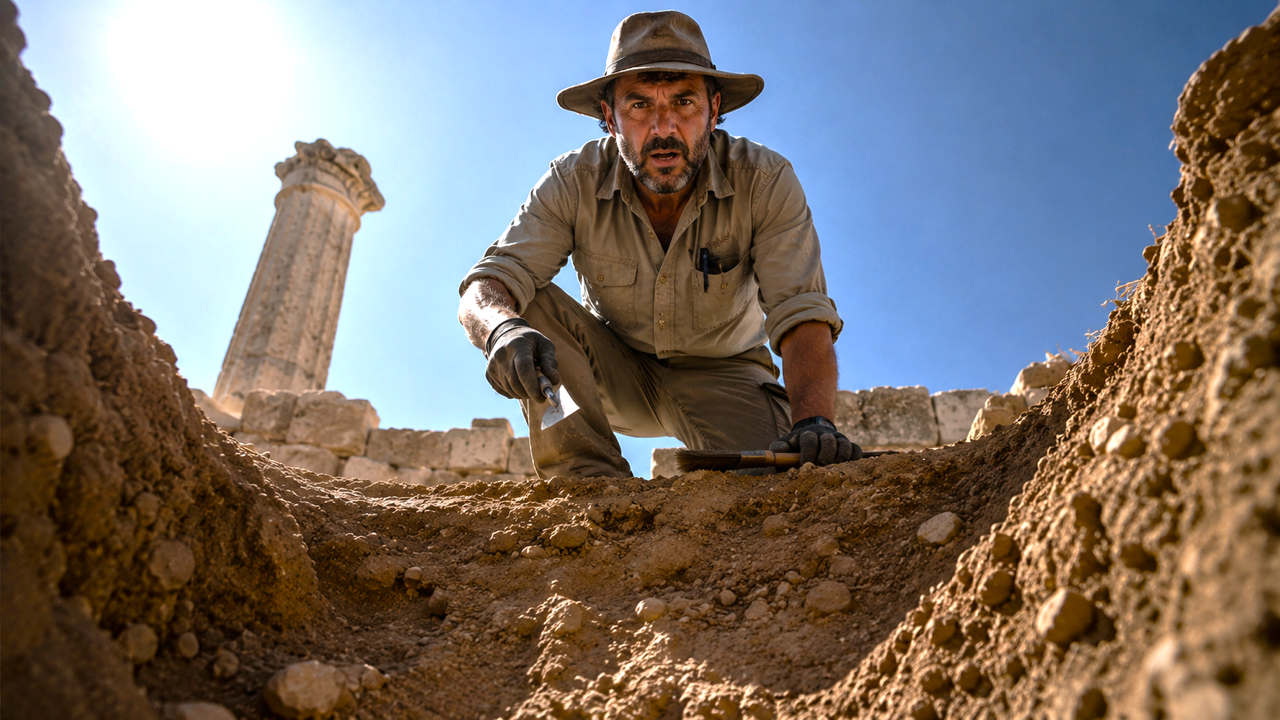
Cyprus is built on history, right?
Construct a hotel, and you uncover an ancient amphitheatre. New roads unearth mosaics. Excavate anywhere from Polis to Pernera and you’ll likely hit a prehistoric hamlet.
Or perhaps our island is built on love?
On yiayia’s cooking, on pappou’s garden, on our ancestors’ fields and vineyards – a passion passed down, generation by generation, that still shapes the way we live today.
Nope. Sorry to break this to you, but we’re all wrong. Because what Cyprus is built on, quite literally, is plastic.
Not everywhere. Not yet. But dig in the wrong place – just beyond the edges of our towns, where the waste is taken – and you’ll find it. Layered into the ground. Bottle caps, packaging, fragments of everyday life, compacted and preserved.
OUT OF SIGHT – BUT NOT OUT OF EXISTENCE
Think about it: how much plastic do you use in a single day?
A bottle of water on the go. A takeaway container. The film around your vegetables. The packaging for your online order. It doesn’t feel like much. A handful of items, here and there – recycled when we can.
And yet, across Cyprus, it adds up. Fast.
Every day, our island produces around 25 truckloads of plastic waste. Over a year, that’s enough to fill more than a hundred Olympic swimming pools.
Now, despite what we all hope, most of that isn’t recycled. It’s buried.
Across the island, waste is collected, (sometimes) sorted, and then sent on. Some ends up at facilities like Koshi and Paphos. But the majority still finds its way into landfills: compacted, covered, and left.
Out of sight maybe. But not out of existence.
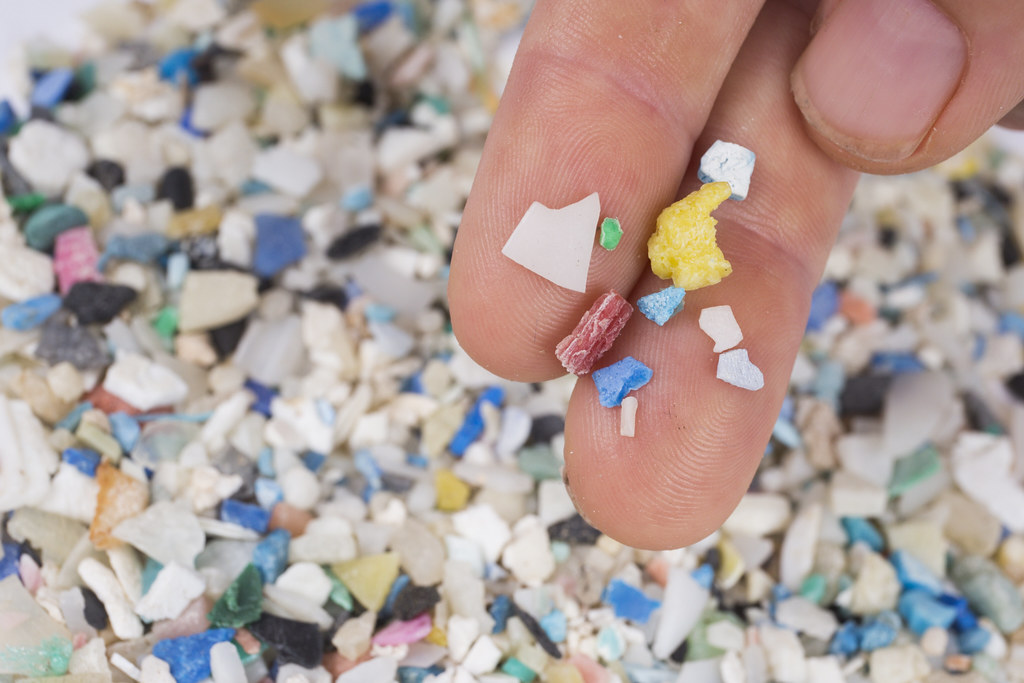
Because, as we know, plastic doesn’t disappear. It doesn’t rot, or break down in any meaningful sense. It fragments, slowly, into smaller and smaller pieces. And, year after year, layer after layer, it builds.
Currently, Cyprus is producing more plastic waste than almost anywhere else in Europe.
According to a national action plan on plastic waste, the island generates around 93,000 tonnes of plastic waste annually – roughly 94 kilograms per person. That places Cyprus among the highest per-capita producers of plastic waste in the EU.
At the same time, recycling rates remain low. Only around 15–16 per cent of total municipal waste is recycled, with the vast majority still going to landfill.
Which raises a simple, uncomfortable point.
There’s no vast hinterland here. No endless space where waste can be absorbed without consequence. There’s only our land, the land of Cyprus – and whatever we choose to bury within it.
Over a decade, if uncompressed, this plastic waste would cover the whole of Paralimni!
Imagine it. Tourists picking their way down the strip through a wave of packaging. A mountain of bottles surging slowly upwards towards Profitis Ilias. A tide of cartons lapping slowly at the water of Fig Tree Bay.
CIRCULAR OIL
Okay, I hear you say. So what can we do about this?
Well, while there’s no definitive answer, there are people who are helping. And some of them are a lot closer to home than you might think.
One of them is based right here in Cyprus: Blend Energy. Founded by chemical engineer Daniel Davidov, the company designs and manufactures industrial systems that take mixed plastic waste – the kind that cannot be conventionally recycled – and convert it into what is known as ‘circular oil’.
It may not be the sexiest thing you’ve ever heard of, but it matters. Because circular oil can be fed back into industry – used as a raw material to make new plastics – rather than the original waste simply being buried.
And this is no longer a lab experiment. Blend Energy’s systems are built in the Limassol region, certified for the European market, and are now being deployed across Europe: the company’s first commercial system has been sold to a plastics manufacturer in Spain, with further projects under development in Italy and northern Europe.
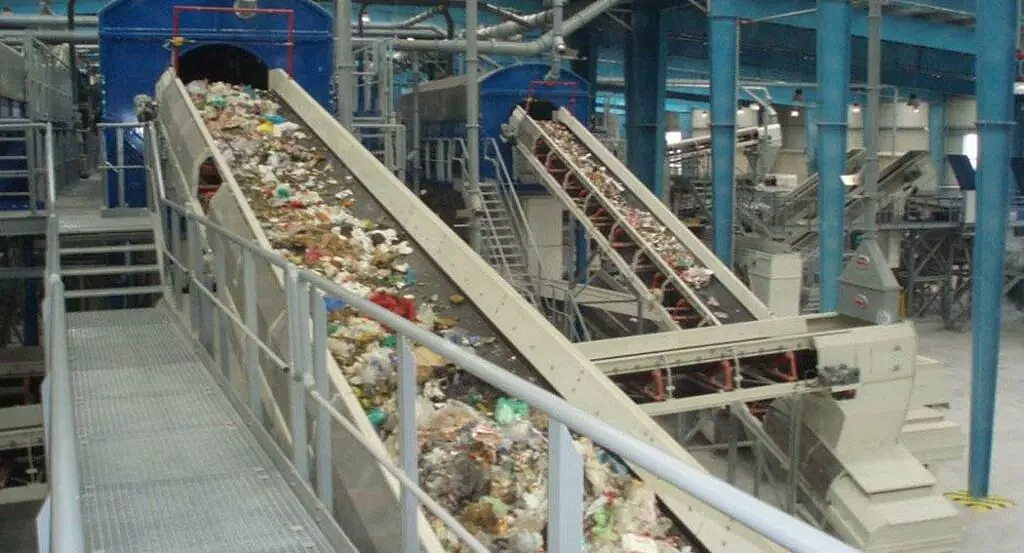
Which makes for an unusual sentence: recycling industrial technology, engineered and manufactured in Cyprus, being exported to the rest of Europe to deal with a problem the whole continent shares.
“In simple terms, we take the plastics that nobody else can deal with,” Davidov explains. “Mixed, contaminated, multi-layered packaging – the crisp packets, films and food trays that conventional recycling has to reject. Our system heats them in the absence of oxygen, so nothing is burned. Instead, the plastic breaks back down into the oil it originally came from. That circular oil then goes to industry as a raw material to make new plastics. Traditional recycling handles the clean, simple items – we handle everything it leaves behind. The two are complementary; together they mean far less ends up in the ground.”
The idea is not entirely new. Variations of this technology – often referred to as thermolysis or advanced recycling – have been explored globally for years, and it is not without its critics.
Davidov is candid about the boundaries. “This is not a magic wand, and it shouldn’t replace anything that already works. If a bottle can be mechanically recycled, it should be – that will always be the more efficient route. Our technology exists for the majority of plastic waste that mechanical recycling cannot touch, which today is simply landfilled. And the direction of travel in Europe is clear: chemical recycling has now received its first formal recognition in EU law, and the new packaging regulations set recycled-content targets for 2030 that mechanical recycling alone cannot meet. So the realistic ambition isn’t to solve everything – it’s to make ‘bury it’ stop being the default answer for the hardest half of the problem.”
This tension – between promise and practicality – sits at the centre of the wider conversation.
Because Cyprus does not just have a waste problem. It has a systems problem.
Landfill remains the dominant solution. Recycling is improving, but slowly. And the volume of waste continues to rise.
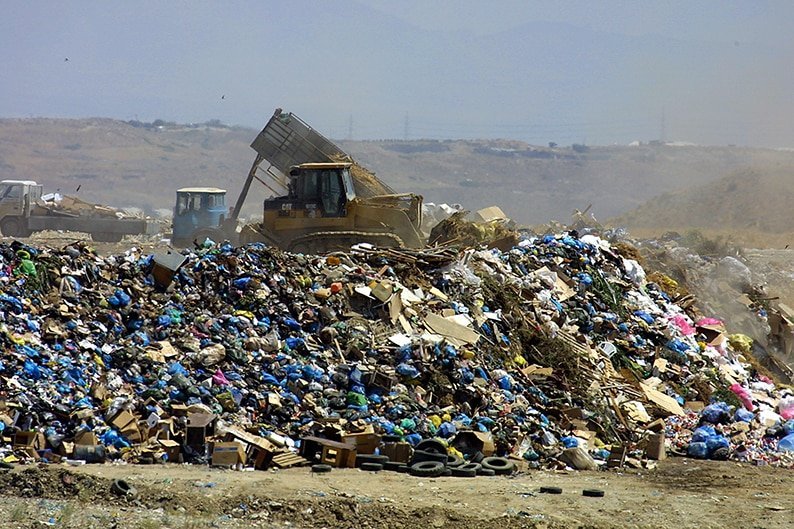
Against that backdrop, the idea of developing new approaches – whether through better systems, reduced consumption, or alternative technologies – becomes less about innovation, and more about necessity.
So why build all this in Cyprus? “Because Cyprus proves the point,” says Davidov. “We are a small island with no space to hide our waste, so nobody understands the urgency better. But there’s a second reason: capability. We design and manufacture these systems here, with local engineers, to full European certification – and then we export them. For decades Cyprus has imported its solutions from abroad. This is the reverse: technology conceived and built on this island, now being installed across Europe. I’d like people to get used to that idea.”
All of which ends with the broader question: what kind of island do we want Cyprus to be?
One that continues to manage its waste by burying it – quietly, out of sight – or one that begins to rethink what waste is, and what it could become?
Because, every day, more plastic is used. More is discarded. More is buried.
Not everywhere. Not yet. But enough to notice.
And enough to suggest that what lies beneath the surface of Cyprus is slowly changing – not just its past, but its all-important future.
WHAT ACTUALLY GETS RECYCLED?
Not everything you put in the bin ends up being reused.
Recycling in Cyprus largely focuses on packaging — not all plastic. Items such as water bottles, soft drink containers, yoghurt tubs, detergent bottles and some clean plastic bags are typically accepted through the Green Dot PMD system.
But even here, condition matters. Packaging should be empty and relatively clean. Food residue, liquids, or mixed materials can contaminate entire batches, meaning they are rejected and sent to landfill instead.
The key takeaway? If it’s plastic, it doesn’t automatically mean it’s recyclable.
WHY ISN’T EVERYTHING RECYCLABLE?
Because modern plastic is more complicated than it looks.
Many everyday items are made from multiple fused materials — think crisp packets, cling film, coffee cups, or ready-meal trays. These are extremely difficult to separate and process.
Others are simply too low-value to recycle economically, or too contaminated to be reused safely.
So even with the best intentions, a large proportion of plastic waste cannot go through standard recycling systems.
And that’s the gap most countries — including Cyprus — are still trying to solve.
WHY LANDFILL IS A BIGGER PROBLEM HERE
On an island, “away” doesn’t really exist.
Cyprus still sends the majority of its municipal waste to landfill — far more than most EU countries.
That’s an issue, because the EU has set a target of reducing landfill to below 10% by 2035. Cyprus is currently nowhere near that.
And unlike larger countries, there is no vast inland space to absorb the problem. Land is limited, expansion is difficult, and long-term solutions are becoming increasingly urgent.
Put simply: burying waste is not a strategy that can last forever.
THE PLASTICS WE STRUGGLE WITH MOST
It’s not the bottle — it’s everything else.
The biggest challenge isn’t the obvious items like water bottles — it’s the less visible plastics:
- Cling film and food wrap
- Crisp packets and snack packaging
- Multilayer cartons and sachets
- Containers with leftover food
- Soft plastics and mixed materials
These are the items most likely to end up in landfill, simply because they are too complex or costly to recycle.
And they are everywhere — used daily, often without a second thought.
SO WHAT WOULD ACTUALLY HELP?
Less plastic, better systems and more realism.
There is no single solution.
Reducing plastic use at source remains the most effective step. After that comes better sorting, cleaner recycling streams, and improved infrastructure for dealing with materials that can’t be conventionally processed.
Cyprus is beginning to move in this direction, with policy changes such as landfill taxation and increased pressure to meet EU targets.
But ultimately, the shift is not just technical — it’s behavioural.




Click here to change your cookie preferences