
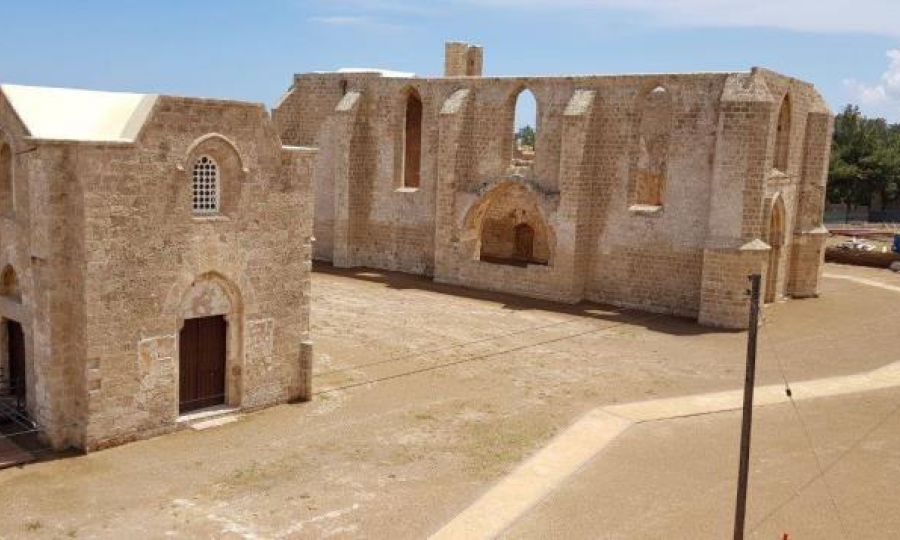
Nine churches belonging to the Maronite, Armenian and Latin communities have so far been preserved or restored in the north, with efforts to begin conservation work on Sourp Magar monastery ongoing.
Speaking to the Cyprus News Agency on Sunday, the bicommunal cultural heritage committee co-chair Sotos Ktoris said six Maronite churches, one Armenian church and two Latin churches have been restored or preserved through the committee’s work.
The Maronite churches include Saint Anna within the Venetian walls of Famagusta, Saints Marina and Theodore in Kormakitis, Saint Marina in Ayia Marina, the Holy Cross church in Karpasia, Archangel Michael in Asomatos and Saint George in Kormakitis.
The Armenian church in old Famagusta has also been preserved, alongside the Latin churches of Saint George of the Latins and Our Lady of the Carmelites, both located with the historic centre.
Ktoris said efforts to begin restoration work on Sourp Magar are currently underway, another significant religious site for the Armenian community in Cyprus.
Historian, archaeologist and writer Anna Marangou informed CNA that the churches reflect the presence and cultural contribution of the Armenian, Maronite and Latin communities on the island over centuries.
She expounded that Armenians arrived in Cyprus from Cilicia during the Byzantine period and established communities mainly around the southern slopes of the Pentadaktylos range.
Referring to Sourp Magar, she described it as a major centre of Armenian religious life and insisted that “the time has come for its conservation to begin”.
Regarding Maronite churches, she referred to the monastery of Prophet Elias in Ayia Marina and the church of Saint George in Kormakitis, which took almost 33 years to complete.
She also spoke of the Latin churches within old Famagusta, describing the city as a historic example of different Christian communities living alongside one another.
“Famagusta may not have 365 churches according to tradition, but we certainly count 30 very important churches that still stand,” she said.
Restoration work by the Bicommunal Technical Committee for Cultural Heritage continues on religious sites and other historic buildings across Cyprus.


Click here to change your cookie preferences