
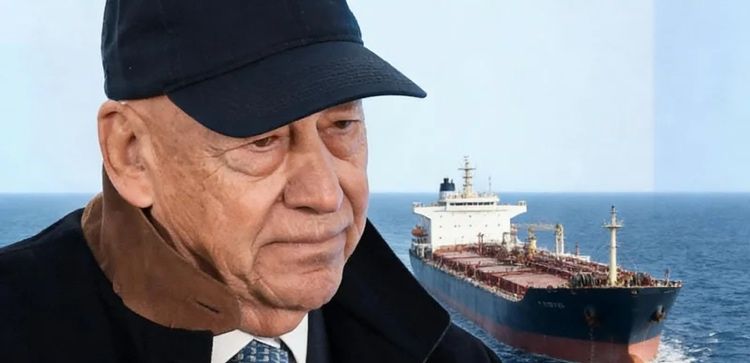
A second tanker managed by Greek shipowner George Procopiou’s Dynacom Tankers Management has been struck in the Strait of Hormuz, as commercial traffic through the waterway fell to a near standstill and more than 700 tankers gathered in the wider region.
The 306,000-deadweight-tonne Acheloos, a Liberian-flagged very large crude carrier delivered earlier this year, was hit by a projectile on Monday while sailing off Oman, according to a TradeWinds report.
Dynacom confirmed that the vessel had been struck by a projectile of unknown origin, adding that all crew members were safe and accounted for. The ship subsequently proceeded to an anchorage, where inspections and damage assessments were being carried out, with no pollution reported.
Acheloos, which can carry around two million barrels of oil, was delivered to Dynacom by China’s Hengli Heavy Industry in June. The 332.8-metre tanker is therefore one of the newest vessels in Procopiou’s fleet.
The attack came at approximately the same time as a strike on another Dynacom-managed tanker, the 75,000-dwt Kavomaleas, according to maritime security company Marisks. Both vessels were reportedly using the US-facilitated southern Hormuz corridor, established close to the Omani coast after Iranian mines made the waterway’s traditional central shipping lanes increasingly dangerous.
Kavomaleas, a Malta-flagged product tanker built in 2025, was struck by two projectiles, sparking a fire in its engine room about eight nautical miles northwest of Oman’s Kumzar. After the ship’s fire-suppression system was activated, the master ordered its evacuation. Omani authorities later located the crew and transferred everyone safely ashore, Dynacom confirmed.
Iran’s Revolutionary Guards separately claimed that two oil tankers had “exploded” and been immobilised after attempting to use what Tehran described as an unsafe southern route. However, it was not immediately clear whether the Iranian statement referred specifically to Acheloos and Kavomaleas.
The attacks represent a sharp reversal for Procopiou, who emerged as one of the few major shipowners willing to continue sending tankers through Hormuz after the war began. By April, Dynacom had reportedly transported approximately 6.5 million barrels through the strait, making it the largest non-Iranian commercial operator still using the route.
Meanwhile, the latest shipping data showed that only four commodity vessels crossed Hormuz on Monday, down from seven on Sunday. Two tankers exited, one carrying petrochemicals and another sailing empty, while a bitumen tanker and an oil tanker entered the Gulf. Crucially, no VLCCs or liquefied natural gas carriers were visible making the crossing.
The average number of supertankers using the strait has now fallen to two per day, compared with five during the previous week and eight in late June and early July. Tanker-to-tanker oil transfers outside Hormuz have also slowed, with satellite imagery showing only one pair of vessels conducting a transfer off Oman on July 18, compared with three pairs a week earlier.
Procopiou’s fleet was also hit outside the Gulf. The Dynacom-managed tanker Asia was struck by a drone at Russia’s Novorossiysk oil terminal in the Black Sea on Monday. Its crew extinguished the resulting fire, with no injuries or pollution reported, before the vessel moved to anchorage for inspections.





Click here to change your cookie preferences