
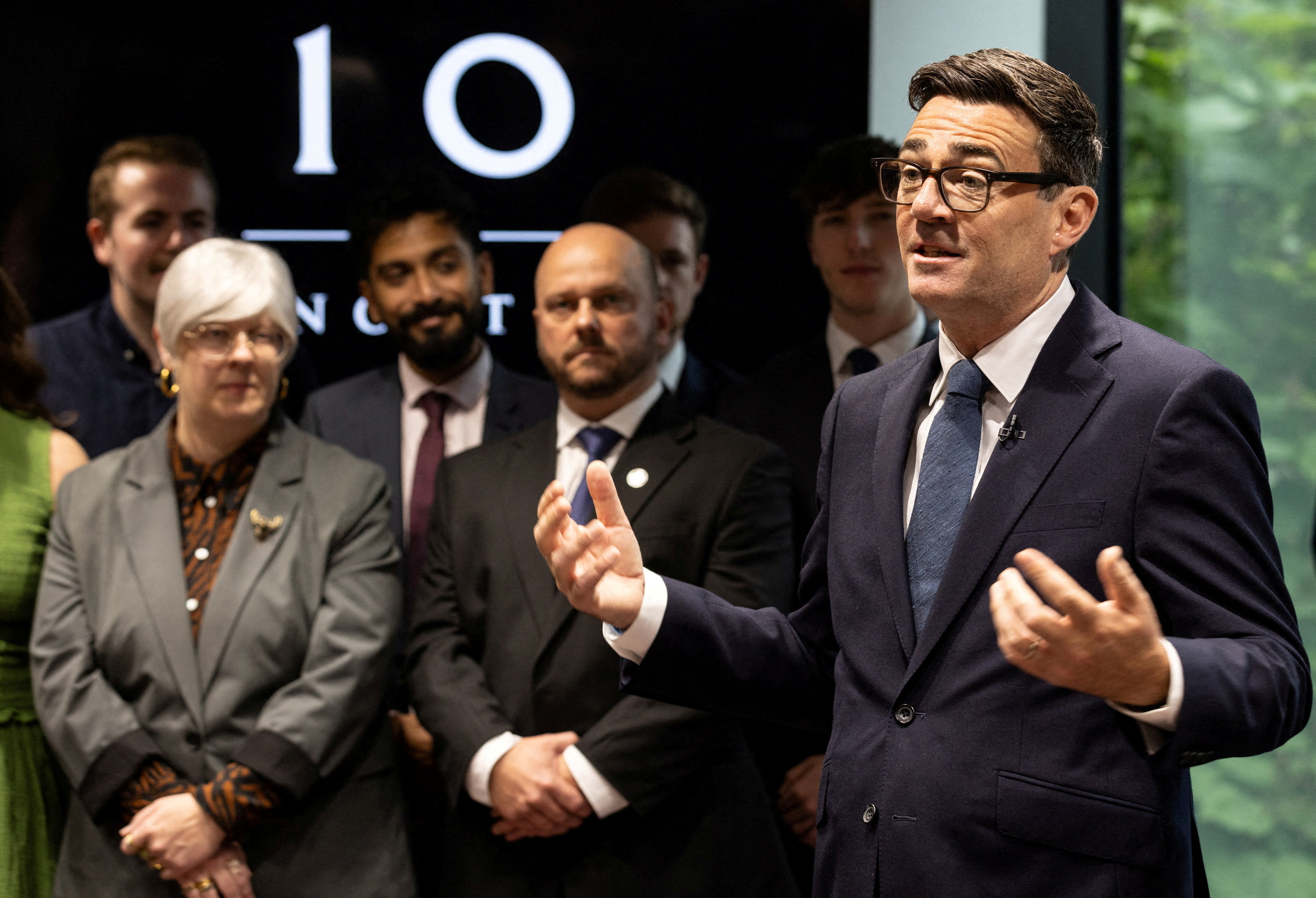
Labour pins hope for continued power on man who has overcome a series of hurdles to find his way to the top
There were no tanks in Whitehall, the King is still on his throne and the BBC is not broadcasting putschist propaganda, but there was a successful coup in Downing Street when Keir Starmer was forced toresign and Andy Burnham MP became UK prime minister on Monday.
The term a very British coup, is from the title of book by the former Labour MP and journalist Chris Mullin, published in 1982 and 1988 TV series about the removal by the British establishment of an imaginary left-wing prime minister with a radical left-wing agenda.
Real life almost imitated art when the very real left-wing radical Jeremy Corbyn nearly became prime minister in 2017 when Conservative prime minister Theresa May called a snap election thinking he had no chance. She was wrong; Corbyn was surprisingly popular and she lost her overall majority.
Perversely, the term very British coup was adapted and applied to the removal of the very right-wing prime minister Margaret Thatcher as prime minister in 1990 when it became a byword for the velvet overthrow of a party leader by the intrigue of ruthless colleagues in their own party.
Like Starmer, she was removed despite winning a general election by a landslide – in her case in 1997. The fact that she had won a landslide the third time round meant nothing to an ungrateful party once they became convinced she could not win the next time and they would lose their seats.
She was succeeded by John Major who went on to win the 1992 general election for the Conservatives – a precedent that the present crop of Labour MPs hope will work for Andy Burnham.
But it did not work when Gordon Brown succeeded Tony Blair as prime minister in 2007 and lost the 2010 general election. The handover from Blair to Brown, however, was more a voluntary transfer of power than a coup as there was an understanding between them that Brown would not oppose Blair as leader of the Labour Party if Blair would make way for Brown as prime minister once in power.
It was said thatMajor rose without trace, and it is true that he became foreign minister and finance minister in 1989 and prime minister in 1990 imperceptibly from a very modest background and managed to defeat Conservative heavyweights like Michael Haseltine and Douglas Hurd for the top job.
All this wheeling and dealing is possible in the UK because command of a majority of seats in parliament is essential for someone to stay prime minister. You are elected by party members but if you lose control of your party in parliament you cannot govern and have to resign.
Both Thatcher and Starmer lost control of their party in parliament. The Labour Party was wiped out in the local elections last May when most of its MPs sensed from the electorate that they could not win with Starmer as leader and they ruthlessly threw him to the wolves.
But Burnham’s path to power had hurdles to negotiate all the way to the top. Unlike Major, he did not rise with no trace. The reverse in fact. He fought two elections to become leader of the Labour Party. In 2010 he lost to Ed Miliband – famously called the wrong Miliband by the right of the Labour Party who preferred his brother David.
Burnham was a candidate again in 2015 when Miliband resigned after losing the 2015 general election. He thought he was in with a chance when Jeremy Corbyn, who did not want the job, threw in his hat as a token left-wing candidate and won it hands down to everyone’s surprise and Burnham’s great frustration.
Corbyn made Burnham shadow interior minister but he resigned his place in the shadow cabinet and his seat as an MP and went off north in a huff to become mayor of Manchester.
But when Starmer began to lose his grip on the Labour Party in 2025 Burnham began to plot his return to parliament. Starmer knew this and tried to prevent him from returning for fear he would challenge him for leadership of the Labour Party. He blocked Burnham from becoming the Labour candidate for MP in a by-election in Gorton and Denton in Manchester in February 2026 that Labour lost to the Green Party. But he could not block his return when John Simons MP gave up his seat in Makerfield to enable Burnham to fight and trounce Reform UK in the north. It was the result of the election in Makerfield that inevitably led to Starmer’s downfall.
The coup against Starmer was unusual in that the Labour Party usually tears itself apart in opposition, not in government. But politics ain’t what it used to be. Reform UK, the new populist anti-immigrant party of the far right and its charismatic leader, Nigel Farage, appeal to Labour’s working-class voters in the north of England and Wales who feel left behind by government and scapegoat illegal immigrants for their plight.
Of course, illegal immigrants pose a serious problem and Burnham has kept Starmer’s tough immigration minister to stem the flow and showed he can outperform Farage and Reform in the north.
But in any case, thepoliticians to blame for the illegal arrival of immigrants in small boats are Farage and Boris Johnson. They inflicted Brexit on the UK and by doing so they disabled it from returning illegal immigrants arriving in small boats straight back to where they came from in the EU under the Dublin Convention —now the the 2026 Asylum and Migration Management Regulation.




Click here to change your cookie preferences