
As the visit of UN Secretary-General Antonio Guterres to Cyprus came and went, I found myself reflecting on how bereft the world seems of genuine leadership.
There was a time when the United States and Europe were looked to for direction. Whether or not one agreed with their policies, their leaders possessed a stature that commanded attention. Today that is no longer the case. With Donald Trump back in the White House, America is demonstrating what leadership should not be. In Britain, a country once synonymous with political stability, six prime ministers in less than a decade have turned what was once an Italian stereotype into a British reality.
Leadership is about more than occupying high office. Leaders inspire others to follow them. They have the courage to point the way forward, even when that path is unpopular or uncertain.
To succeed, leaders need two essential qualities. The first is the ability to earn people’s trust – enough for them to follow despite the uncertainties that lie ahead. That trust may stem from personal character or from a proven record of overcoming adversity. Nelson Mandela exemplified the former. Margaret Thatcher’s leadership during the Falklands War reinforced the latter.
Trust alone, however, is not enough. Leaders must also possess the judgement to choose the right course. Results ultimately matter. Mandela’s greatest achievement was not that he created a perfect South Africa, but that he guided a deeply divided nation away from what could easily have descended into civil war. His example of reconciliation continues to inspire leaders around the world.
Watching The Odyssey recently, I found myself reflecting on another leader: Odysseus. Brilliant, courageous and resourceful, he nevertheless failed in one crucial respect. Although his ingenuity helped the Greeks win the Trojan War, he was ultimately unable to bring his men safely home. At critical moments, he could not persuade them to follow the wiser course. They ignored his warnings, and tragedy followed.
Leadership is measured not only by intelligence or vision, but by the ability to carry others with you.
That is the challenge facing Cyprus today.
No one should expect Guterres to unlock the Cyprus problem. By his own admission, his role is to facilitate dialogue, not to impose solutions. Ultimately, the responsibility rests with the parties themselves.
Of course, meaningful progress requires Turkey to engage constructively. That reality has been repeated so often that it has become a cliché, not to mention a convenient excuse for failure. But it also requires us, on our side, to approach the problem with clarity, imagination and empathy.
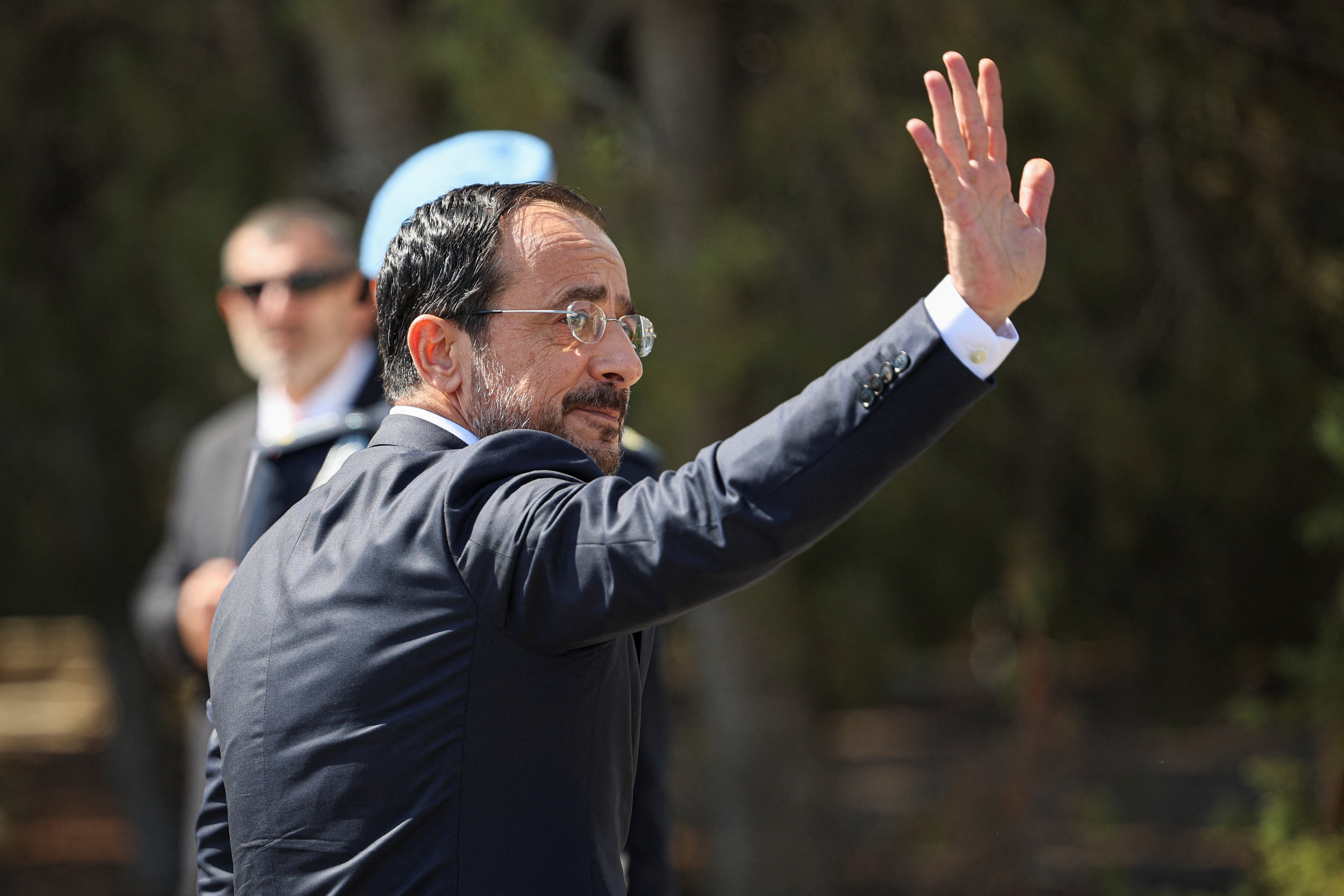
President Nikos Christodoulides has yet to demonstrate the kind of inspirational leadership this moment demands. He has earned a measure of credibility internationally by cultivating constructive relationships abroad. Yet diplomatic goodwill alone will not resolve Cyprus’ most intractable problem. The task before him is one that few leaders would envy.
Can he rise to the occasion?
The immediate signs following the Guterres visit are not especially encouraging. Yet, as Mandela reminded us, “It always seems impossible until it’s done.”
Christodoulides would do well to study Mandela’s example more closely. Madiba, as he was affectionately known, extended a hand of reconciliation to those who had oppressed the black majority for generations. In doing so, he demonstrated that true leadership sometimes demands forgiveness where resentment would be easier, and vision where fear would be politically safer.
Mandela himself, rejected any notion of sainthood. “I am not a saint,” he once said, “unless you think of a saint as a sinner who keeps on trying.”
That is perhaps the most important lesson for Cyprus.
We must continue trying until we find a way to live together peacefully. For Christodoulides especially, whose intentions are under scrutiny, this is a time to prove his worth. While we should remain vigilant against any Trojan horse offered by the Turkish side, we must also be willing to think creatively and challenge assumptions if we are ever to overcome decades of deadlock.
While I do not condone any solution for the sake of a solution (an accusation often bereted against supporters of a federation), I am well aware that for some, any solution is no solution at all.
Yet, in the end, it is not for me – or for the countless commentators filling media outlets and television studios – to prescribe the solution. That responsibility belongs, first and foremost, to Christodoulides.
My hope is simply that he chooses to emulate Mandela rather than Odysseus: a leader remembered not for his cleverness alone, but for bringing his people safely to a better future.
Loukis Skaliotis is an economist





Click here to change your cookie preferences