
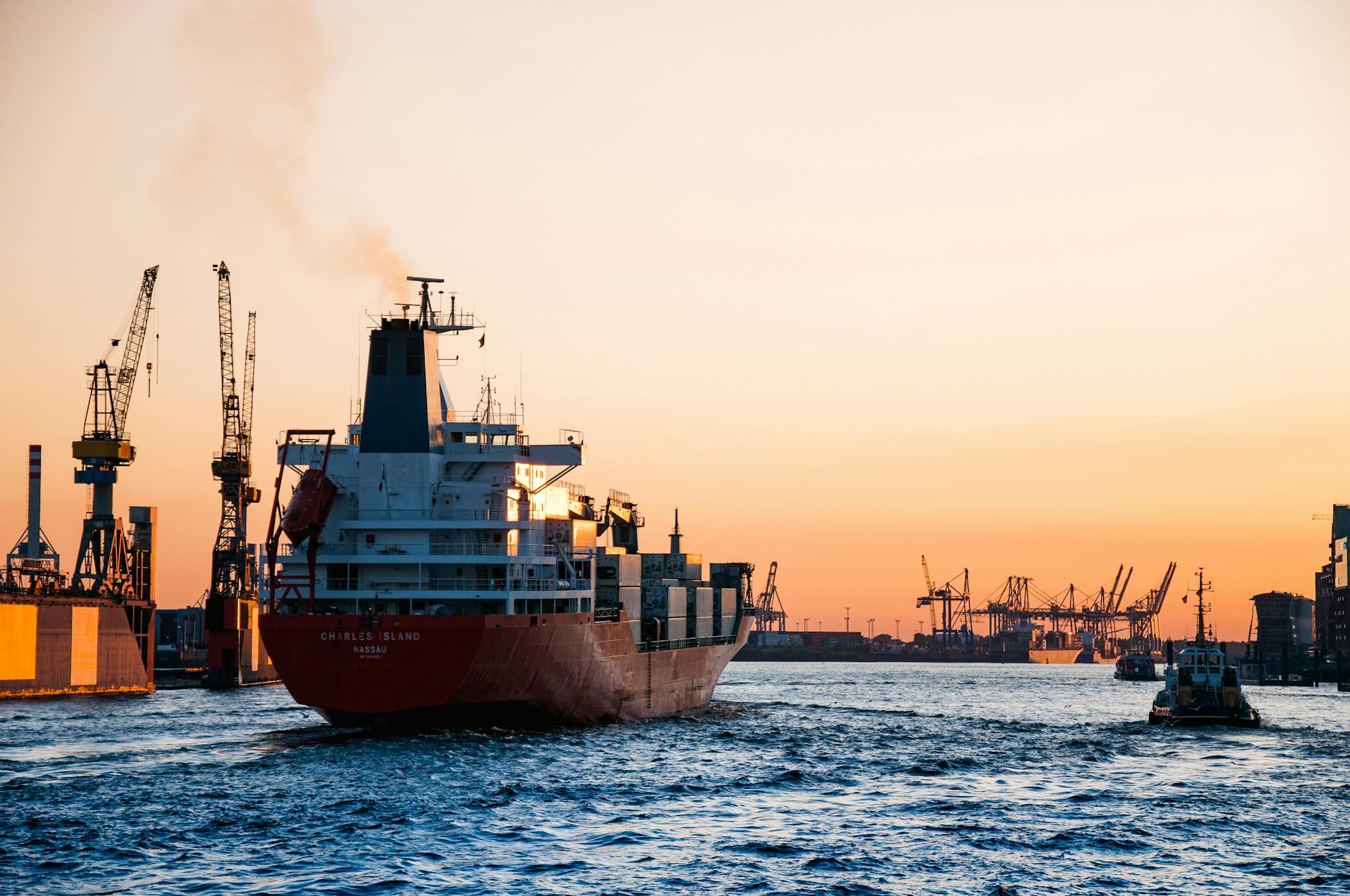
The world notices shipping when fuel prices rise, cargo is delayed or goods become more expensive. Far less attention is paid to the people still on board, watching through the night for drones and missiles.
That was the warning from International Maritime Organisation (IMO) Secretary-General Arsenio Dominguez, who told the UN podcast Awake at Night that seafarers have been pushed from one crisis to another since the Covid-19 pandemic.
Speaking to host Melissa Fleming, the UN Under-Secretary-General for Global Communications, Dominguez described the plight of 11,000 seafarers who were trapped for months in the Strait of Hormuz through no fault of their own.
Ships cannot simply be abandoned and must remain crewed around the clock. At the same time, replacing those on board becomes almost impossible when few seafarers are willing to enter a conflict zone.
Dominguez said, “They are just powerless,” explaining that crews faced exhaustion, disrupted communications and prolonged separation from their families.
One seafarer who eventually left the strait told him that crew members had taken turns keeping watch throughout the night.
“They knew that they couldn’t do anything about it,” Dominguez said. Still, watching for a drone or missile gave the rest of the crew some reassurance that somebody was looking out for them.
Despite their own shortages, seafarers also shared supplies between vessels, aware that neighbouring crews were facing the same ordeal. Their greatest concern, Dominguez explained, was that the world had stopped seeing them.
“What they really want is for people to remember them. They feel forgotten,” he said.
While news coverage concentrated on fuel prices, disrupted cargo and the wider economic cost, Dominguez added that “nobody talks about the seafarer”, renewing his call for more countries to recognise them as key workers.
The consequences extend far beyond the ships themselves. Around 20 per cent of the world’s oil, 19 per cent of liquefied natural gas and 13 per cent of fertilisers linked to global food security come from the region.
Following the peace agreement, the IMO began working on the evacuation of the stranded crews and the gradual restoration of safe passage through the strait. Dominguez welcomed the progress but stopped short of celebrating.
“I take every small gain as a positive step towards what we are all looking forward to, which is the full reopening of the Strait of Hormuz in a safe manner,” he said.
The first priority is to evacuate the seafarers, followed by demining the area and maintaining dialogue with the parties involved. Only then, he explained, can confidence return and trade begin moving normally again.
For Dominguez, Hormuz is only the latest example of commercial shipping becoming caught in geopolitical conflict. Ships continue to face attacks in the Black Sea, while Houthi strikes in the Red Sea forced operators to divert around the Cape of Good Hope.
The resulting collapse in traffic cost the Suez Canal about 70 per cent of its transit revenue during the disruption. More recently, piracy has also increased off Somalia and Yemen, possibly because attention and security resources had shifted towards Hormuz.
“My biggest concern is how geopolitics are utilising shipping as leverage and politicising it,” Dominguez said.
The pattern began during the pandemic, when some seafarers were unable to leave their vessels for as long as two years because borders were closed. Russia’s invasion of Ukraine followed, then the Red Sea attacks and the latest crisis in the Persian Gulf.
“Whenever you affect shipping, everybody else gets affected,” Dominguez said, pointing out that vessels carry about 90 per cent of global goods.
“Please do not take shipping for granted,” he added.
At the same time, the industry is under pressure to reduce its environmental footprint. The IMO’s greenhouse gas strategy, adopted in 2023, aims to decarbonise shipping by or around 2050, with possible solutions including ammonia, methanol, hydrogen-derived fuels, carbon capture and even nuclear power.
Nevertheless, cleaner fuels remain limited and the ports, infrastructure and technology needed to support them are not yet available on the required scale.
“That’s why I always call this a marathon and not a sprint race,” Dominguez said.
The interview also offered a glimpse of the man behind the role. Born in Panama, Dominguez grew up watching enormous vessels pass through the Panama Canal before studying naval architecture in Mexico and beginning his career in a shipyard.
He later spent two decades representing Panama at the IMO and joined the organisation’s secretariat in 2017. His optimism, he said, came largely from his mother, who took on extra work to support his studies and remained positive even when the family faced difficulties.
Asked what keeps him awake at night, Dominguez did not point to war, piracy or the enormous task of making shipping greener. “What I can do next,” he said, “I’m always thinking about what’s next.”



Click here to change your cookie preferences