
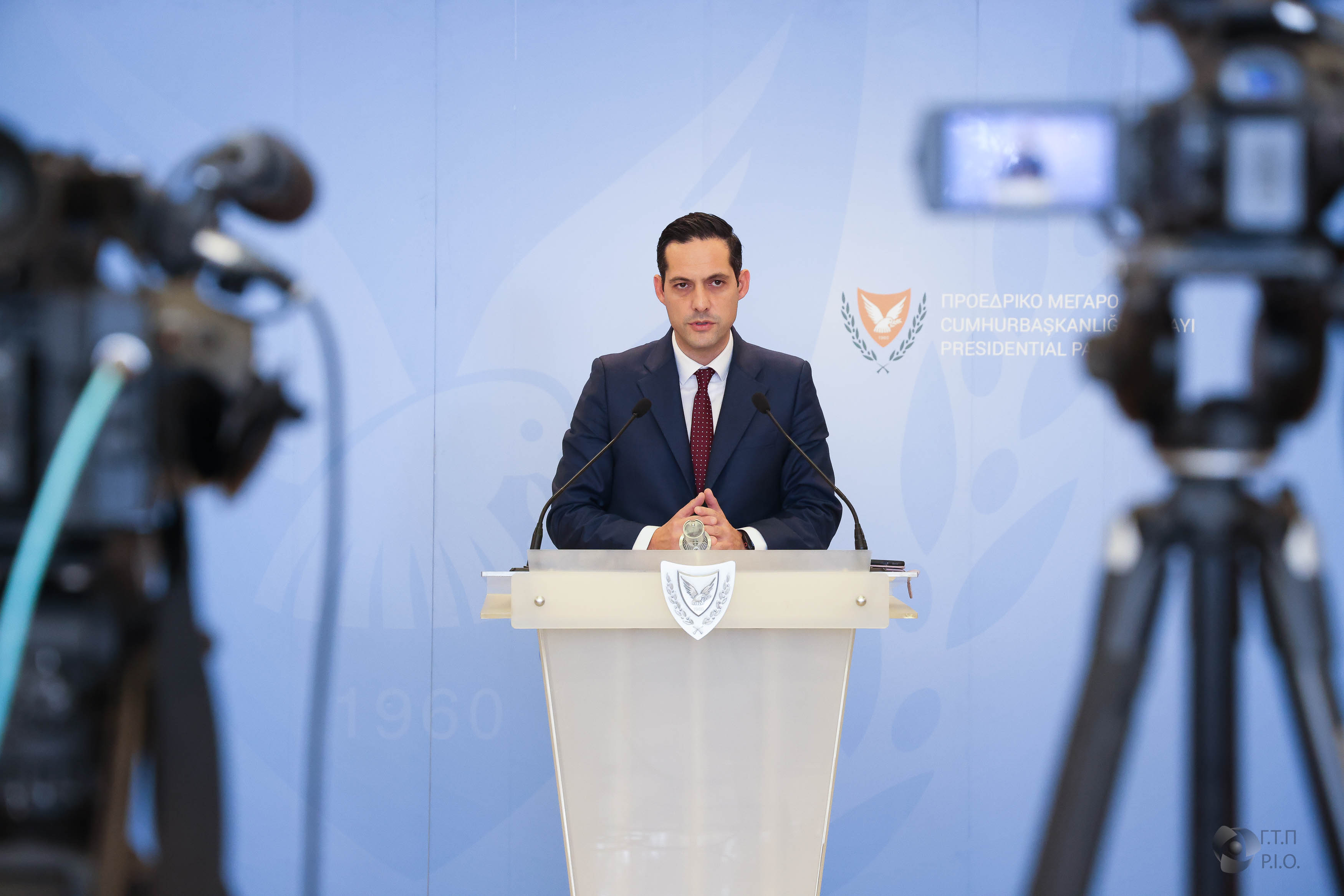
The European Union’s support for the Great Sea Interconnector project constitutes a “shield” against expected opposition to the project from Turkey, government spokesman Konstantinos Letymbiotis said on Wednesday.
He told CyBC radio that the project has a “strong geopolitical dimension”, and said that while there have been “significant technical and economic challenges” in its planning and implementation so far, “substantial progress has been recorded in those processes” of late.
As such, he said, the project is now “closer than ever” to being completed, particularly after French asset management firm Meridiam purchased a majority stake in it earlier this month.
He said Meridiam has “extensive experience” in conducting such projects, as it also built the cable which directly connected the electricity grids of the United Kingdom and Germany.
Meanwhile, Energy Minister Michael Damianos told CyBC television that a navtex, a message used to transmit information to seaborne vessels, will be issued “in the coming weeks” to warn sailors of plans to conduct seabed surveys for the laying of cables between Cyprus and Crete.
These surveys, he said, will be conducted by a French ship, and not the Italian research vessel the Ievoli Reulme that conducted previous seabed surveys for the interconnector project in 2024.
Earlier, Greece’s independent transmission system operator Admie, which owned the interconnector project until the Meridiam buyout, was quoted as having said that around 60 per cent of the seabed surveys have been completed thus far.
The remaining 40 per cent of the impacted seabed, it said, is located in disputed waters which are claimed by both Greece and Turkey.
These conflicting claims have impeded attempts to carry out seabed surveys between Cyprus and Greece before, with Turkish naval vessels being deployed in 2024 after the Ievoli Reulme strayed into what Turkey believes to be its own waters.
The naval vessels escorted the research ship away from Turkey, but not before Greece, too, dispatched a number of its own naval vessels, including the frigates the Nikiforos Fokas and the Aittitos, to the area.
In response, the European Commission said that it “continues to expect Turkey to unequivocally commit to and promote good neighbourly relations and the peaceful settlement of disputes”.
The dispute about the ownership of the waters stems from the question of whether islands generate their own exclusive economic zone (EEZ) or not.
Greece and the Republic of Cyprus, citing the United Nations convention on the law of the sea (Unclos), state that they do, while Turkey, which is not a signatory to Unclos, states that they do not.
As such, according to Turkey’s position, beyond the 12 nautical miles of territorial waters to which Turkey believes both islands are entitled, the sea between Cyprus and Crete is Turkish.
By contrast, the position held by Greece and by the Republic of Cyprus is that, given that islands generate a full EEZ, the EEZs of Greece and Cyprus border one another south of Kastellorizo, Greece’s easternmost inhabited island.





Click here to change your cookie preferences