
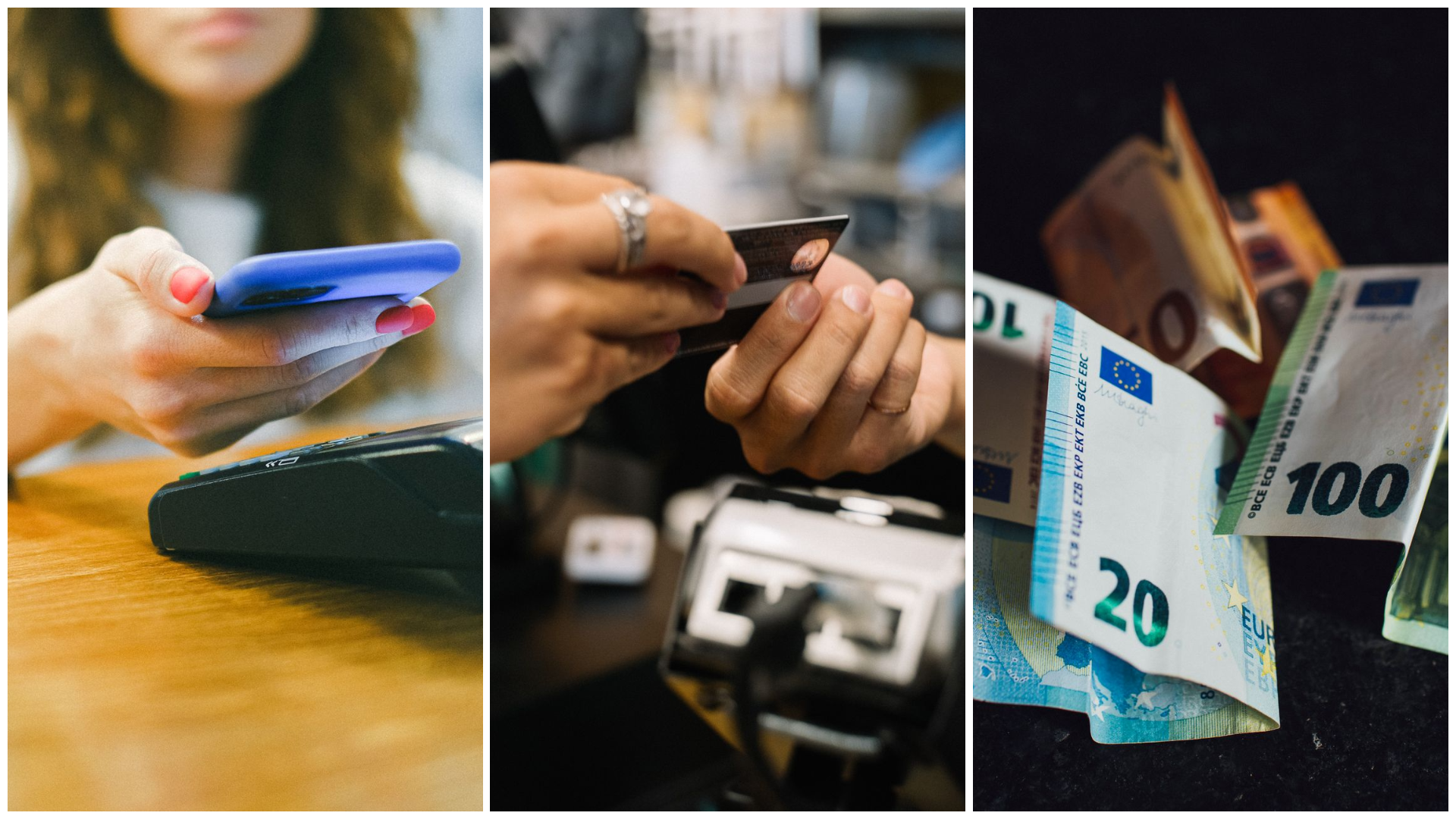
European businesses balance digital boom with physical money
European businesses are embracing digital payments at speed while continuing to rely heavily on cash for privacy, reliability and resilience, a tension that could shape the European Central Bank’s (ECB) case for introducing the digital euro and test how consumer rights are protected as payment data becomes increasingly digital.
Recently-published ECB survey findings show that 92 per cent of euro area businesses with physical points of sale accept cash, making it the bloc’s most widely accepted payment method, even as the acceptance of mobile payments has almost doubled in two years.
Mobile payment acceptance rose from 36 per cent of businesses in 2024 to 68 per cent in 2026, while card acceptance remained broadly stable at 88 per cent.
The figures point to a payments market in which digital methods are expanding rapidly without displacing cash to the extent that might have been expected following the pandemic.
Cash acceptance actually recovered slightly, rising from 90 per cent in 2024 to 92 per cent in 2026 after declining during and immediately after the pandemic.
The reason is not simply consumer habit. Businesses continue to see privacy and reliability as major advantages of cash, particularly when compared with digital payment methods.
That creates an increasingly important question for policymakers as payments become more automated and the amount of information generated by everyday transactions grows.
Digital payments can make commerce faster and more efficient, but they also create records that can potentially be collected, analysed and used in ways that cash transactions do not.
The distinction is particularly relevant to the ECB’s digital euro project, which is intended to offer a digital form of central bank money while retaining some of the characteristics that people associate with cash.
At the same time, the shift towards digital payments is being actively encouraged by businesses themselves.
Around 25 per cent of euro area companies have taken steps to promote digital payments, including investing in tills that accept cashless payments or reducing the number of tills that accept cash.
A further 13 per cent have introduced self-checkout terminals.
For businesses, digital payment systems can therefore offer advantages beyond the transaction itself, including faster processing and potentially more efficient use of staff and checkout space.
Yet the ECB findings suggest that companies are not necessarily choosing between cash and digital payments.
Consumer preference, security and ease of handling are the main considerations when businesses decide which payment methods to accept, while cash continues to offer qualities that digital systems struggle to replicate.
That tension is particularly relevant in Cyprus, where consumers are moving rapidly towards electronic payments while maintaining a strong attachment to cash.
A Central Bank of Cyprus (CBC) survey found that 61 per cent of Cypriots had no knowledge of the digital euro, while only 1 per cent considered themselves fully informed about the project.
Maria Kontou, who conducted the research, said digital payments had expanded rapidly over the past decade, both internationally and in Cyprus, with electronic wallets and mobile applications increasingly being used for transactions in shops and online.
The digital euro is being developed by the ECB as “a digital form of money” that would be issued by the central bank and available throughout the euro area for payments both with and without an internet connection, Kontou said.
Work is continuing on both the legal framework and the technical infrastructure required for its introduction, with the first launch currently targeted for 2029.
The Cyprus survey, carried out through 506 telephone interviews among people aged 18 and over across the island, found that cash remained the most widely used payment method despite the rapid expansion of alternatives.
Credit and debit cards were used weekly in physical shops by 63 per cent of respondents, while 23 per cent made online payments or money transfers through internet banking and mobile applications each week.
Among those paying by card through their mobile phones, 40 per cent used the method weekly.
Cheque use, meanwhile, had become “very limited”, Kontou said.
Cash remains important across the wider euro area too. The ECB’s 2024 study on consumer payment attitudes found that cash accounted for 52 per cent of small payments in physical shops and remained widely used for payments between individuals.
Some 62 per cent of European consumers considered the ability to pay with cash “very important”, highlighting the continued role of physical money even as digital alternatives proliferate.
The Cyprus data also reveal a clear demographic divide in payment habits.
Daily cash users tended to have more limited access to digital services and were mainly older men with lower levels of education and income, as well as pensioners and unemployed people.
Those favouring digital payments, including internet and mobile banking and card payments through mobile phones, were mainly women under 45 who had tertiary education, belonged to middle and higher-income groups and lived in urban areas.
People who preferred a combination of physical cards and cash were mainly middle-income women living in urban areas.
Cheque users were primarily older men and businesspeople, the CBC reported.
At the same time, knowledge of the digital euro was also higher among certain groups.
Those with at least some understanding of the project tended to be under 65, university graduates and people in employment.
Those who had simply heard about it tended to be older men with university education and higher incomes, generally living in urban areas and working in business, self-employed roles or management.
Social media was the most common source of information among those familiar with the digital euro, used by 49 per cent, while 30 per cent had encountered information through television programmes.
Conferences and seminars were the least popular source of information.
Younger people, employees, middle and lower-income groups and rural residents were more likely to rely on social media.
Television was more commonly used by older people, lower-income groups, those with less education and unemployed people.
Higher-income groups, university graduates, urban residents, businesspeople, the self-employed and managers were more likely to prefer printed and online newspapers.
Despite growing digital payment use, enthusiasm for the digital euro remains limited.
Only 35 per cent of Cypriot respondents said they were willing to use it in their daily lives, while 28 per cent considered it somewhat unlikely or very unlikely that they would adopt it.
Those willing to use it were mainly under 45, employed, university educated and from higher-income groups.
Among potential users, 41 per cent said they would use the digital euro for purchases in shops and 40 per cent for online shopping.
Another 33 per cent would use it for payments between individuals, while 17 per cent were unsure what transactions they would carry out with it.
The biggest obstacle may be that many consumers do not see a clear reason to switch.
Just 19 per cent believed the digital euro would offer a genuinely different way of making transactions, while 56 per cent did not believe it would offer anything “truly different” from existing payment methods.
Privacy emerged as the most significant concern. Fifty-three per cent of respondents feared that their transactions could be monitored, while the same proportion expressed concern that the introduction of the digital euro could eventually lead to cash being abolished.
Security was a concern for 38 per cent, while 25 per cent were worried about how they would manage their spending using the digital currency.
Ease of use generated less concern, although 30 per cent still expressed serious reservations about it.
The strongest reservations came from women, older people, lower-income groups and those without tertiary education, as well as unemployed people and respondents who had no prior knowledge of the digital euro.
Businesses were considerably more receptive. Among business owners, managers and self-employed respondents, 54 per cent said they would accept digital-euro payments without reservations.
Another 9 per cent said their decision would depend on factors including cost, ease of implementation and customer demand, while 27 per cent said they would not be willing to accept digital-euro payments.
The question of resilience is also significant in Cyprus. CBC payments data show that the number of ATMs on the island fell only slightly from 398 at the end of the second half of 2024 to 396 a year later, despite new machines being installed in remote and mountainous areas.
Those additions were more than offset by removals elsewhere, mainly in central locations.
At the same time, more than 73 per cent of Cyprus’s ATMs supported contactless transactions, compared with just 38 per cent across the euro area.
That puts Cyprus well ahead of the wider euro area in terms of contactless cash infrastructure, even as the number of machines has declined.
The number of ATMs across the euro area fell from 252,249 to 248,888 over the same period.
Over five years, ATM numbers have fallen by around 13 per cent in both Cyprus and the euro area, a trend linked to declining cash use and banks’ efforts to reduce operating costs.
Cyprus has nevertheless experienced one of the strongest shifts away from cash at the point of sale.
According to the ECB’s SPACE study, it recorded the largest decline in the share of cash payments at the point of sale among euro area countries between 2022 and 2024 by volume.
Yet the continuing importance of cash is demonstrated by the amount still being withdrawn.
Cypriots withdrew about €2.6 billion from ATMs during the second half of 2025, broadly unchanged in total value from the previous year.
The number of withdrawals fell, however, meaning the average amount taken out each time increased.
The average ATM withdrawal rose by 27 per cent, from €307 in the second half of 2022 to €390 in the second half of 2025.
This suggests that consumers may be withdrawing cash less frequently while taking out larger amounts each time.
Cash access is also becoming more diversified through services such as cashback at tills.
ATM withdrawals remain the main way of obtaining cash in Cyprus, but cashback has gained ground and is becoming an increasingly important complementary channel.
Over-the-counter cash withdrawals at bank branches have meanwhile almost halved over the past three years.
The decline appears to reflect both greater use of ATMs and alternative channels and demand for lower-cost services, as banks seek to reduce reliance on physical branches.
The wider payments figures reinforce the scale of Cyprus’s digital shift. Non-cash payment transactions increased in both volume and value during the second half of 2025, with card payments accounting for 75 per cent of all non-cash payment transactions by volume.
That was the highest share recorded among euro area countries. Online card payments also had significantly higher average transaction values than card payments made in physical shops, with Cyprus recording one of the highest average values for online card transactions in the euro area.
Credit transfers remained the dominant non-cash payment method by value, accounting for 84 per cent of the total value of non-cash payments in Cyprus.
Cheques continued to decline but remained the second most important payment instrument by value, reflecting their continued use in certain business and property transactions.
Instant euro credit transfers have also grown significantly over the past three years in both Cyprus and the euro area.
Growth has been stronger in Cyprus, allowing the country not only to close its previous gap with the euro area but to move ahead of the average following implementation of the EU’s Instant Payments Regulation.
Taken together, the figures present a more complicated picture than a straightforward transition from cash to digital payments.
Cyprus is adopting digital payment technology rapidly, with mobile payments, online banking, cards and instant transfers becoming increasingly important.
But businesses and consumers continue to value cash for reasons that go beyond habit, including privacy, reliability and the ability to function without dependence on digital infrastructure.
That creates a difficult balance for the digital euro. The ECB’s broader retail payments strategy is intended to strengthen Europe’s strategic autonomy while improving efficiency, competition and resilience.
A digital euro could potentially offer some of the privacy characteristics associated with cash while giving consumers and businesses the convenience of electronic payments.
But the Cyprus findings suggest that privacy cannot simply be assumed by consumers to be built into a new digital payment system.
More than half of respondents are already worried about transaction monitoring and the possible disappearance of cash, meaning trust and consumer rights could be as important to adoption as convenience.
The business findings add another dimension. Companies are clearly willing to embrace digital systems when they can reduce friction, improve efficiency and respond to customer demand, but they have not abandoned cash because it remains useful in its own right.
For policymakers, that means the digital euro is unlikely to succeed simply by offering another way to pay.
Its case will depend on whether it can provide meaningful advantages while preserving the qualities of cash that consumers and businesses are reluctant to lose.





Click here to change your cookie preferences