
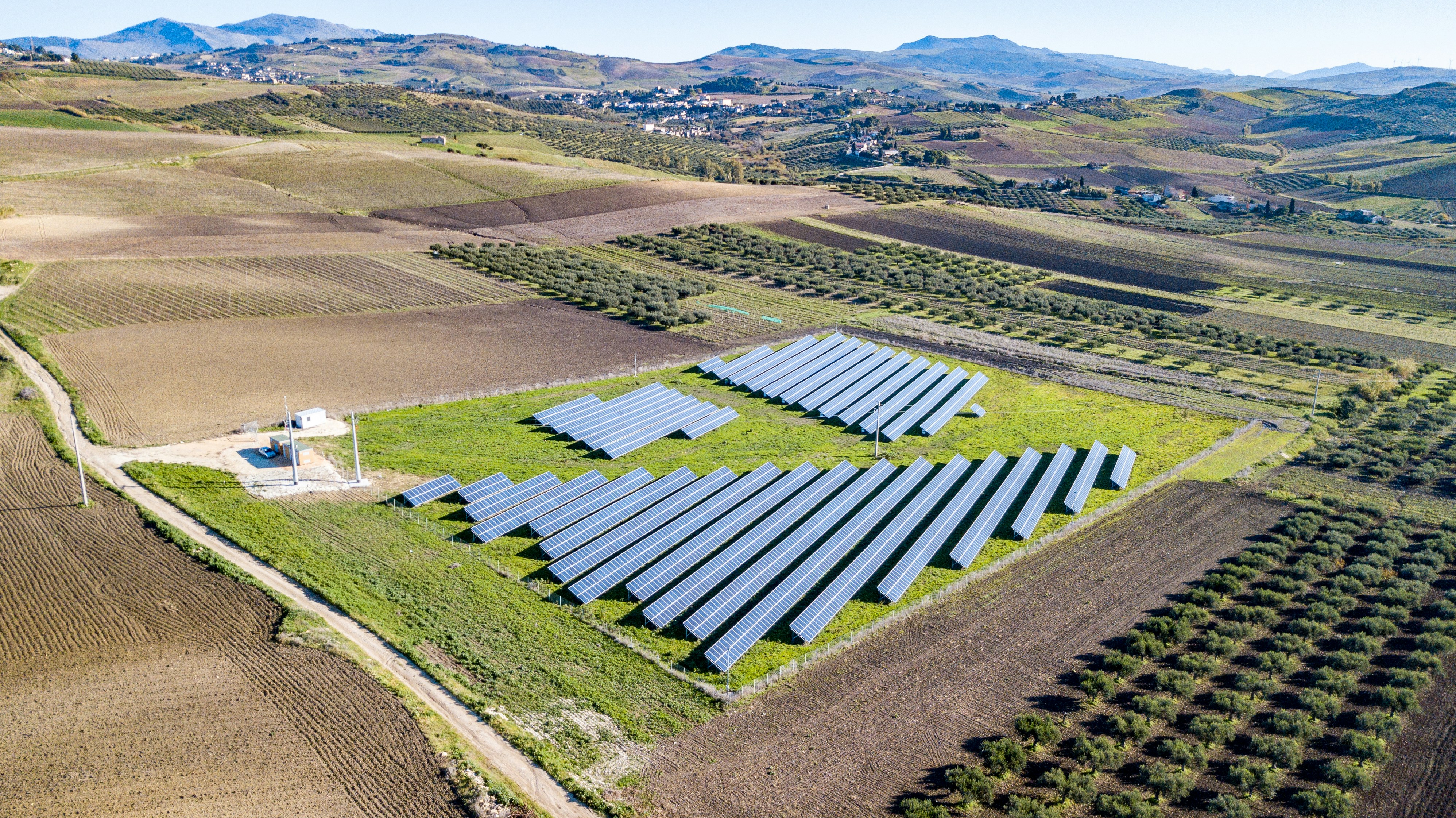
Owners of commercial solar parks on Monday took to task the leader of the Direct Democracy party Fidias Panayiotou, who claimed businesses could slash their prices by as much as 20 per cent and still make a profit.
Earlier, Panayiotou had publicly urged President Nikos Christodoulides to intervene in the matter of high electricity prices. The MEP asserted that it costs solar parks between 5 to 8 cents per kilowatt-hour to generate electricity, but they sell the power for anywhere from 25 to 30 cents.
Based on this huge difference, Panayiotou said, electricity bills could be cut by up to 20 per cent.
Responding, the Energy Market Association (EMA) rejected the notion its members are making windfall profits.
They said Panayiotou’s claims fail to take into account solar parks’ operating costs, overheads, lack of energy storage and – most of all – the frequent curtailments to renewables.
According to the EMA, solar energy from commercial parks corresponds to just 6.4 per cent of the total energy traded since the launch of the competitive electricity market in 2025.
At the same time, it added, the average price of this energy was considerably lower than the figures cited by Panayiotou.
Weighing into the discussion, an electricity systems expert said the average price of solar energy sold on the day-ahead market comes to 14.48 cents per kilowatt-hour. According to the same expert’s calculations, a simulation showed that, with a price cap of 11 cents, the weighted average price would be reduced by just 1.8 per cent rather than by the 20 per cent suggested by Panayiotou.
“Mr Panayiotou cannot question the above data with generalities and aphorisms,” the EMA said. “Numbers are answered with numbers, and data with data.”
The association went on to say it has invited Panayiotou for a discussion of the matter.
The EMA is a member of the Federation of Employers and Industrialists (OEV).
Later in the day, in an apparent dig at Panayiotou, OEV itself released a statement where it said that “oversimplifications will not bring down the cost of electricity”.
The federation stated that no single intervention is capable of resolving the problem of high electricity prices in Cyprus.
“No action on its own, not even the country’s electricity link to Greece and Israel, can yield spectacular reductions in the cost of electricity. Rather, it must be understood that the investments required for the necessary infrastructures need to be written off, something which in the short term will drive electricity prices up.”
OEV added: “Oversimplifying a complex matter with well-sounding but unsubstantiated claims, targeting one or more participants in the electricity market, and fostering a belief that simple and fast actions will bring down the cost of electricity, is not just misleading – it is also dangerous.”
Following years of delays, Cyprus officially launched its full competitive electricity market in October 2025.
The market operates with multiple private participants (including conventional producers, independent suppliers, aggregators, and green energy producers) trading in 30-minute intervals.





Click here to change your cookie preferences