
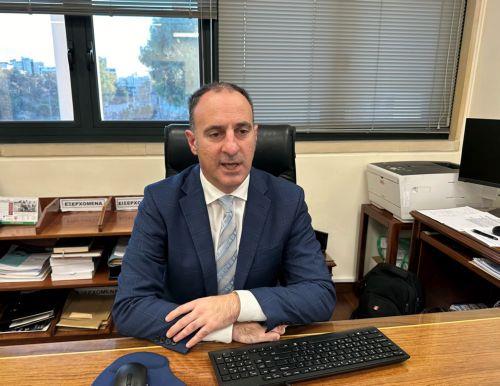
Bank transfers accounted for 85 per cent of the total value of government receipts during the first half of 2026, reflecting the state’s rapid shift towards digital payments, accountant-general Andreas Antoniades told the Cyprus News Agency (CNA).
Alongside bank transfers, online payments represented 10 per cent of receipts, while electronic payments made in person accounted for a further 1 per cent. This left just 4 per cent for traditional payment methods.
Antoniades said the prevalence of electronic payment channels was now “universal in the state”, while the use of digital methods to settle debts to the government continued to increase.
According to him, the figures confirmed “the smooth path towards the complete digital transformation of state transactions”.
This shift is expected to deepen under a new contract for processing electronic government transactions, signed with VivaBank Single-member Banking Company on August 12, 2026.
The contract, awarded following a tender by the Treasury of the Republic, is worth €4.1 million, with the new technical solution expected to be implemented and completed during 2027.
Antoniades explained that “the provision of services by the new contractor will cover a period of three years, with the right to renew by the government for one plus one year, while, in addition, the evaluation, preparation and technical interconnection are included”.
Until the new system becomes operational, card transactions for the state will continue to be cleared under the existing contract with JCC Payment Systems Limited, which was recently renewed.
Approximately €1.5 billion in government receipts is processed through JCC each year, Antoniades said.
At the same time, the government is gradually withdrawing the remaining traditional methods used to settle debts to the state.
Personal cheques have not been accepted from either individuals or businesses since January 1, 2026, while banker’s drafts remain temporarily available. However, Antoniades said the government intended to stop accepting them in the near future.
Once banker’s drafts are withdrawn, cash is expected to remain the state’s only traditional payment method. It is currently accepted for transactions of up to €10,000.
Antoniades described the transition towards a fully digital payment environment as a key part of the state’s broader digital transformation.
Explaining the benefits, he said “the use of modern technologies and secure electronic transaction channels enhances speed, accessibility and transparency in serving citizens and businesses”, while also “contributing to the reduction of administrative costs and the operational burden of public administration”.
Moreover, the continuous upgrading of digital infrastructure and the adoption of new payment solutions would help make public administration more efficient and accessible.
Antoniades said these efforts were creating the conditions for “a more efficient, modern and citizen-friendly State”, while ensuring that public resources were used as effectively as possible.




Click here to change your cookie preferences