
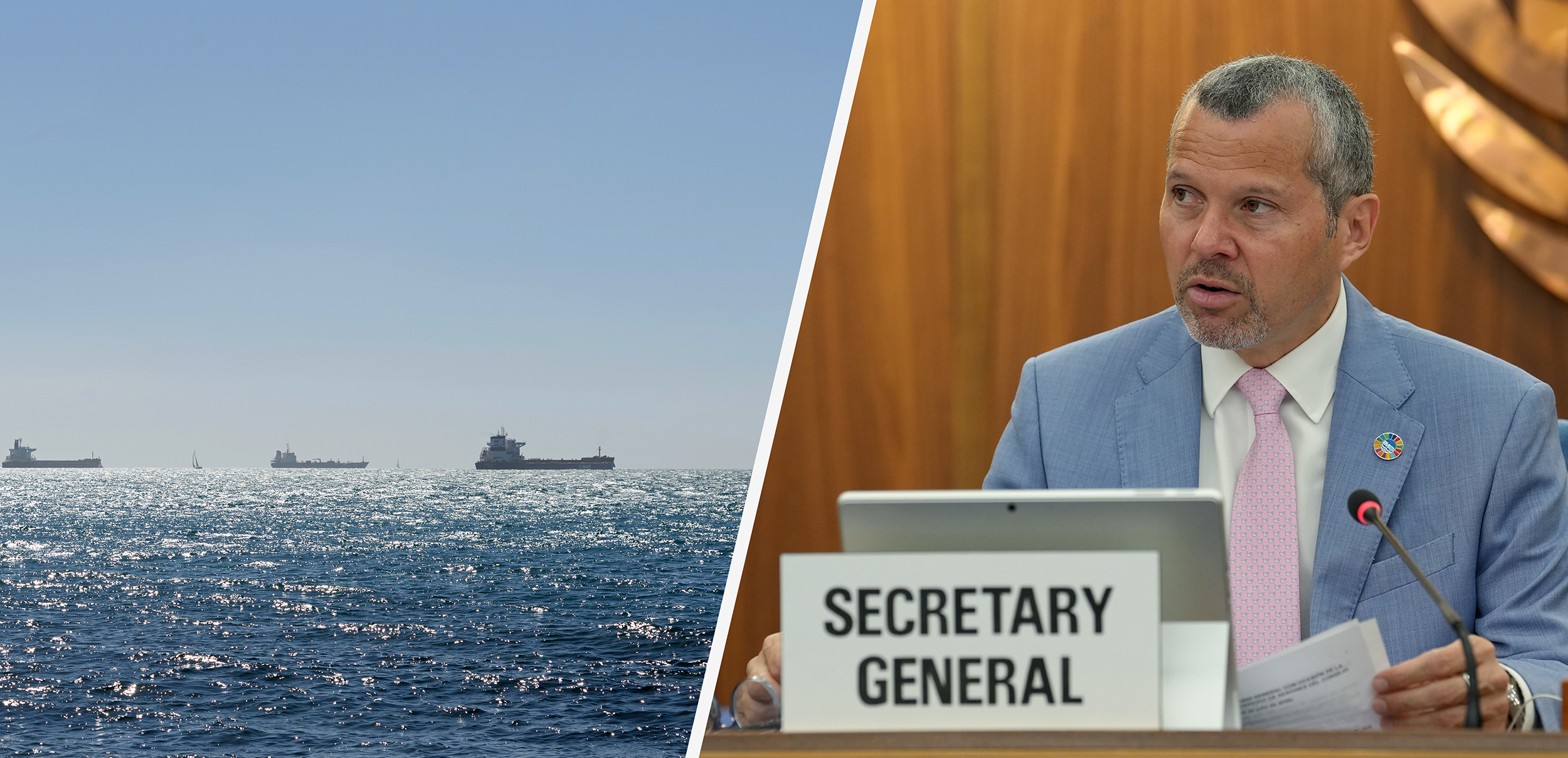
Up to 400 ships carrying around 6,000 seafarers remain unable to leave the Persian Gulf safely, six months after the Middle East conflict began, according to the International Maritime Organisation (IMO).
IMO Secretary-General Arsenio Dominguez said the situation in the Strait of Hormuz remained unresolved, leaving thousands of seafarers living and working under “conditions of heightened risk and uncertainty”.
While some vessels and their crews have managed to leave the region, hundreds remain unable to depart safely.
The disruption is affecting a much larger number of maritime workers. According to the IMO’s latest information, more than 20,000 seafarers are affected across the region, alongside port workers and offshore crews.
Meanwhile, the IMO has verified 70 attacks on international shipping as of August 26, which have resulted in the deaths of 19 seafarers.
The confirmed incidents include fatal attacks on the Minoan Dignity and Riyan Star in August, while another seafarer remains missing following an incident involving the Minoan Pioneer earlier in the month.
In response to the crisis, the IMO Council called in March for the establishment of a temporary safe maritime framework to help merchant vessels confined within the Gulf leave the region.
The voluntary mechanism was designed for vessels covered by the International Convention for the Safety of Life at Sea that wished to depart, while preserving the rights and freedoms of navigation under international law.
According to IMO figures, the framework helped 136 vessels carrying an estimated 2,900 seafarers leave the region between June 23 and June 26.
However, the evacuation operation was subsequently temporarily paused after a vessel that had passed through the Strait of Hormuz was attacked in the Gulf of Oman.
The ship had not travelled under the IMO framework, but Dominguez said the operation needed to be paused while the organisation reconfirmed that the necessary safety guarantees remained in place.
The IMO is also participating in a United Nations-led task force on the Strait of Hormuz, working with member states and the shipping industry on the wider response.
Against this continuing uncertainty, Dominguez warned that the effects of the crisis were serious in both the short and long term, with disruption to supply chains for fuels, fertilisers and other commodities affecting communities and economies worldwide.
In July, the IMO Council adopted a resolution protecting vital shipping lanes and condemned attacks on civilian commercial vessels in and around the Strait of Hormuz.
It reaffirmed that transit passage through straits used for international navigation must not be threatened, impeded, denied, hampered, impaired or suspended.
Moreover, the Council said any regional arrangement must guarantee non-discriminatory and unimpeded passage for all vessels through the internationally recognised traffic separation scheme, which was adopted by the IMO in 1968.
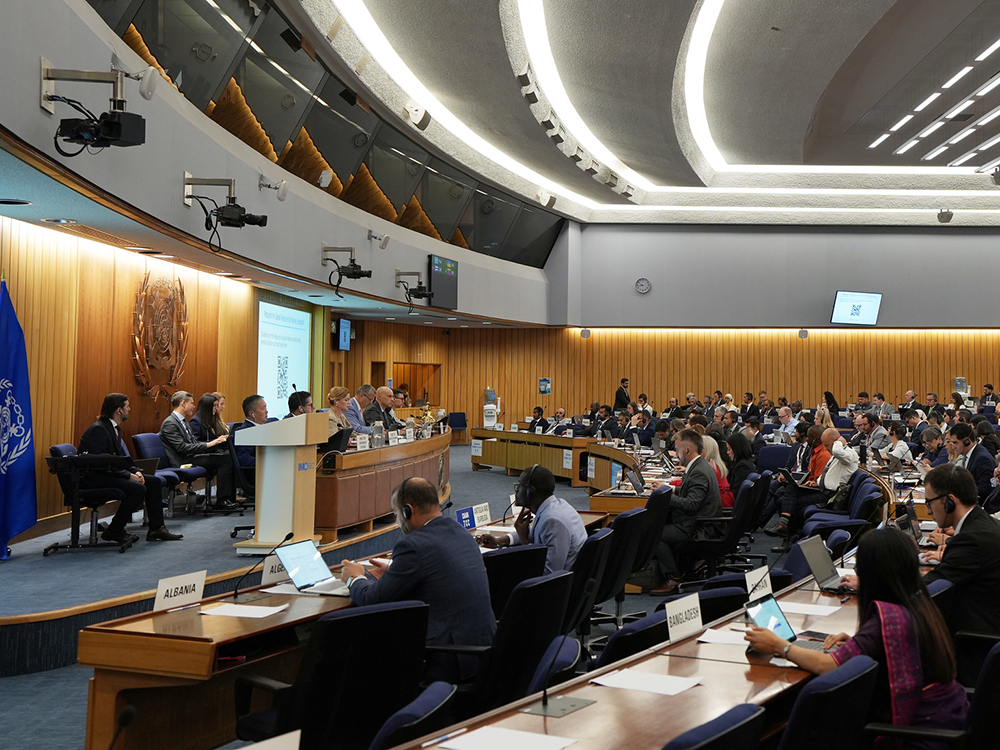
It also stressed that passage through the Strait should remain free from tolls and charges, in accordance with international law, while calling for the de-escalation of tensions in the region.
However, Dominguez said renewed political will and cooperation were required to fulfil those commitments.
“I call on all Member States and the shipping industry to work together with IMO and the wider United Nations system, to advance practical solutions to restore the freedom of navigation through the Strait,” he said.
He also warned that maritime security was deteriorating across several regions, including the Black Sea, Red Sea and Gulf of Aden.
“The deterioration of maritime security around the globe, from the Black Sea to the Red Sea and Gulf of Aden, is detrimental to us all,” Dominguez said, adding that it was “particularly distressing for the thousands of innocent seafarers affected”.





Click here to change your cookie preferences