
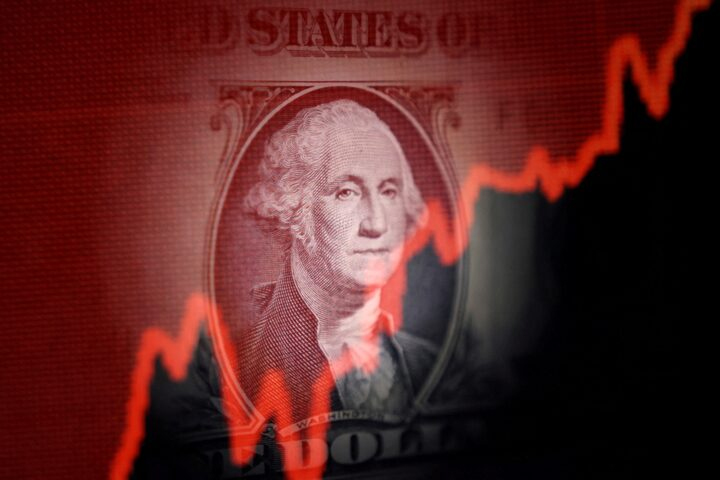
For decades, international markets treated US government bonds as a zero-risk asset and safe haven during times of crisis. However, the escalating US national debt is causing concern, broadly affecting asset pricing, sovereign credit ratings and interest rate structures on a global scale, thereby challenging the traditional view of US Treasuries as the ultimate risk-free benchmark.
Official data reflects the scale of the problem. According to the US Department of the Treasury, the US national debt has already surpassed $40 trillion, reaching 127 per cent of GDP, after more than doubling within a single decade.
To put this into perspective, this debt load translates to approximately $120,000 for every citizen of the US, with the national liability growing by nearly $7 billion every day.
This explosive rise reflects years of undeterred federal spending by both Republican and Democratic administrations, compounded by emergency economic stimulus packages, tax cuts and statutory spending commitments.
While there are valid reasons for the increase in debt during challenging times (such as during the pandemic), the most alarming aspect is the cost of servicing the mountain of accumulated debt.
Interest expenses are currently increasing by 14 per cent annually and, according to the Congressional Budget Office (CBO), are almost certain to surpass $1 trillion for the first time in history in 2026.
This means that the US is now spending more money on servicing its debt than it allocates to its military budget, which roughly amounts to $900 billion annually.
At the same time, the CBO forecasts a $2.1 trillion deficit for 2026, a figure that approaches 6 per cent of US GDP and is notably high during a period of economic growth. Historically, peacetime deficits of this magnitude have been restricted to severe economic recessions.
Looking ahead, the spiking energy costs from the conflict with Iran and the resurgence of inflation has caused the recently-appointed Federal Reserve Chairman, Kevin Warsh, to strike a hawkish tone and point to possible interest rate hikes.
Already, the first hike by 25 basis points was unanimously approved by the members of the Federal Open Market Committee on Wednesday. This marks the first such increase in more than three years, while the markets are expecting at least one more hike within 2026, implying a further increase to the cost of servicing the US sovereign debt.
These developments directly affect Europe as well, since the global financial system remains dollar-centric, with the US dollar amounting to almost 60 per cent of all global foreign exchange reserves. When the US government issues bonds to finance its deficits, it directly impacts global liquidity by drawing up available capital.
In early September 2026, the yield on the 10-year US Treasury bond rose to 4.8 per cent, dragging European bond markets along with it and increasing borrowing costs for Eurozone member states and businesses. As US yields climb, European debt yields face upward pressure, forcing European corporations to pay higher premiums to attract capital.
This fiscal trajectory is already altering the behaviour of international capital. Official foreign investments in US bonds are showing signs of fatigue, as major foreign holders gradually reduce their total share of outstanding US debt.
Central banks worldwide are diversifying their reserves by turning to tangible assets, a fact that keeps the price of gold at high levels, around $4,475 per ounce.
Despite repeated warnings from analysts and global financial watchdogs like the International Monetary Fund, the necessary political will does not appear to exist in Washington for fiscal consolidation.
The two major political factions favour strategies based on debt issuance, driven either by tax cuts that reduce federal revenue or increased public spending on domestic infrastructure and social programs.
As the US tests the limits of its “super privilege” – the unique economic advantage of issuing the world’s primary reserve currency – the investment landscape is being fragmented and investors are realising that investing in American bonds carries real inflation and liquidity risks.
For policymakers and fund managers, the message is clear: the stability of the global financial architecture is shifting under the weight of Washington’s balance sheet and diversifying into safe assets not tied to the US dollar may be a long-term strategic option.






Click here to change your cookie preferences