
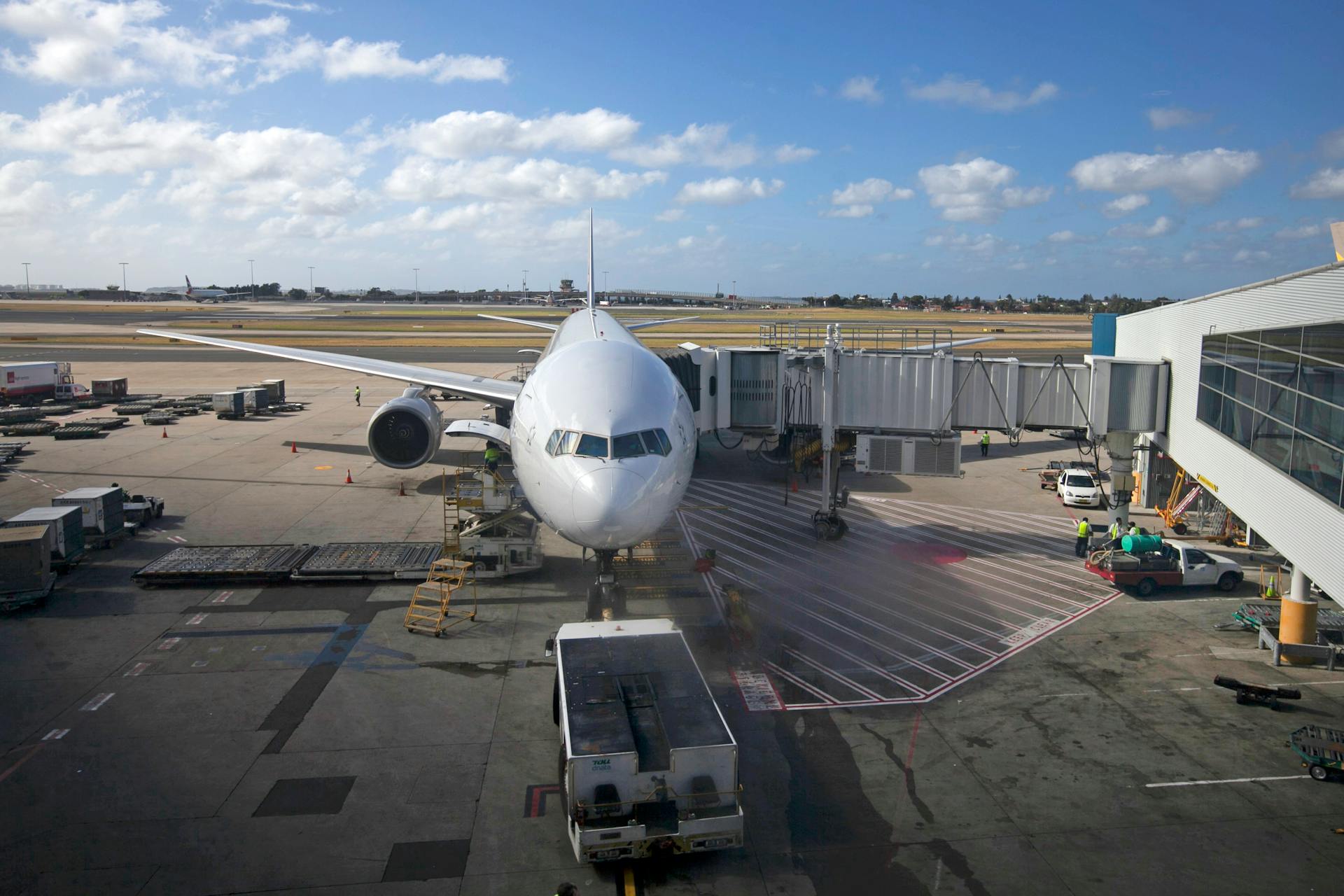
Global air cargo demand increased by 3.9 per cent year-on-year in July 2026, with all regions recording growth, according to figures released this week by the International Air Transport Association (IATA).
Demand for international operations rose by 4.7 per cent compared with July 2025.
Meanwhile, total capacity, measured in available cargo tonne-kilometres, increased by 1.7 per cent, while international capacity grew by 1.8 per cent.
The global cargo load factor consequently rose by one percentage point to 46 per cent.
IATA senior vice president for sustainability and chief economist Marie Owens Thomsen said airlines in Asia-Pacific, Europe and North America accounted for more than 90 per cent of the overall increase.
“Dedicated freighters gained market share as belly-hold traffic declined,” Owens Thomsen said, adding that this possibly reflected “demand for larger or specialist shipments and the operational flexibility that freighters can provide”.
She said the outlook remained broadly positive, supported by manufacturing activity, export orders and global trade.
However, Owens Thomsen warned that “higher fuel prices, geopolitical tensions and tariff uncertainty will need to be watched carefully”.
The operating environment remained supportive for cargo demand, with global trade increasing by 7.5 per cent year-on-year.
At the same time, however, jet fuel prices rose by 12.2 per cent compared with June and were 56.9 per cent higher than a year earlier, adding to pressure on airline costs.
Global manufacturing activity eased slightly in June but remained in expansion territory. The Global Manufacturing Output Purchasing Managers’ Index fell by 0.3 points to 52.7, while the New Export Orders Index rose to 50, its highest level in three months.
North American carriers recorded the strongest regional performance, with cargo demand rising by 4.8 per cent despite capacity falling by 1.5 per cent. The region’s load factor increased by 2.5 percentage points to 41.2 per cent.
European airlines followed with demand growth of 4.4 per cent, while capacity increased by 1.3 per cent. Europe recorded the industry’s highest cargo load factor at 51.1 per cent, up by 1.5 percentage points from July 2025.
Asia-Pacific carriers saw demand rise by 4.1 per cent and capacity increase by 3 per cent. Their load factor reached 49.5 per cent, representing an annual increase of 0.5 percentage points.
Latin American and Caribbean airlines also recorded demand growth of 4.1 per cent, although capacity expanded more quickly at 7 per cent. As a result, the region’s load factor fell by 0.9 percentage points to 32.3 per cent.
Middle Eastern carriers reported a 1.7 per cent increase in demand alongside a 4 per cent rise in capacity. Their load factor declined by one percentage point to 44.1 per cent.
African airlines recorded the weakest demand growth at 1.1 per cent, while capacity increased by 4.1 per cent. The region’s load factor fell by 1.4 percentage points to 45.8 per cent.
Performance differed considerably across the main international trade lanes, with the Asia–North America corridor recording the strongest growth at 9.2 per cent. This marked its sixth consecutive month of expansion.
Cargo traffic within Asia increased by 6.1 per cent, extending its growth run to 33 months, while demand between Europe and Asia rose by 3.1 per cent for a 41st successive month.
The Europe–North America route recorded growth of 2.1 per cent, its third consecutive monthly increase.
However, routes linked to the Gulf continued to face disruption from the conflict in the Middle East. Cargo demand between Europe and the Middle East fell by 16.1 per cent, while traffic between the Middle East and Asia declined by 14.1 per cent. Both corridors recorded a fifth consecutive month of contraction.
The Africa–Asia trade lane also remained under pressure, with demand falling by 14.7 per cent for a second successive month.





Click here to change your cookie preferences