
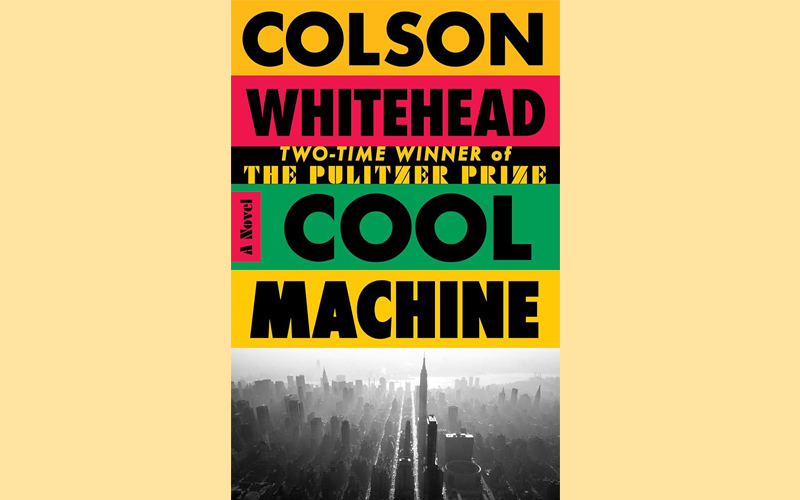
Book Review: Cool Machine by Colson Whitehead
Endings are hard. And when you’ve enjoyed two books as much as this reader enjoyed Harlem Shuffle and Crook Manifesto, it was always going to be difficult coming to the end of Colson Whitehead’s Harlem trilogy. Perhaps it’s for the best, then, that Cool Machine manages both not to disappoint and also not to wow so much that you end up feeling bereft when you have to put it down.
Whitehead, consummate as always, gives us what we’ve come to expect. Back comes Ray Carney, family man, furniture salesman, and leading Harlem fence. We’ve seen him in 60s and 70s New York; now we find him in the 80s, and a city that continues to be riven by dichotomies – white/black; straight/crooked; rich/poor – that make New York uniquely itself.
Part 1 of the novel puts us in 1981 and tells the story of Carney’s only ever direct involvement in carrying off a crime, in partnership with a legend of Harlem crookedness, Uncle Rich, back for a daring score whose goal is personal: he’s going to break into the Waldorf Astoria to save a Jesse Owens gold medal from the white people. Why? Because ‘you have to ask yourself what’s worth stealing? Truly of value. Not to the world – to you.’
Part 2 reminds us that for nations as for art collectors, countries’ heritage has been worth stealing for centuries. Specifically, there’s a booming black market in African masks, and where money’s at stake, violence and subterfuge are always in attendance.
Part 2 also reunites us, blessedly, with Pepper, Whitehead’s adorable apotheosis of violence. His stomach is eating itself; he’s had to ‘swear off headbutts’; and he’s pissed off at himself for not having taken ‘a more forceful stand when the goddamned yuppies came’. Despite it all, Pepper’s enlisted to protect a dodgy businessman involved in a dodgier purchase of a Gabonese mask, which brings him up against an antagonist of whom no higher praise can be given than to say he lives up to the moniker, ‘the Melancholy Hitman’.
Part 3 gives Carney the chance to atone for failing to protect his cousin Freddie, who died early on in Harlem Shuffle, by saving Freddie’s son from mob vengeance after he witnesses a murder and makes off with a pile of cash. It also confronts him with the question: what kind of ending does he want for himself?
And if there’s one thing that lets Cool Machine down, it’s the pressure to make it feel like an ending. Part 1 closes heavy-handedly; and Part 3 gives us a happy ending for Pepper which is somehow both lovely and underwhelming. But after all, it’s testament to Whitehead’s storytelling brilliance that it feels like he could just keep spinning great stories out of Ray, Pepper and New York, such that any ending was going to feel a little forced. I just wish there was more; and that’s why you should read it.





Click here to change your cookie preferences