
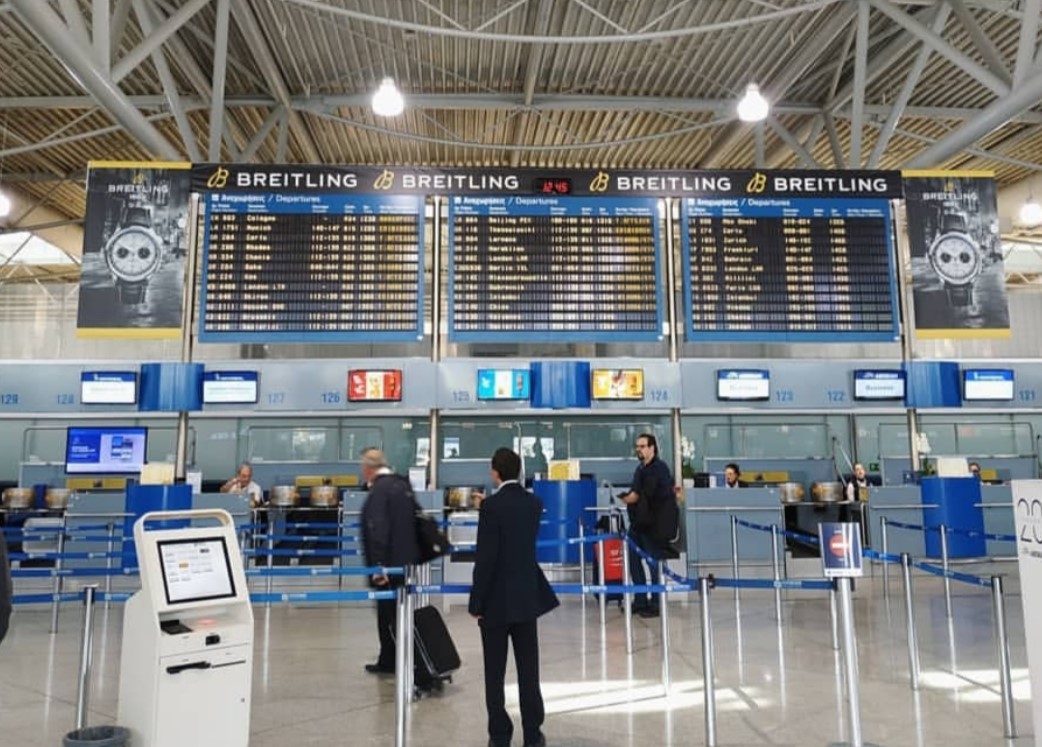
Athens International Airport is reshaping its major expansion programme after passenger traffic rose 4.5 per cent in the first half of 2026, with the airport now planning a more phased approach that could eventually increase capacity beyond 40 million passengers a year.
The airport handled 15.75 million passengers between January and June, up from the same period last year, despite the impact of the conflict in the Middle East during the second quarter.
The strong traffic performance led Athens International Airport to revise its full-year 2026 traffic guidance upwards, from low single-digit growth to mid-single-digit growth.
The airport, which is an important aviation gateway for the wider eastern Mediterranean, reported the figures on September 9, 2026, as part of its financial results for the six months ended June 30.
Domestic passenger traffic increased by 5.1 per cent year-on-year during the first half, while international traffic rose by 4.2 per cent.
Traffic growth was particularly strong in the first quarter, when passenger numbers increased by 8.1 per cent.
Growth slowed to 2.2 per cent in the second quarter as geopolitical developments in the Middle East affected aviation demand.
Domestic traffic still increased by 3.8 per cent during the April to June period, while international traffic rose by 1.5 per cent.
All three months of the second quarter recorded passenger numbers above the corresponding months of 2025 in both domestic and international markets, apart from international traffic in April.
International traffic in April fell by a marginal 0.9 per cent, mainly because of the suspension of services to and from the Middle East.
Despite the traffic growth, total revenues and other income fell by 2.8 per cent to €299.60 million during the first half.
The decline was mainly attributed to a temporary 30 per cent discount on the Passenger Terminal Facility charge, which was in effect from October 1, 2025 until April 30, 2026.
Adjusted EBITDA fell by 7.6 per cent to €168.50 million, with the airport reporting an adjusted EBITDA margin of 56.2 per cent.
The airport said the decline reflected its pricing policy, which had been implemented to bring profitability in line with regulatory requirements.
Net profit fell by 11.6 per cent to €81.40 million.
The decline in profitability was expected as the airport sought to align full-year Air Activities results with regulation following the depletion of its Air Activities Carry Forward amount.
The airport’s board has meanwhile decided to restructure its 40 million passenger capacity expansion programme, moving towards a more phased and modular approach while preserving the option of developing capacity beyond 40 million passengers.
The decision followed a strategic review which took into account stronger-than-expected traffic growth, construction challenges, operational constraints and continuing geopolitical uncertainty.
The airport said traffic had continued to grow faster than originally anticipated despite the geopolitical environment and high fuel prices, creating an opportunity to assess further capacity development.
At the same time, substantially higher traffic levels and changing design requirements had increased the complexity of expanding the airport while keeping existing operations running.
These considerations included the European Entry Exit System, air traffic control-related capacity constraints and delays, as well as lessons from the Early Contractor Involvement process.
The board concluded that alternative expansion configurations that would have a substantially smaller construction impact on the core terminal areas should be evaluated to better protect service quality and commercial activity.
Geopolitical uncertainty was another factor behind the decision, even though it was not currently having a material effect on traffic growth.
The airport said the continuing tensions reinforced the case for maintaining greater flexibility before committing to high-capital expenditure contracts.
Under the revised strategy, the existing 40 million passenger plan remains the reference plan unless an alternative can demonstrate clear strategic and financial benefits while meeting technical and regulatory requirements and securing the necessary approvals.
The first phase of the 40 million passenger programme will proceed immediately, allowing work to continue while preserving the airport’s ability to proceed with the existing plan for at least the next two years.
The first phase will include the South Main Terminal Pier, Satellite Terminal expansion and associated works.
Athens International Airport will discontinue the current Early Contractor Involvement tender process for the broader expansion scope and launch a separate open construction tender for the first phase.
The airport will also assess alternative expansion configurations and implementation strategies, including options capable of providing capacity beyond 40 million passengers.
Existing works on the North-West Apron, Multi-Storey Car Park, VIP Terminal and associated apron areas will continue.
The airport will also accelerate targeted investments in passenger-processing facilities, including passport control and security screening.
A new tender for the initial phase of the North Terminal expansion is planned for the second half of 2027, with the project intended to address medium-term capacity requirements.
The revised approach is designed to allow capital spending to be phased according to demonstrated demand, reducing the risk of committing funds before the additional capacity is required.
Total capital expenditure for capacity expansion through to the end of 2030 is expected to reach €950 million in 2026 prices.
Construction of the Multi-Storey Car Park and North-West Apron continued during the first half, with design and construction taking place in parallel.
The projects moved beyond earthworks and enabling activities into their main construction phase, with most of the car park’s foundation work completed and structural elements, including spiral ramps and staircases, now being built.
At the North-West Apron, the Ramp Service Station building reached the superstructure stage, while apron earthworks were nearly complete.
Installation of deep utility networks had also begun and foundations for both service bridges had been completed.
Both projects remain scheduled for completion in 2027.
A new 600 square metre VIP Terminal is also being developed to serve heads of state and government, alongside a new apron area.
The tender for detailed design and construction was completed during the first half, with detailed design and construction now under way and completion targeted for 2027.
Other projects include the installation of Advanced Visual Docking Guidance System units at aircraft parking stands, designed to improve aviation safety and operational efficiency.
The airport is also designing an additional floor for Building 20 to accommodate ground-handling personnel following the planned repurposing of areas in the Main Terminal and Satellite Terminal buildings.
Work is also under way on an overflow aircraft parking apron near Taxiway B, additional immigration and emigration booths in the Main Terminal, and Self-Baggage Drop-Off clusters in the check-in hall.
The airport also completed the second year of its four-year Scrip Dividend Programme on May 15, 2026, raising €83.25 million for Air Activities capital.
A total of 2,166 shareholders subscribed to the programme, representing a take-up of 87.64 per cent of the outstanding share capital.
The company’s share capital increased by €8.65 million to €318.20 million, divided into 318,197,805 common registered voting shares with a nominal value of €1 each.
The remaining €74.60 million between the nominal value of the new shares and their offer price was credited to the share premium account.
The funds raised will be used for Air Activities investments.
Athens International Airport also entered the international debt capital markets for the first time during the reporting period, issuing a €500 million seven-year senior unsecured bond on June 24, 2026.
The bond carries a coupon of 3.75 per cent, with the proceeds earmarked for refinancing existing debt and general corporate purposes.
The issue received investment-grade ratings of BBB from S&P and Baa2 from Moody’s.
The airport said this made it one of the few Greek non-financial companies to complete such an issuance in international markets.
The transaction broadened the company’s funding sources, expanded its international investor base and strengthened its financial flexibility.
Athens International Airport also received its first investment-grade issuer ratings, with S&P assigning BBB+ with a stable outlook and Moody’s assigning Baa1 with a stable outlook.
The ratings agencies cited the airport’s strong traffic performance and robust financial profile.





Click here to change your cookie preferences