
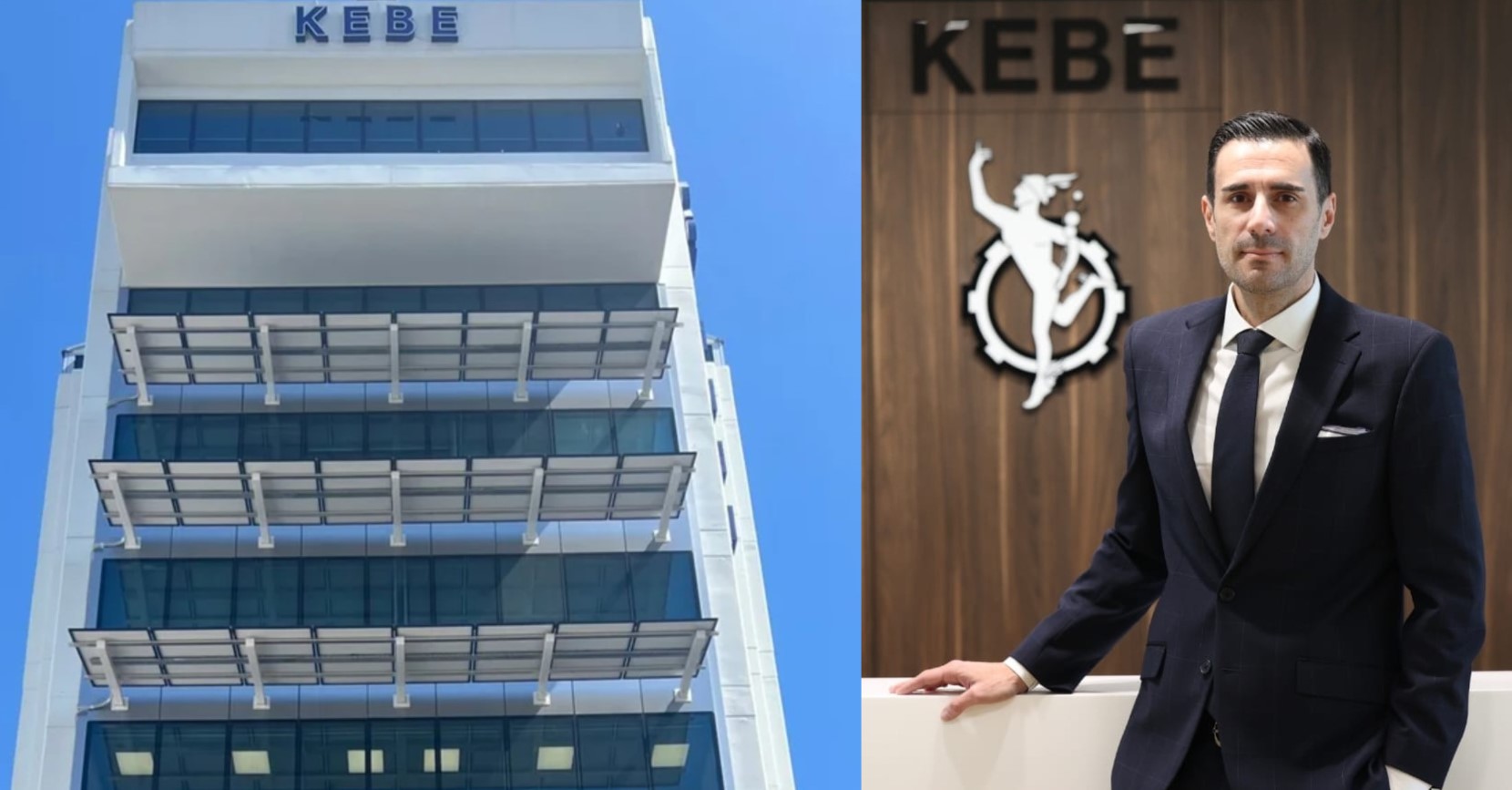
The Cyprus Chamber of Commerce and Industry (Keve) has called for a formal and regular dialogue with the government on competitiveness and the wider economy, arguing that Cyprus needs to react quickly when companies consider leaving and make better use of opportunities to attract foreign firms.
Speaking to the Cyprus News Agency (CNA), Keve secretary general Philokypros Roussounides said closer and more frequent contact with the state could help tackle problems affecting foreign investment before they become more serious.
It could also, he argued, put Cyprus in a better position to benefit when geopolitical uncertainty pushes companies to look for a new base.
His comments followed reports that a company had decided to leave Cyprus, although Roussounides was careful not to present the case as evidence of a wider trend.
He stressed that Keve did not want a single departure to be seen as the beginning of an exodus or to create unnecessary concern over the position of other companies based on the island.
Instead, the case showed why there should be a standing channel of communication between the chamber and the government.
“What we are asking for is a dialogue on the competitiveness of the country and, more generally, the economy, which may affect foreign direct investment or companies based in Cyprus,” he said.
He added that this should not be taken to mean that other businesses were preparing to follow.
“It would be useful, also as a preventive measure, to have a discussion and an ongoing dialogue with the state, so that incidents such as the one that came to light can be dealt with immediately and situations can be anticipated,” he added.
Roussounides noted that Keve already has proposals on competitiveness and is ready to present them, together with supporting evidence, if asked.
One of the issues he highlighted was Pillar Two, the international minimum tax framework which applies a 15 per cent minimum effective tax rate to large multinational groups with annual revenues above €750 million.
“There are various issues on which there needs to be an open dialogue with the state,” he said.
He also pointed to high energy costs in Cyprus, which may be higher than in competing jurisdictions and could weigh on decisions taken by companies operating on the island.
“There must be continuous communication and dialogue with the country’s chamber, given that it is an institution which, by law, advises on economic matters,” Roussounides said.
He returned to the recent company departure later in the interview, again warning against reading too much into a single case.
“Without wanting to cause panic or create any domino effect, we want this discussion to take place regularly, particularly on foreign direct investment, so that we can anticipate possible similar situations,” he said.
But Roussounides also framed closer cooperation with the government as a way of moving quickly when new investment opportunities arise, rather than simply reacting when companies consider leaving.
Keve has links with chambers abroad through its economic diplomacy work and is involved in trade missions dealing with foreign investment and the international expansion of Cypriot businesses.
Those contacts, he argued, can be particularly useful when instability elsewhere prompts firms to reconsider where they are based.
He pointed to the Middle East, where uncertainty and security concerns had led some companies to explore moving their headquarters towards Europe, including firms based in Dubai and Qatar.
“When this dialogue exists, and both we as the chamber and the state are alert, we can make use of such cases of geopolitical upheaval,” he said.
Roussounides also referred to the wider uncertainty facing the global economy, particularly under the Trump administration. For Cyprus, however, that uncertainty, he concluded, could also bring opportunities, provided the country is ready to act on them.



Click here to change your cookie preferences