
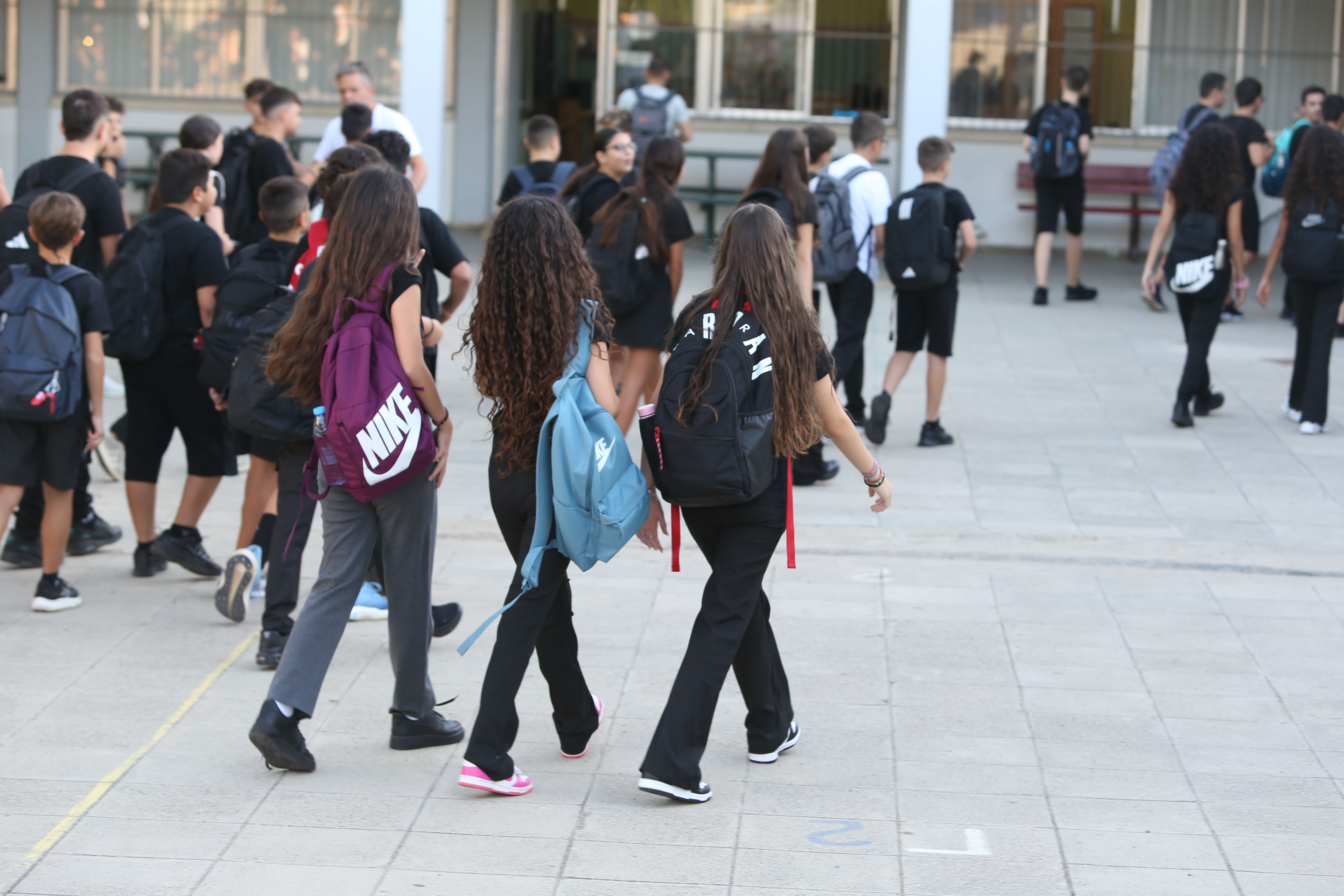
The new school year has only just begun, and schoolkids have already embarked on union activity. Psem, the ludicrous association supposedly representing the interests of secondary school children, called for a boycott of the fourth period on Wednesday to protest about conditions in public schools. The main gripe by Psem was that the installation of air conditioning units in classrooms was taking too long and had to be speeded up, while also demanding safe infrastructure at schools.
There was a third ‘demand’ that perfectly highlighted the absurdity of unionisation at schools. Psem also demanded that the curriculum was reduced, because the “huge curriculum has already transformed the school year into a marathon to cover it by the time of the exams, despite the commitment to reduce it.” The underaged unionists, who are encouraged by political parties, mainly Akel, warned: “We will not back down from our demands, nor will we tolerate the disparagement of the student community.”
We should all be having a laugh at this nonsense, but instead the usually sensible minister of education, Athena Michaelidou, gave legitimacy to the underaged unionists, by issuing an announcement about the ‘industrial’ action. “Our children have the right to have an opinion, to express their anguish and to be actively involved in matters that concern them,” she said in a written statement. “This is what our education wants to create – youths with judgement, an opinion and active involvement in society.”
At least this is the theory. The demands of the party-directed kids in charge of Psem are all aimed at making life easier for schoolkids – ACs in all classrooms, safe infrastructure and of course the union favourite of less work by reducing the curriculum. Education is cultivating a union mentality, which seeks an easy and untaxing working life, values that should be kept out of our schools. Our schools should be encouraging the pursuit of excellence, high achievement and a competitive spirit through hard work, values that are shunned by unions.
The idea of engaging in dialogue about the curriculum with 15-, 16- and 17-year-olds that have zero expertise about educational matters is preposterous. These are issues for grown-ups for which children do not have the qualifications to have any input. Of course, after this government gave in to the children’s demand for the abolition of twice-yearly exams, it set a very bad precedent, creating the impression that children should have a say in education matters.
It is disappointing that the education minister, who has been at loggerheads with teaching unions in her unwavering efforts to raise educational standards at public schools, should now be pandering to the students’ union and talking about the need for dialogue with children making a fuss about ACs in classrooms and the curriculum.



Click here to change your cookie preferences