
President tells Turkey must apply the same principles of international law it invokes
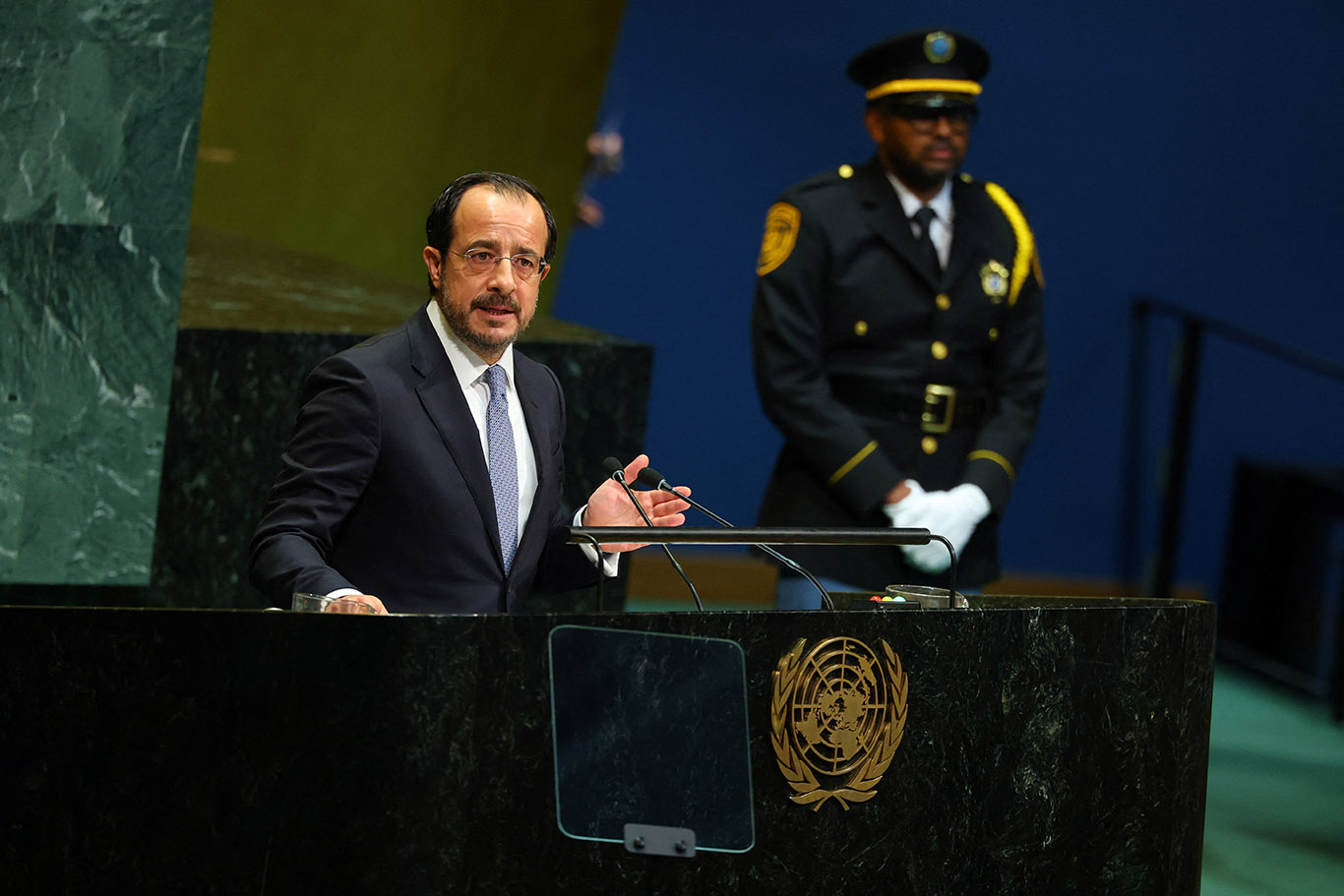
President Nikos Christodoulides on Wednesday accused Turkish President Recep Tayyip Erdogan of “hypocrisy of the highest form” as he addressed the United Nations general assembly in New York.
“I listened very carefully to the speech of President Erdogan yesterday. References to international law, to the respect for the sovereignty and territorial integrity of all states, to illegal occupation, to the drama of refugees. Yet, in relation to Cyprus, Turkey is doing exactly the opposite. Hypocrisy of the highest form,” he said.
He added that during his speech on Tuesday, Erdogan had “quoted extensively from the UN charter”, but stressed that “politicians are judged not by their words, but their deeds.”
“Mr Erdogan, if you want to quote from the charter, you must first apply it. The UN security council has established the framework for the settlement of the Cyprus problem. That framework, of a bizonal, bicommunal federation with political equality, remains the only basis on which a comprehensive settlement must be reached,” he said.
As such, he said that he is “fully committed to achieving a comprehensive settlement” and “ready to resume negotiations from where they left off in 2017, building on the substantial work already achieved, within the agreed United Nations framework”.
He stressed that “the common ground is there” for negotiations to recommence, and that that common ground is “the relevant resolutions of the United Nations security council, international law, and the laws, values, and principles of the European Union”.
“What is now required is political will by all parties, a genuine willingness to return to meaningful negotiations, to engage seriously, to build on the body of work already achieved, and to reach a settlement that reunifies our country and our people,” he said.
This settlement, he added, will “allow Greek Cypriots, Turkish Cypriots, Maronites, Armenians, and Latins to live together in peace, security, and prosperity”.
‘I call on my Turkish Cypriot compatriots to perceive our future together’
He said he wishes for a solution to the Cyprus problem to come about “because division will not be accepted”, and that “this cannot and will not be the future for my country and my people, ever”.
“I therefore call on my Turkish Cypriot compatriots to perceive our future together as the opportunity for prosperity, and I call on President Erdogan to give the green light for substantive negotiations within the UN-agreed framework,” he said.
Earlier, he had said that “the application of international law” is, for Cyprus, “not an abstract principle”, but a “painful, existential reality”.
“Fifty-two years have passed since the illegal Turkish invasion of Cyprus – an act of aggression, violating the core principles of the UN charter,” he said, before accusing Turkey of “an ongoing, flagrant violation of international law”.
“For 52 years, tens of thousands of displaced and their descendants are prevented from returning to their homes,” he said. “Varosha remains sealed off, with Turkey still in defiance of its clear and specific obligations set out in the relevant UN security council resolutions.”
“Pain and immense suffering are the daily reality of the relatives of the missing persons, that to this day are demanding answers as to the fate of their loved ones,” he said.
‘UN resolutions cannot be upheld in one case and disregarded in another’
“Respect for sovereignty and territorial integrity are not rhetorical vehicles, nor are they to be applied selectively, depending on who the perpetrator is. These principles do not become less important with the passage of time, nor do the resolutions of this organisation,” he said.
“UN resolutions cannot be upheld in one case and disregarded in another, and the sovereignty and territorial integrity of a state cannot depend on its size, its power, or the passage of time.”
He added that “this consistency matters, particularly for states whose security rests on the protection afforded by international law, rather than on the balance of power”.
Away from the matter of the Cyprus problem, he said that “technology, including artificial intelligence, is advancing at rapid speed”, and that “climate change is reshaping our societies”.
“The international landscape is becoming more complex, more contested, and more unpredictable. The international order is not simply changing, it is being tested in an unprecedented manner,” he said.
However, he stressed that “it is in such times of uncertainty that the foundational values of multilateralism must be protected”, before listing those values as “international law, the UN charter, respect for sovereignty and territorial integrity, the peaceful settlement of disputes, respect for human rights, [and] the equality of states”.
“All these are not principles of the past, they are principles that transcend time,” he said.
Small states ‘expect international law to be applied consistently’
He said that in the coming years, “transformation is inevitable”, but that “what must remain consistent is the UN charter as our compass”.
“It directs all of us, irrespective of power, size, and leverage. For small-sized countries, the principle of equality of states is fundamental, and it has formed the binding trust between us,” he said.
Small states, he said, “rely on an international system in which sovereignty and territorial integrity are respected”, and “expect international law, including the UN convention on the law of the sea, to be applied consistently”.
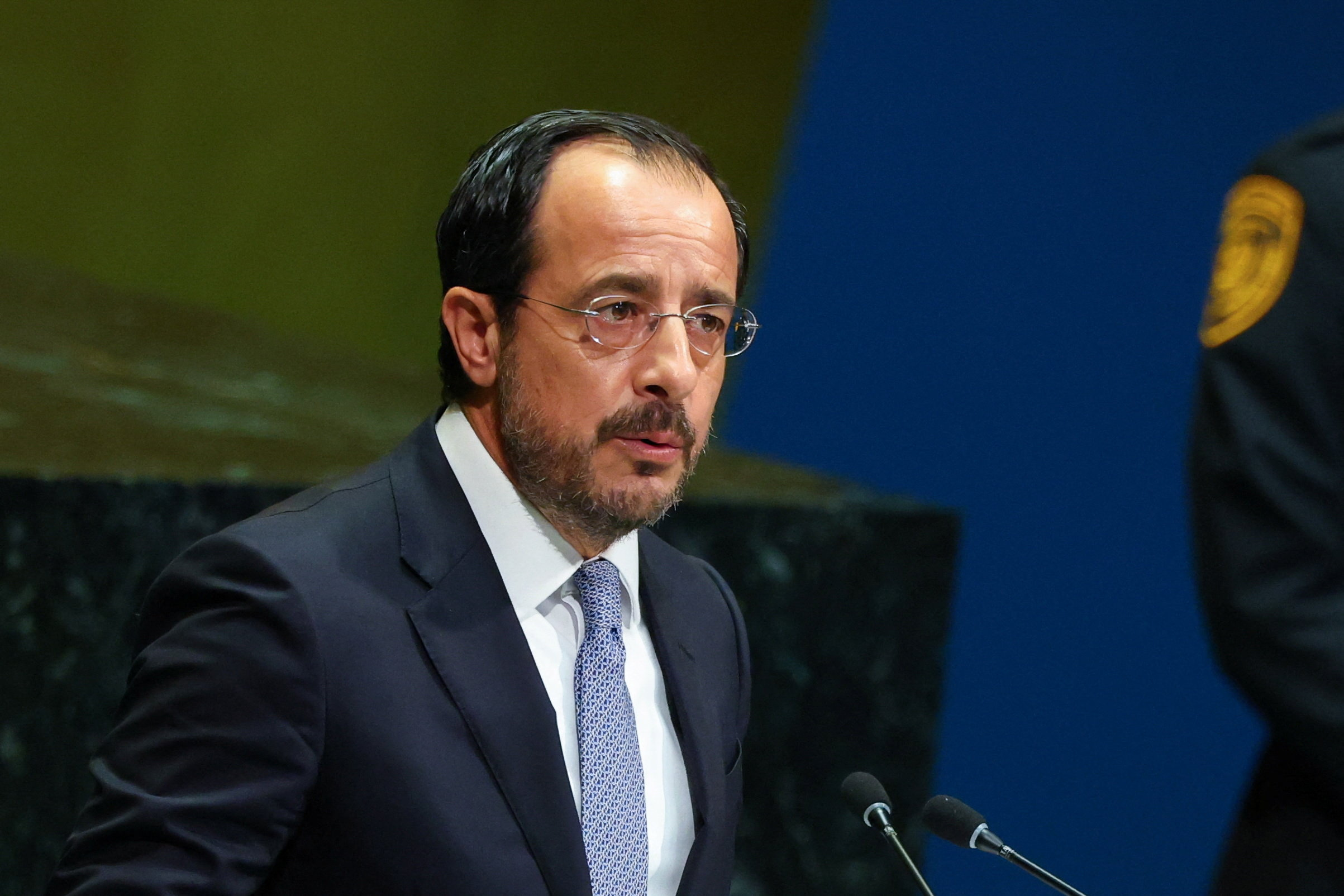
The reference to the UN convention on the law of the sea comes (Unclos) with the Republic of Cyprus and Greece locked in disputes with Turkey over maritime jurisdiction. Turkey is not a signatory to Unclos as it believes the convention offers too much weight to the territorial waters and exclusive economic zones generated by islands.
“We believe in the peaceful resolution of disputes, and we demand that the rights of every state be protected. These are the integral elements of our collective trust, and this is the code of conduct of Cyprus’ diplomatic engagement, and in a rapidly changing world, small and medium-sized states must seek synergies, while continuing to pursue strategic autonomy,” he said.
‘We cannot compel, but we can coalesce’
“We cannot compel, but we can coalesce. We cannot dictate outcomes, but together, we can help shape them. There is no doubt that the challenges of today require cooperation and partnerships based on the knowledge of regions and their abilities, and the Republic of Cyprus has sought to do exactly that,” he said.
He said that Cyprus’ “geographical position, at the crossroads of Europe, Asia, and Africa” has placed the island “close to some of the most complex dynamics of our world”, but that “at the same time, it gives us the opportunity to actively contribute to address them”.
On this matter, he referenced Cyprus’ Amalthea humanitarian aid corridor to Gaza and the Estia plan, saying that “when third-country nationals needed to be evacuated from our neighbourhood, my country has served, time and time again, as a safe harbour”.
“Our infrastructure and our resources have been made available in order to facilitate safe passage for people in danger. In the last three years alone, we helped evacuate thousands of citizens from 70 different countries,” he said.
Drawing his speech towards a close, he said that “we believe that small states have a particular role to play, not on the margins of international affairs but as active participants in shaping our common future”.
“For the Republic of Cyprus, that means defending the principles on which we depend, contributing to the institutions in which we believe, building partnerships for the common good, taking initiatives to create useful synergies, and acting responsibly where we can affect change,” he said.




Click here to change your cookie preferences