
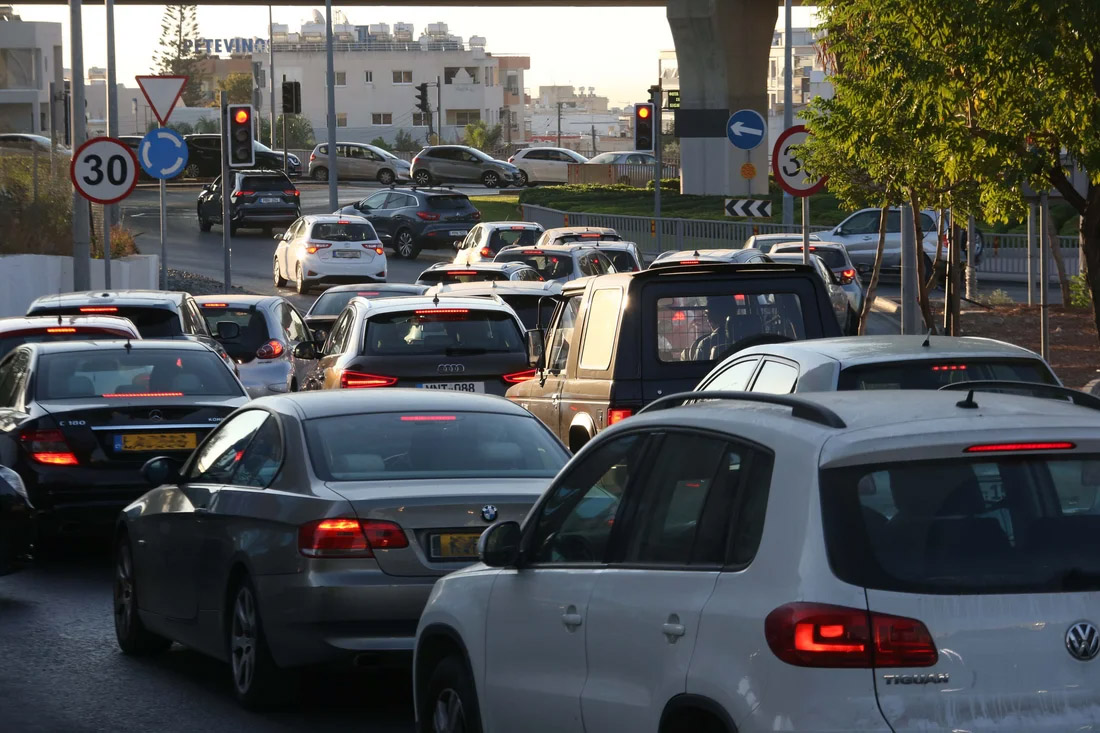
As greenhouse gas emissions were decreasing across Europe, in Cyprus they increased by 67.1 per cent between 1990 and 2024, while 13 per cent of the island’s land area was affected by drought in 2024, Eurostat said on Wednesday.
Greenhouse gas emissions in Cyprus increased by 67.1 per cent between 1990 and 2024, in contrast to a 34.9 per cent decrease across the EU as a whole, according to Eurostat’s 2026 Regional Yearbook, published on Wednesday.
Cyprus is among the European regions that recorded the largest increases in emissions over this period. According to Eurostat, emissions in the country were 77 per cent higher in 2008 compared to 1990, before declining for five consecutive years. They subsequently followed a generally upward trend, leaving emissions in 2024 just 5.5 per cent below their 2008 peak.
According to the yearbook, the relatively high emissions in Cyprus may be linked to the country’s continued dependence on fossil fuels, energy consumption, transport, waste and household consumption, as well as economic growth that has outpaced reductions in carbon intensity.
Drought
Regarding drought, Eurostat reports that 13 per cent of Cyprus’ land area was affected in 2024 by conditions in which vegetation productivity failed to return to the reference levels recorded during the 2000-2020 period.
The highest share in the EU was recorded in Malta, at 57.5 per cent of its land area, followed by Bulgaria at 20.1 per cent, Romania at 17.5 per cent, Cyprus at 13 per cent, Greece at 11.4 per cent and Italy at 10.7 per cent.
Overall, 290 of the 1,160 European regions for which data were available experienced prolonged drought impacts in 2024.
Education and digital use
In education, Cyprus recorded the largest gender gap in 2024 in the share of tertiary education students enrolled in master’s programmes. Specifically, 57.7 per cent of female tertiary education students in Cyprus were enrolled in master’s programmes, compared to 35.6 per cent of male students. Across the EU, the corresponding shares were 31.3 per cent for women and 27.1 per cent for men.
Furthermore, Cyprus was one of four European regions in which 51 per cent of the tertiary education students, excluding those in short courses, were pursuing a post-graduate degree.
In digital use, Cyprus was among the 24 EU regions where at least 80 per cent of the population aged from 16 to 74 were using social media in 2025. The respective percentage in the EU was 67.3 per cent.
Cyprus was also among the 115 regions that had already reached or surpassed the 2025 European goal for 78 per cent employment among people aged 20 to 64 by the year 2030. The EU percentage in 2025 was 76.1 per cent.
Agriculture
According to data for 2022 included in the yearbook, characteristic elements of the rural landscape, such as tree rows, terraces and stone walls, covered 21.1 per cent of agricultural land in Cyprus.
This was one of the highest percentages among European regions, compared to an average of 5.6 per cent in the EU.
In contrast, in 2023 the percentage of farms in Cyprus using precision crop monitoring technologies was zero, as was the case in the Ionian islands of Greece. The corresponding EU average was 3.2 per cent.
Eurostat explained that the data concerns farms exceeding the minimum physical size limits provided for by the relevant regulation.





Click here to change your cookie preferences