
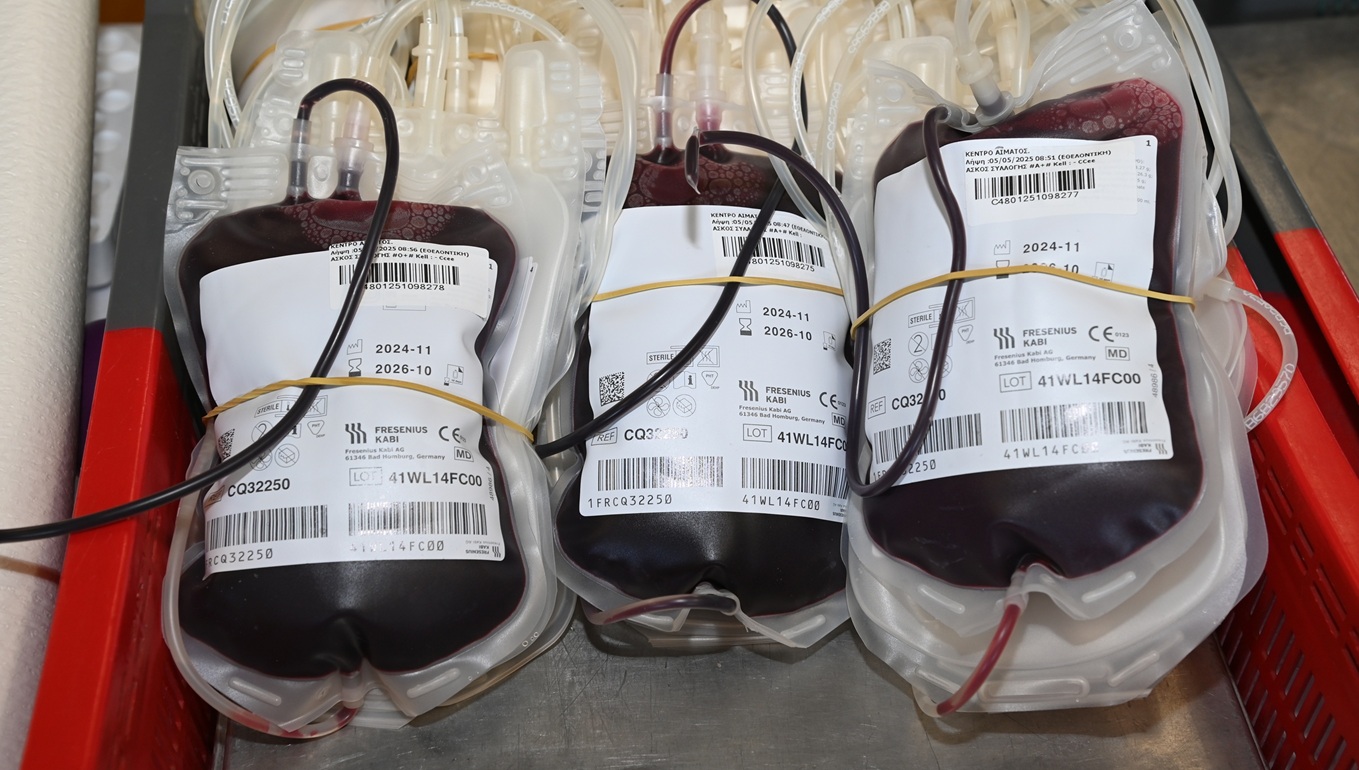
Despite Cyprus having the world’s highest rate of voluntary unpaid blood donation relative to its population, recent shortages show the need to ensure a steady supply throughout the year, the national thalassaemia committee said on Friday.
Recent blood shortages have led to some scheduled transfusions being postponed. The committee said blood was essential not only in emergencies but also for the ongoing care of patients with cancer and other serious illnesses, as well as people living with chronic conditions.
For patients who depend on regular transfusions, including those with thalassaemia and sickle cell disease, even a short-lived shortage could seriously disrupt treatment, it said.
Thalassaemia is an inherited blood disorder that leaves patients unable to produce enough healthy red blood cells, meaning many require regular transfusions throughout their lives.
The committee, which operates under the health ministry, said it supported the work of the blood centre and the ministry in encouraging donations and maintaining stable supplies.
It also expressed support for the national thalassaemia association, which represents patients and campaigns for blood donation.
The committee said it would work with the relevant authorities to draw up a plan to support blood donation, including measures to encourage donors to give blood regularly and improve communication about the needs of transfusion-dependent patients.
It said the aim was to align these efforts with the goals of the national blood strategy.
Despite the recent shortages, the committee said Cyprus’ tradition of voluntary donation remained exceptionally strong and represented a valuable asset for the health system.
Health Minister Neophytos Charalambides presented the national blood strategy earlier this year, describing it as a tool for reforming services with a focus on patient safety, blood quality and the protection of donors and recipients.
Charalambides said implementation of the strategy would depend on better monitoring of blood stocks and greater cooperation between the ministry and medical professionals.





Click here to change your cookie preferences