
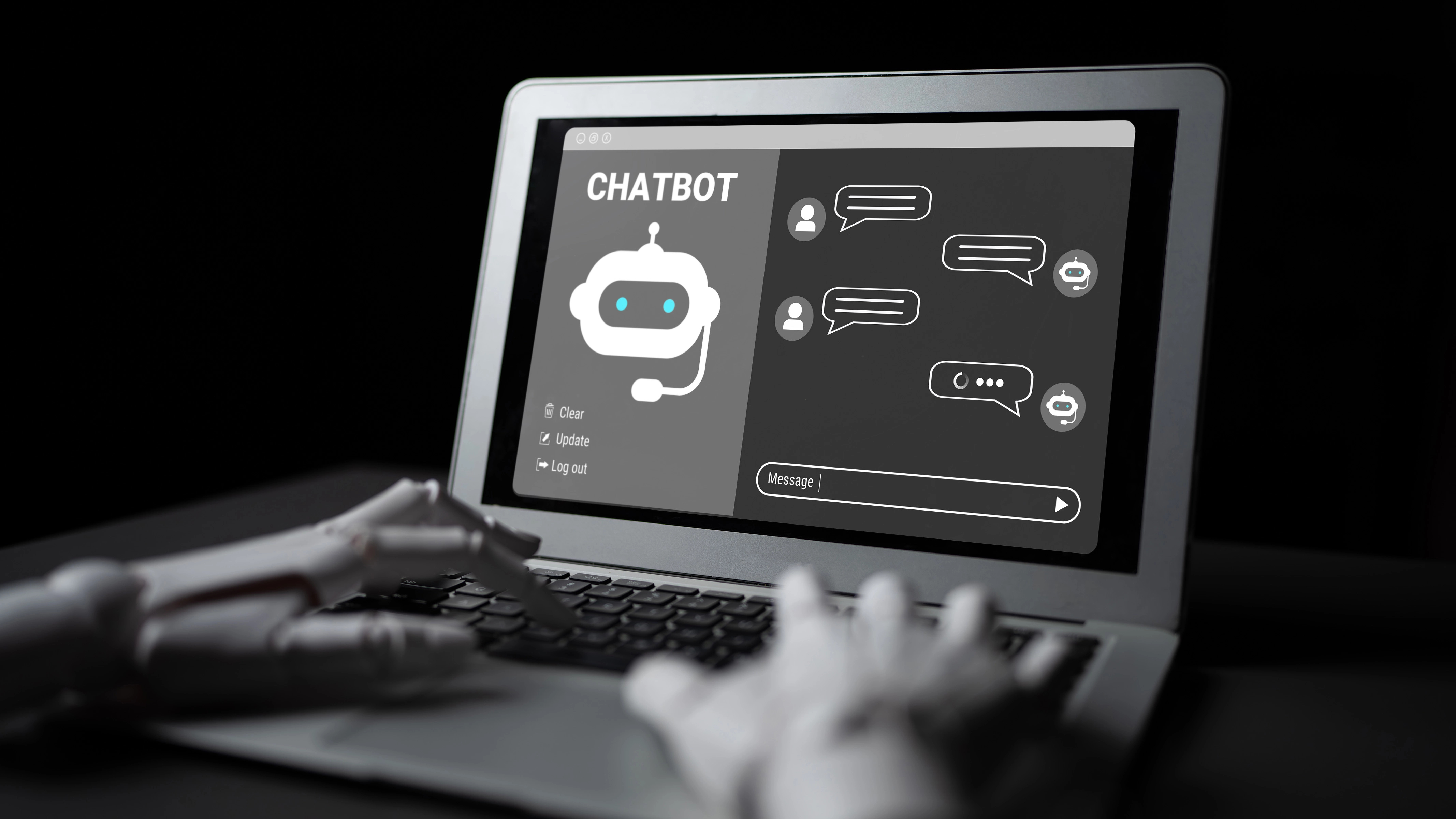
Couples broadly agree on what physical infidelity looks like. A survey of 2,150 US adults suggests they have no settled rules for what happens when the third party is software.
Imagine discovering that your partner has been talking to an AI companion most evenings. Not occasionally, and not as a joke. They tell it about their day, confide in it about problems at work, and sometimes, you learn, the conversation turns romantic. There is no other person involved. Nobody has met anyone, nobody has touched anyone, and the thing on the other side of the screen does not exist in any ordinary sense.
Has a boundary been crossed?
Most couples have never had to answer that, because until recently there was no version of intimacy with no one on the other end. Now there is, and a new survey suggests people are already wrestling with what to make of it.
People are already drawing lines
The survey, commissioned by the review site AI Girlfriend Coach and fielded through SurveyMonkey Audience on August 26 and 27, 2026, asked 2,150 US adults a set of questions about AI girlfriends and boyfriends. After 441 responses showing suspicious answer patterns were excluded, the final analysis included 1,709 responses. The sample was balanced for age and gender but not region or income, so it describes the Americans surveyed rather than the American public, and it says nothing about attitudes in Cyprus or anywhere else.
Asked whether they would consider a partner having a romantic or intimate relationship with an AI companion to be cheating, half of respondents, 50.5%, said yes. Another 21.2% said they would not call it cheating but would still be uncomfortable with it. Only 28.3% took the view that because an AI is not a real person, nothing had happened.
That last figure is the interesting one. The obvious argument against AI cheating, that there is no one to cheat with, was the minority position. Most respondents were not resolving the question that way.
The people using these apps drew the strictest lines
One might expect firsthand experience to make AI companions seem less mysterious and, perhaps, less threatening. The survey found something different.
Among respondents currently using an AI girlfriend or boyfriend app, 80.6% said a partner’s AI romance could count as cheating. Among people who had never used one, 44.0% said so. Former users sat between them at 60.2%.
The definition shifted too. Current users’ single most common answer was that it becomes cheating once a partner grows emotionally or intimately attached, an answer only one in ten never-users chose. Never-users were three times as likely as current users to say an AI is not real, so it cannot be cheating.
The survey cannot say why. Using these apps might change how seriously people take them, or people who already take them seriously might be the ones who try them; the data shows the association and no more. Familiarity with AI companions was not linked to dismissing them. If anything, the people with firsthand experience were the least willing to say the question did not apply.
It usually starts with something less dramatic than romance
The grey area is easier to see once you know why people say they would use these apps in the first place.
Asked their main reason, 56.6% of respondents chose having someone to talk to or feeling less lonely. Just 10.3% chose affection, romance or intimacy. The question was hypothetical and asked of everyone, so it measures what people imagine the appeal would be rather than the confirmed motives of users, but the ordering is stark. For most respondents, an AI companion is pictured first as company.
That is exactly what makes the boundary hard to locate. A partner using an app for romantic roleplay is a relatively clear case to argue about. A partner who talks to an AI every night about work, worries and the relationship itself is not. The behaviour that sends people to these apps is ordinary conversation, and somewhere along the way, for some of them, ordinary conversation becomes emotional intimacy. Couples have always understood that distinction with other people. Nobody has yet worked out where it sits with software.
Not the generation you would expect
One finding cuts against the assumption that this is a young person’s problem. Asked whether they would consider using an AI girlfriend or boyfriend, 44.7% of respondents aged 30 to 45 said yes, against 12.5% of those aged 18 to 29. Reported use followed the same pattern, and on every openness measure the survey took, adults in their 30s and early 40s led while the youngest adults trailed.
The survey does not explain why, and the sample skews older and more married than the US population, so the finding should be read with care. But it suggests that the people most open to navigating these questions may not be twenty-somethings experimenting with new technology. Adults in their 30s and early 40s showed considerably more openness to AI companionship.
The question is about the couple, not the machine
It is tempting to argue about whether an AI can genuinely love someone, or whether a relationship with one is real. The survey suggests most people are not asking that. Fewer than three in ten treated the AI’s non-humanity as the deciding factor. The rest were asking older questions: what their partner was doing, whether it was hidden, whether attention that used to come home was going somewhere else.
Those questions do not need the AI to feel anything. They need a couple to have agreed, in advance, what counts. Couples already negotiate boundaries around private messages, close friendships and old flames online, and each of those was once a new problem too. AI companionship is the next item on that list, and the survey’s clearest lesson is that partners will not automatically agree on it. One can sincerely believe it is only a chatbot while the other sincerely believes a line has been crossed, and the data shows substantial numbers of people on both sides.
The technology is new. The conversation it requires is not. Whether the time, the intimacy, the secrecy or the romantic behaviour involved crosses a boundary is something no survey can settle, because it is not a question about AI at all. It is a question two people have to answer for themselves.
The findings in this article come from AI Girlfriend Coach’s survey of 2,150 US adults, conducted through SurveyMonkey Audience on August 26 and 27, 2026, and analysed on 1,709 quality-screened responses. Respondents were US adults; the results describe the surveyed sample.
DISCLAIMER – “Views Expressed Disclaimer – The information provided in this content is intended for general informational purposes only and should not be considered financial, investment, legal, tax, or health advice, nor relied upon as a substitute for professional guidance tailored to your personal circumstances. The opinions expressed are solely those of the author and do not necessarily represent the views of any other individual, organization, agency, employer, or company, including NEO CYMED PUBLISHING LIMITED (operating under the name Cyprus-Mail).





Click here to change your cookie preferences