
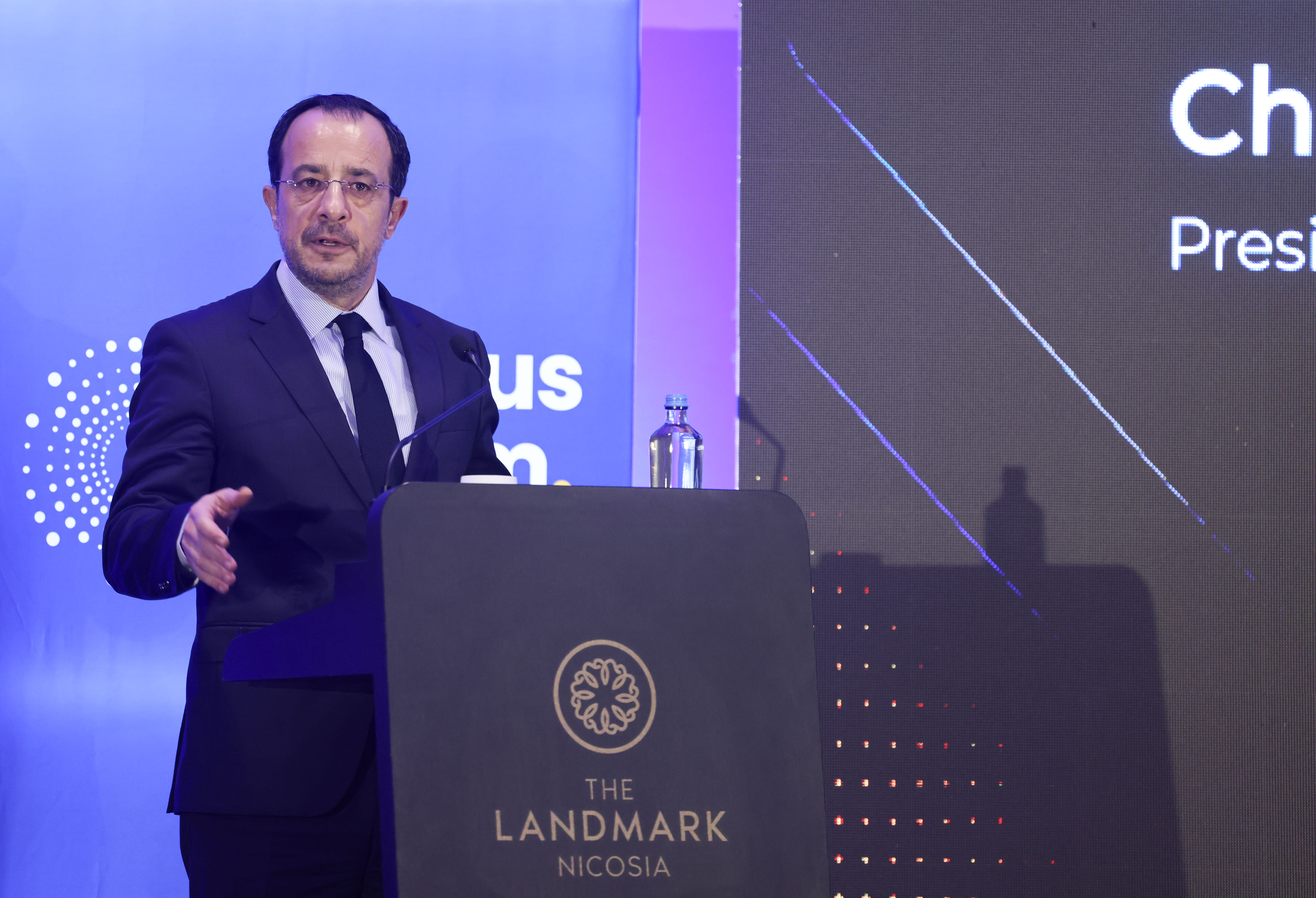
Giving people of Cyprus a voice in government policies is at the heart of several initiatives that aim to boost participatory democracy, President Nikos Christodoulides told the Cyprus Forum on Tuesday.
He said the policies implemented by his government include the ‘citizens legislative initiative’, which allows people to shape policies by collecting 5,000 signatures which then obligates either parliament or the government to take action to implement their request.
Another change introduced is the automatic registration of all citizens who have reached the age of 17 on the electoral roll, allowing them to participate in elections.
“In addition to the many actions that I have mentioned and the direct contact of the members of the Council of Ministers with organised groups, society in general, in the coming days we will also have a special meeting of the Council of Ministers in which young men and women, in my presence, will assume the role of ministers and present their suggestions and proposals,” he said.
This initiative, carried out in collaboration with the citizens’ commissioner, he added, is expected to provide a “real opportunity” for young people to submit their suggestions to the executive branch and to contribute to public debate.
“From this unique experience of participatory democracy, as the executive branch we will evaluate what is submitted and act accordingly,” Christodoulides said.
Digital tools to give people a voice
The president added that the government has created several other digital tools that strengthen the voice of citizens in the decision-making process, such as the e-consultation for public consultations, the citizen’s voice for advisory votes, the EkfraCy platform, which provides young people with a platform to submit proposals and suggestions, and the online platform diakivernisi.gov.cy, through which citizens can at any time check-in on the progress of the implementation of government actions and policies.
“We will also say what we will implement in the coming year so that every citizen knows what we have said and at the end of the year and at any time during the year can check whether we have implemented everything we have promised,” he said.
Meanwhile, Christodoulides stressed that, although he was well aware of the many challenges democracy faces, he did not believe that it was in decline.
“I believe that our democracy is being tested,” he said.
“First and foremost, and we must put things as they are, by the questioning of institutions, and the very relationship of citizens with politics. It is a fact that politics is something distant, that it is not sufficiently adapted to the real needs and concerns of society that affect citizens and our society in general,” he said.
Christodoulides spoke of a “direct connection” between the quality of democracy and the ability of institutions to adapt, listen and provide solutions.
Democracy is being tested
“However, our democracy is mainly being tested by new technologies and new ways of communication, which directly affect public debate,” he added.
He said that the greatest current challenge was to ensure that democracy would not simply monitor the developments of the digital age, but adapted and utilised the possibilities offered by it.
“And despite the risks and challenges it creates, the digital age offers us new tools and opportunities for more direct and meaningful citizen participation, so that we can address this distance between democracy and citizens,” he said.
“I truly believe that greater citizen participation, dialogue and accountability is the answer to society’s growing, and often justified, sense that citizens’ voices are not being heard and that decisions are being made behind closed doors, away from them,” Christodoulides concluded.



Click here to change your cookie preferences