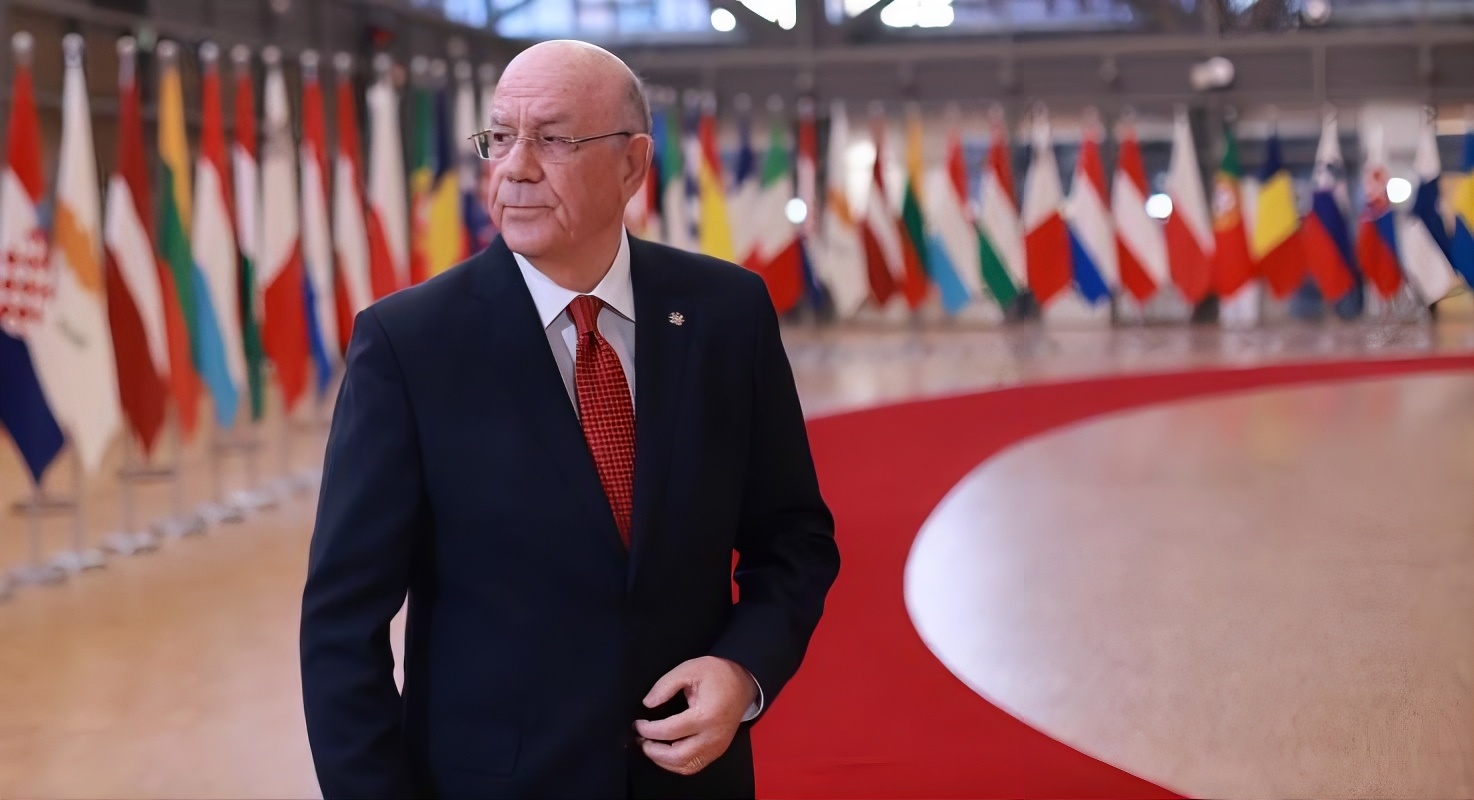
Cyprus will press for greater fiscal flexibility and relief from high energy costs at this week’s Eurogroup and Ecofin meetings in Luxembourg, where Finance Minister Makis Keravnos will also take part in talks on banking competitiveness, capital markets and the wider European economy.
Keravnos travels to Luxembourg on Wednesday ahead of the Eurogroup on October 8 and Ecofin on October 9.
According to the Finance Ministry, the two meetings will cover “very serious issues” concerning the effectiveness of public finances under the European economic governance framework, as well as the impact of the energy crisis on the European economy.
Cyprus has already sought a derogation from excise duty on heating oil, the ministry said, referring to earlier statements by Keravnos.
It has also joined other member states in supporting additional fiscal room within the EU’s economic governance framework.
The aim, the ministry said, is to give governments greater flexibility so they can “effectively support and protect citizens and businesses”.
At Thursday’s Eurogroup meeting, finance ministers will discuss the challenges and opportunities linked to improving the effectiveness and efficiency of public finances, following a presentation by the European Commission.
The discussion is expected to focus on policy priorities and will feed into further work planned under the Eurogroup’s programme.
Energy will also feature prominently, with ministers examining how developments in the energy market are affecting fiscal and structural policies across the euro area.
They will also exchange views on foreign exchange developments, based on presentations by the European Commission and the European Central Bank.
The meeting will then move into an expanded format with all EU member states, where ministers will review progress on the Capital Markets Union.
Later on Thursday, ministers will attend an informal working dinner focused on the Market Integration and Supervision Package.
The discussion is intended to help pave the way for agreement when Ecofin formally takes up the package the following day.
On Friday, Keravnos will join fellow EU finance ministers at Ecofin, where the agenda will begin with an exchange of views on recent economic developments.
Ministers will then discuss the taxation of windfall profits in the energy sector, based on a paper prepared by the Irish presidency.
Taxation Commissioner Wopke Hoekstra is also expected to present the European Commission’s 2026 report on tax compliance gaps across member states.
The Market Integration and Supervision Package will return to the table during the formal Council session, with ministers set to consider a compromise proposal from the Irish presidency.
According to the Cyprus Finance Ministry, the package is designed to deepen the single market for financial services and is expected to “contribute decisively to improving the competitiveness of the European economy”.
The Irish presidency is aiming for agreement at Council level so that talks with the European Parliament can begin as soon as possible.
Banking competitiveness will also be discussed, based on a European Commission report that is expected to help shape legislative proposals due in 2027.
Ministers will then turn to the economic and fiscal impact of Russia’s war against Ukraine.
As part of the EU’s economic governance framework, the Council is also expected to adopt recommendations approving the Czech Republic’s revised medium-term fiscal-structural plan and extending Greece’s escape clause for spending linked to strengthening energy security.
Climate finance will also be on the agenda ahead of COP31 in Antalya from November 9 to 20, with ministers expected to approve conclusions setting out the EU’s position.
They are also due to agree the EU’s terms of reference for the meeting of G20 finance ministers and central bank governors in Bangkok on October 15.


Click here to change your cookie preferences