
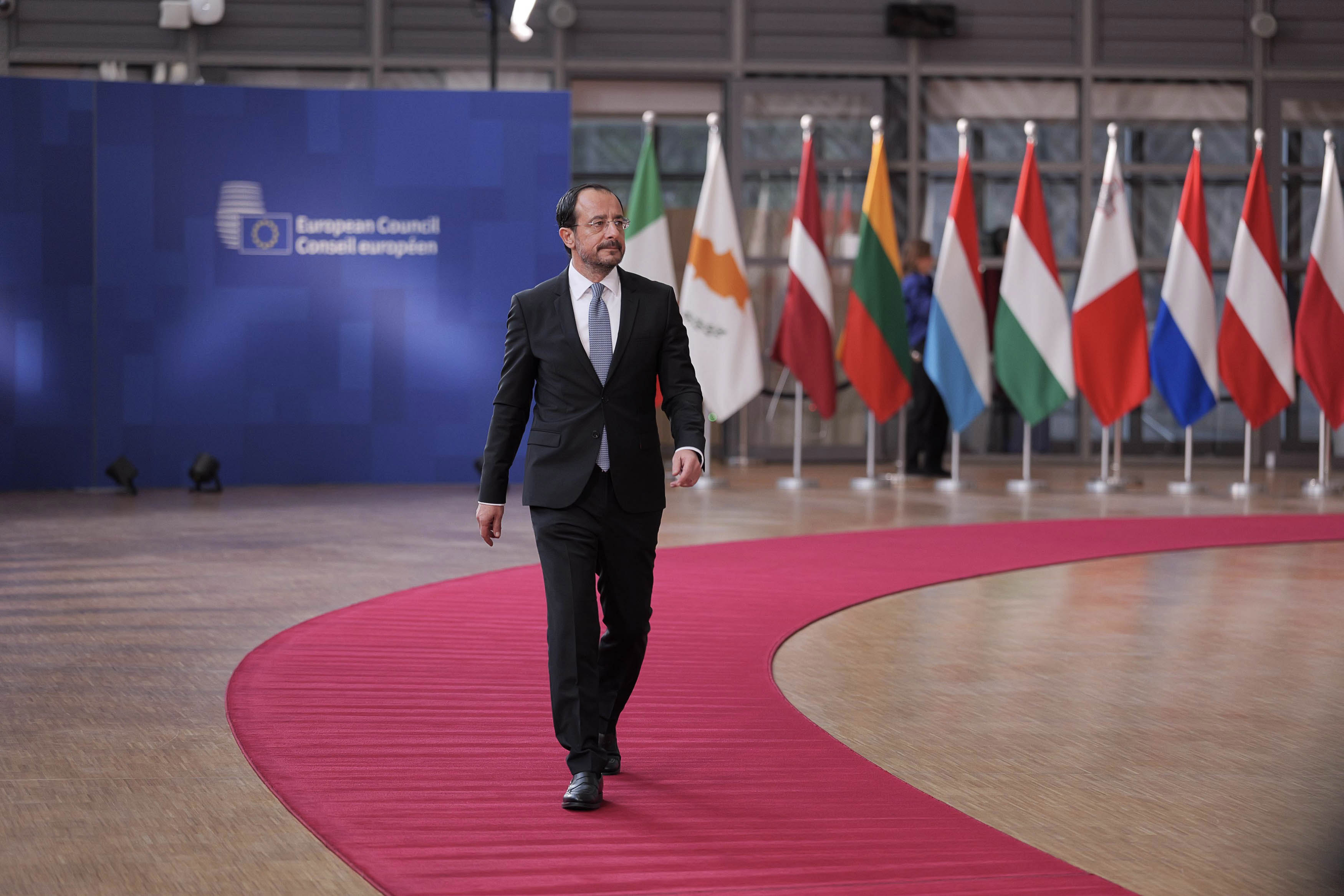
The European Union must “demonstrate greater flexibility” so as to stem the rise of consumer energy bills, President Nikos Christodoulides said on Thursday, as he arrived at the day’s European Council summit in Brussels.
“There is a need for the European Union to demonstrate greater flexibility regarding the adoption of national measures, as well as for a further suspension of the implementation of ETS2. This is something several member states are calling for, and we will support it,” he said.
ETS2 is the EU’s new emissions trading system, which the European Commission says will “cover and address the carbon dioxide emissions from fuel combustion in buildings, road transport, and additional sectors”, which it said comprise “mainly small industry not covered by the existing emissions trading system”.
Member states will be required to pay for their greenhouse gas emissions produced by buildings and road transport as well as other sectors, as they currently are for carbon dioxide emitted in energy production and nitrous oxide emissions, which the EU then spends on climate and energy-related investments.
At present, ETS2 is expected to be gradually implemented between this coming January and 2028, but calls for that date to be pushed back have been made throughout this year, with conflicts in the Middle East and in Europe having caused energy costs to rise.
Additionally, calls have been made for the initial ETS system to also be suspended, with Italian Prime Minister Giorgia Meloni and Czech Prime Minister Andrej Babis having sent a joint letter to the commission, demanding a “temporary suspension” of the ETS across Europe to stem rising energy costs across the continent.
Such a suspension, it said, would “provide immediate relief to European industry from carbon costs”.
“However, in the absence of sufficient support for such an option, it is worth considering a number of targeted and immediately actionable alternatives that the European Council could promote to alleviate the impact of the current shock and complement measures already announced at a European level,” it said.
ETS ‘unjust, absurd, unsustainable’, Italian minister says
Meanwhile, Italian Defence Minister Guido Crosetto went further, saying that “a tax like ETS today is unjust, absurd, unsustainable in international competition, and creates inequalities because it falls indiscriminately and equally on all European end consumers”.
The commission, however, has been less willing to change course, with Energy Commissioner Dan Jorgensen having said at the end of an informal meeting of the bloc’s 27 member states’ energy ministers last month that “it is important to stick to temporary and well-targeted measures”.
“Fiscal resources are limited and we should not waste public money on measures that are counterproductive in a fossil energy crisis, and I urge governments to use the fiscal flexibility with which we have provided them for clean energy investments,” he said.





Click here to change your cookie preferences