
Safe Bulkers chief executive and Cyprus Union of Shipowners (CUS) president Polys Hajioannou warned that China’s rapidly expanding shipyards could leave dry-bulk shipping with more vessels than it needs, despite expectations of still higher newbuilding prices.
His concern, emphasised in a TradeWinds report published on Friday, follows this week’s Capital Link shipping forum in Shanghai, where he joined industry executives to discuss the outlook for dry bulk. The apparent contradiction is that busy shipyards and higher prices today may be storing up trouble for shipowners tomorrow.
For a market built around moving iron ore, coal and grain, the numbers matter. New shipyards can take on more orders, but every additional bulker eventually has to find cargo. If the fleet grows faster than seaborne trade, competition between vessels can push freight earnings lower, irrespective of what those ships cost to build.
The scale of China’s current orderbook helps explain the anxiety. According to the latest BIMCO figures, the global shipyard backlog stood at 203.2 million compensated gross tonnes on September 1, 13 per cent higher than a year earlier. Chinese yards secured 74 per cent of newly contracted shipbuilding work over the preceding 12 months and now hold 64 per cent of the global orderbook.
China’s yards are due to deliver 44 million compensated gross tonnes in 2028, almost double the 22.7 million completed in 2025, BIMCO chief shipping analyst Niels Rasmussen said. The measure reflects shipbuilding workload across vessel types, rather than the cargo-carrying capacity of dry-bulk ships alone. Nevertheless, it points to the amount of additional production the industry is preparing to bring on stream.
For now, orderbooks provide several years of work, helping to support vessel prices. The longer-term worry is that yards which expand to handle the present backlog will still need business when orders slow. Greater building capacity could then make it easier for owners to commission ships beyond what the trading market can comfortably absorb.
There is a particular reason for caution in dry bulk. An October analysis by Maritime Strategies International, reported by Riviera, found that absorbing ships ordered between 2023 and 2026, after allowing for fleet replacement, would require annual demand growth of more than 5.3 per cent between 2026 and 2029. Its own forecast was around 2.7 per cent. That does not guarantee a glut, but it raises questions about how much of the current ordering is driven by actual cargo requirements.
Hajioannou has been making the same distinction for some time. At a Capital Link discussion during Posidonia in June, he warned that “If we see yards coming out from nowhere, the situation will change for the worse very fast.” He also described himself as cautiously optimistic about the market, rather than confident that favourable conditions would last indefinitely.
The timing is especially relevant to Cyprus, where Hajioannou is president of the CUS and Safe Bulkers maintains a substantial operating presence in Limassol. The company has been pursuing a programme of fleet renewal while retaining the flexibility to order additional ships or buy second-hand vessels.
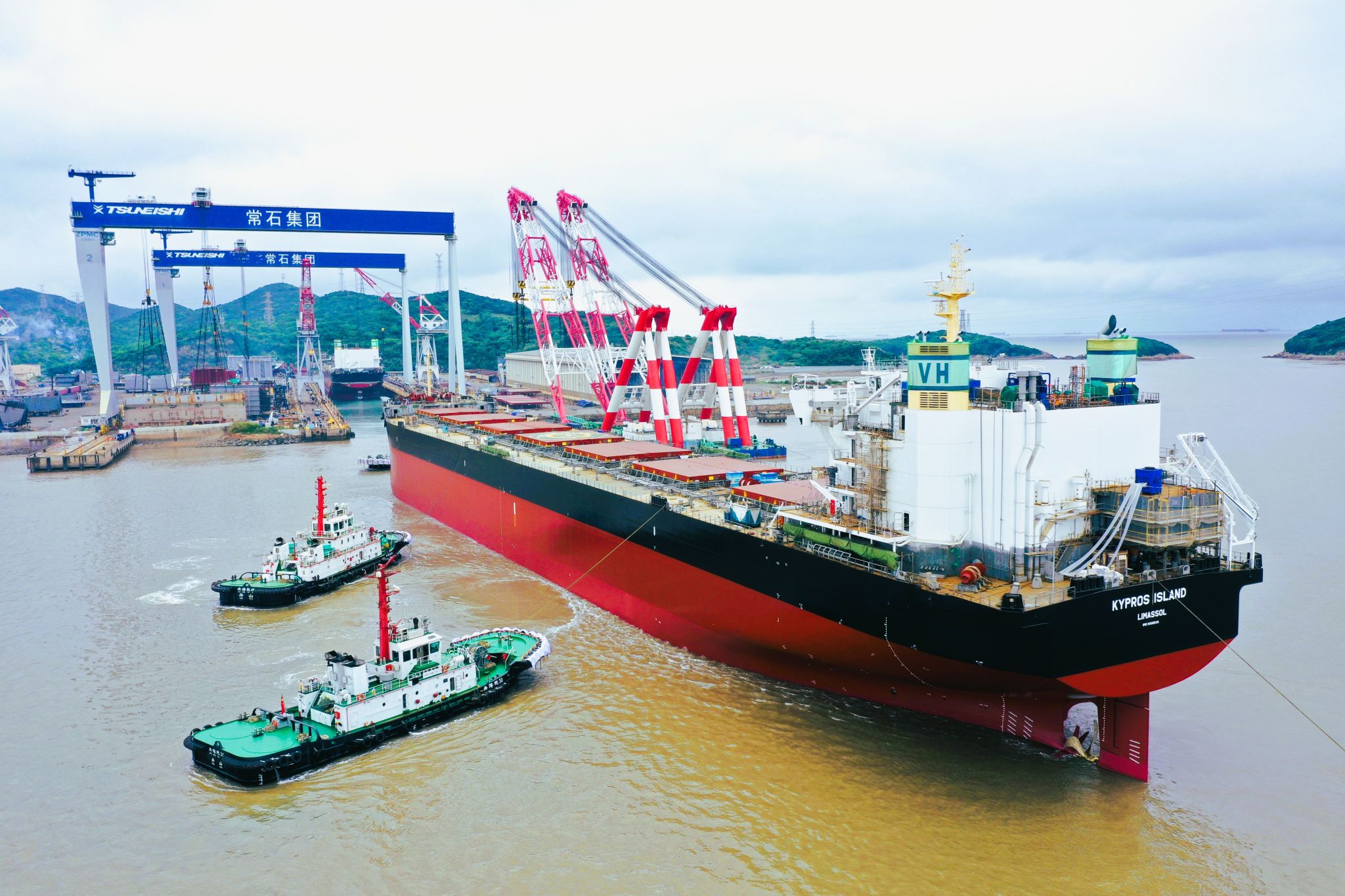
In September, Safe Bulkers raised €80.4 million through a share placement to support that programme and other possible acquisitions. Then, on Thursday, the company took delivery of Kypros Island, an 81,200-deadweight-tonne methanol dual-fuel Kamsarmax built at Tsuneishi’s Chinese shipyard and the first vessel of its type to join the Cyprus register.
The two developments are not necessarily at odds. Replacing ageing vessels with more fuel-efficient ships is different from expanding the world fleet without a corresponding increase in demand. For owners making investment decisions years before delivery, however, judging where renewal ends and overbuilding begins is the difficult part.





Click here to change your cookie preferences