
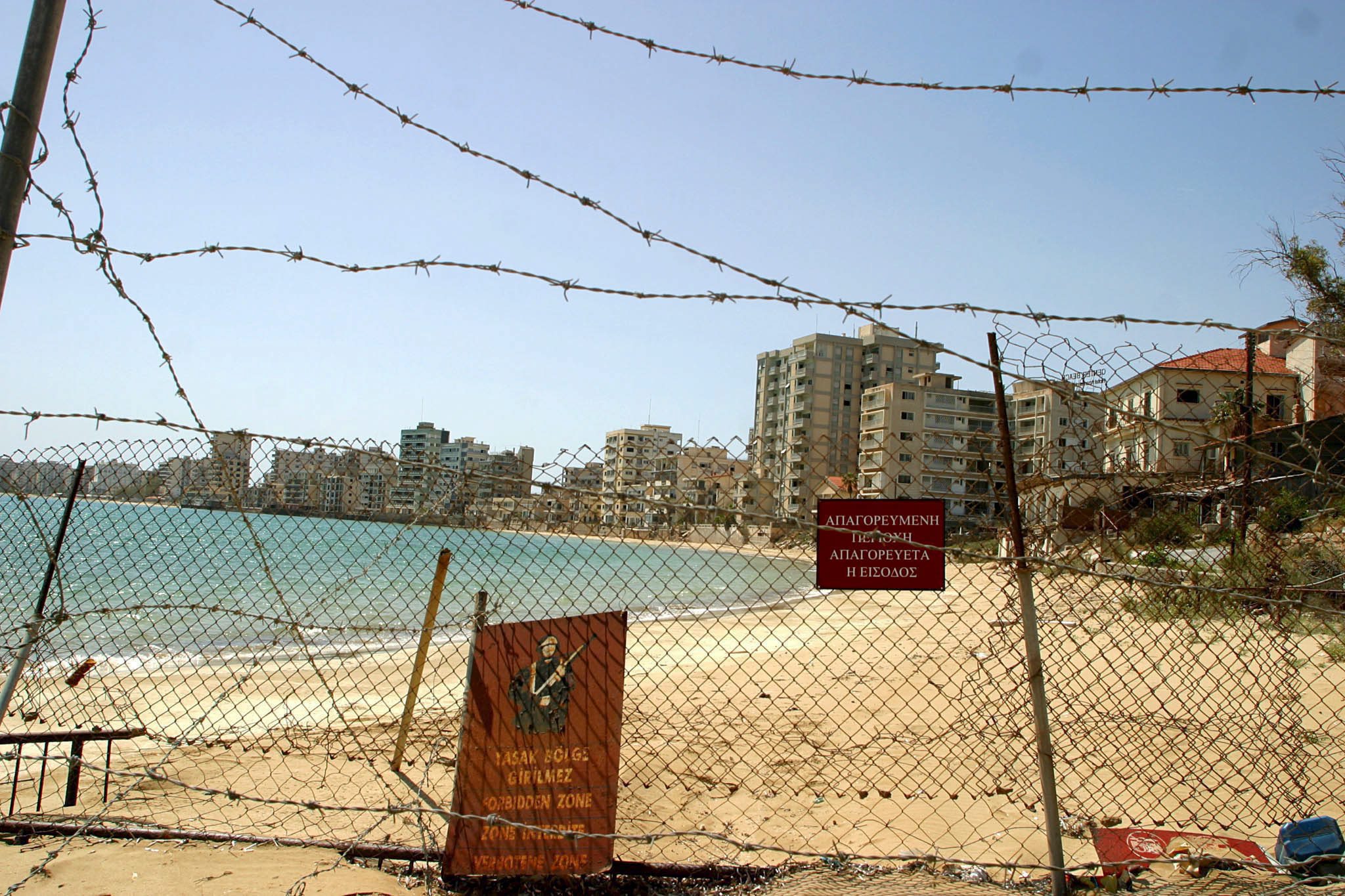
Turkish Cypriot ‘prime minister’ Unal Ustel announced on Monday plans for the major redevelopment of Varosha, promising to turn the fenced-off district of into a “major tourist destination”.
Ustel said that the so-called “new Varosha vision plan” had been completed and would be presented to the public in the coming weeks.
He described it as the largest structural project prepared by his administration, claiming it would transform Famagusta and “reconnect the city with the sea”.
In a social media post, Ustel said the project formed part of his administration’s preparations for the 50th anniversary of the unilateral declaration of independence in 2033.
“Famagusta will be reunited with the sea it has longed for and will become one of the strongest tourism destinations in our region,” he said.
Varosha was abandoned after Turkish forces took control of Famagusta in 1974, with its Greek Cypriot residents fled during the invasion and have been unable to return to their homes and properties.
The fenced-off district remained largely inaccessible for decades until Turkish and Turkish Cypriot authorities partially reopened its beachfront and sections of the area to visitors in October 2020.
In July 2021, they announced that the military status of a further 3.5 per cent of Varosha would be lifted, paving the way for civilian use.
The moves were condemned by the United Nations Security Council, which called for their reversal.
Under Security Council resolutions 550 and 789, attempts to settle any part of Varosha with people other than its original inhabitants are considered inadmissible, while the area should be placed under United Nations administration and returned to its lawful residents.
Ustel has repeatedly rejected Christodoulides’ proposal for the return of Varosha under UN administration in exchange for the opening of Famagusta port under European Commission supervision, arguing that Varosha cannot be addressed separately from a comprehensive settlement of the Cyprus problem.
In an earlier television appearance, Ustel also claimed that the hotels inside the fenced-off area had reached the end of their lifespan, citing seismic assessments which had found that the edifices examined did not meet earthquake-resistance standards, with many in an advanced state of dilapidation.




Click here to change your cookie preferences