
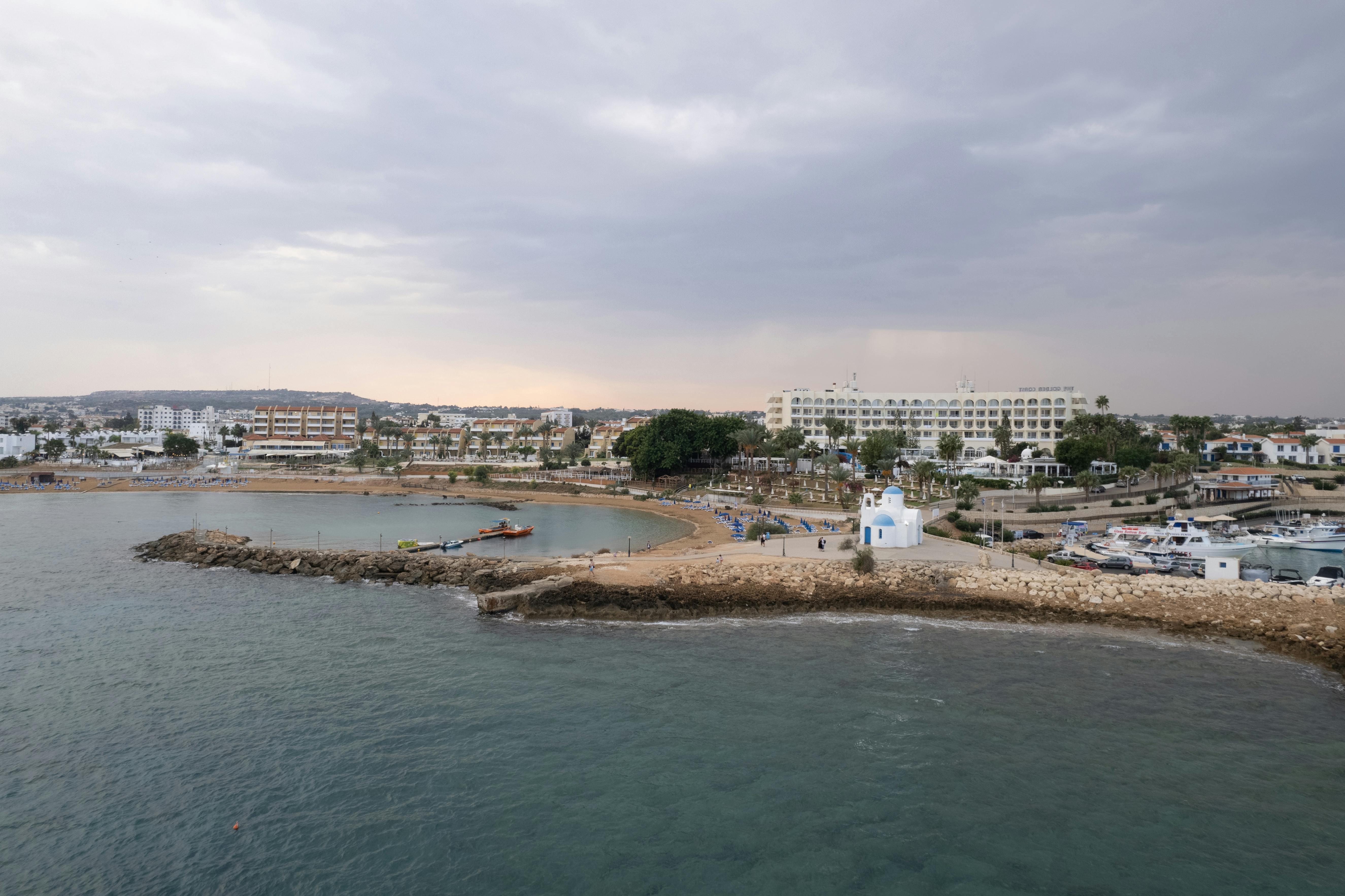
Cyprus’ hotel industry is facing another licensing headache, with tourist businesses at risk of closure next year unless Parliament agrees to give them more time to meet fire safety requirements, raising concerns over jobs and the wider economy at an already difficult time for tourism.
With the February 28, 2027 deadline approaching, MPs from Disy, Diko and Elam have put forward a proposal to extend the transitional arrangements for hotels and tourist accommodation establishments that have still not secured their full operating licences.
The concern, as mentioned by Politis this week, is that a substantial number of businesses will not obtain the necessary fire protection certificates in time, potentially forcing them to stop trading.
The MPs behind the proposal have warned that widespread closures could have serious consequences for the economy, putting thousands of jobs at risk and affecting businesses that depend on tourism.
Their proposed amendment would move the fire safety deadline to February 28, 2029, giving operators another two years to secure the required documentation and resolve outstanding problems with their properties.
It would also allow qualifying businesses to continue operating until December 31, 2030, provided they comply with the relevant conditions while working towards obtaining full licences from the Deputy Ministry of Tourism.
The proposal was submitted to Parliament on October 22 by Disy MP Nikos Georgiou, Elam MP Linos Papayiannis and Diko MP Chrysis Pantelides.
Under the proposed arrangements, establishments must already hold a building permit allowing their premises to be used as a hotel or tourist accommodation business. Operators would have until December 31, 2028 to obtain an operating confirmation from the Deputy Ministry of Tourism.
The extension would not, however, excuse businesses from meeting health and safety requirements.
They would still need the necessary documentation covering fire protection, hygiene, swimming pools, electrical installations, lifts, gas installations and workplace safety, where applicable.
The Fire Service would continue inspecting properties before issuing the relevant certificates, and businesses that fail to submit their fire safety documentation by the new deadline would lose their temporary operating approval.
For operators struggling with complicated licensing procedures, another extension would provide some breathing space. The difficulty is that Cyprus has been trying to sort out the same problem for decades, with successive deadlines doing little to bring the entire industry into compliance.
In fact, Parliament approved another extension only six months ago, allowing qualifying establishments to continue operating without full licences until the end of 2028.
That legislation passed with 25 votes in favour, one against and 15 abstentions, although several MPs were far from convinced that giving hoteliers more time would produce the desired results.
Disy MP Kyriacos Hadjiyianni questioned the effectiveness of repeated extensions, while Akel MP Costas Costa argued that some operators had grown accustomed to Parliament stepping in whenever another deadline approached.
Their concerns were hardly without foundation.
An audit office investigation published in July revealed that only 168 of the 728 hotels and tourist accommodation establishments examined held full operating licences, representing just 23 per cent of the total.
Another 158 were operating under temporary arrangements, leaving 402 establishments, or 55 per cent, without either a full licence or temporary authorisation.
The situation was particularly troubling in Famagusta, one of Cyprus’ principal tourist districts, where just 24 out of 241 establishments held full operating licences.
For the audit office, the problem went considerably further than missing paperwork.
Its findings raised concerns over inadequate inspections, weak enforcement and the risks associated with businesses operating without the necessary approvals.
It also questioned the fairness of allowing establishments that had failed to meet licensing requirements to compete with businesses that had invested in bringing their properties into compliance.
Auditor General Andreas Papaconstantinou warned that the shortcomings were calling into question efforts to improve the quality of Cyprus’ tourism product, particularly when proper supervision and safety standards could not always be guaranteed.
The watchdog was equally critical of years of limited enforcement, arguing that concerns about the economic consequences of hotel closures could not justify allowing businesses to continue operating outside the law indefinitely.
There is, nevertheless, another side to the problem.
The Deputy Ministry of Tourism has repeatedly acknowledged that hotel licensing is a complicated affair, particularly for older establishments whose buildings have undergone extensive alterations over the years.
In its response to auditors, the ministry explained that the difficulties date back almost three decades and became more pronounced between 2014 and 2018, following large-scale hotel renovations and expansions encouraged by planning incentives introduced in 2013.
Those changes left some properties with discrepancies between their approved plans and their actual construction, requiring further approvals before full licences could be issued.
Obtaining those documents can involve several authorities, with lengthy procedures adding to the difficulties faced by businesses trying to regularise their position.
Progress has been made, although not nearly enough to settle the matter.
According to the ministry, only 43 operating licences had been issued during the five-year transitional period introduced under the 2019 legislation, leaving just 6 per cent of establishments fully licensed by April 2023.
The proportion has since risen to 23 per cent, with a further 22 per cent operating under temporary arrangements.
Tourism Deputy Minister Kostas Koumis told Parliament in February that approximately 70 per cent of hotel beds were now covered by licences, a considerably stronger picture than the overall number of fully licensed establishments might imply.
He also acknowledged that the government was not opposed to further extensions, provided hoteliers took responsibility for bringing their businesses into compliance.
There is, however, one detail that remains particularly difficult to overlook. More than half of tourist establishments had never submitted an application for a full operating licence, according to the ministry’s own findings.
That makes it difficult to attribute the entire problem to lengthy procedures and administrative delays, particularly after so many opportunities to put matters right.
The issue has also raised questions at the highest level of government.
In February, President Nikos Christodoulides referred an earlier hotel licensing amendment back to Parliament, expressing concerns that a special permitting arrangement could create unequal treatment between businesses already complying with the law and those operating under more flexible conditions.
The government subsequently supported a further transitional extension, although the underlying difficulties remained.
Now, another proposal is before MPs, at a time when the tourism industry has rather more immediate worries than licensing paperwork.
Tourist arrivals reached 3.4 million during the first nine months of 2026, down 5.6 per cent compared with the same period last year, according to the Statistical Service.
September brought some relief, with arrivals rising 1.8 per cent to a record 580,889, but the stronger month was not enough to reverse the decline recorded since the beginning of the year.
The outlook for 2027 has also given hoteliers reason for concern.
Paphos hoteliers association president Evripides Loizides warned earlier this month that advance bookings from Britain’s three largest tour operators were running 20 to 30 per cent below last year’s levels.
Although these are early booking figures rather than a forecast for the entire season, they have added to uncertainty following a summer affected by the Middle East conflict.
Loizides also reported that hotel occupancy during the summer months and September had been approximately 7 per cent lower than a year earlier, while rising costs, staffing shortages and competition from short-term holiday rentals continued to weigh on businesses.
It is in this climate that the latest licensing dispute has taken on greater importance. For hotel operators, a forced closure could mean lost revenue, cancelled bookings and uncertainty for employees. Suppliers, restaurants, transport companies and other businesses relying on visitor spending could also feel the consequences.
For the authorities, though, the issue is not simply about keeping hotels open. Visitor safety, fair competition and the credibility of the licensing system are equally important, particularly when businesses that have complied with the rules are expected to compete with those that have not.
The MPs supporting the latest proposal argue that more time is necessary because obtaining the required certificates and approvals remains a lengthy process, making the existing deadlines difficult for some establishments to meet.
Their proposal has been referred to the House commerce committee for examination and has not yet been approved.


Click here to change your cookie preferences