
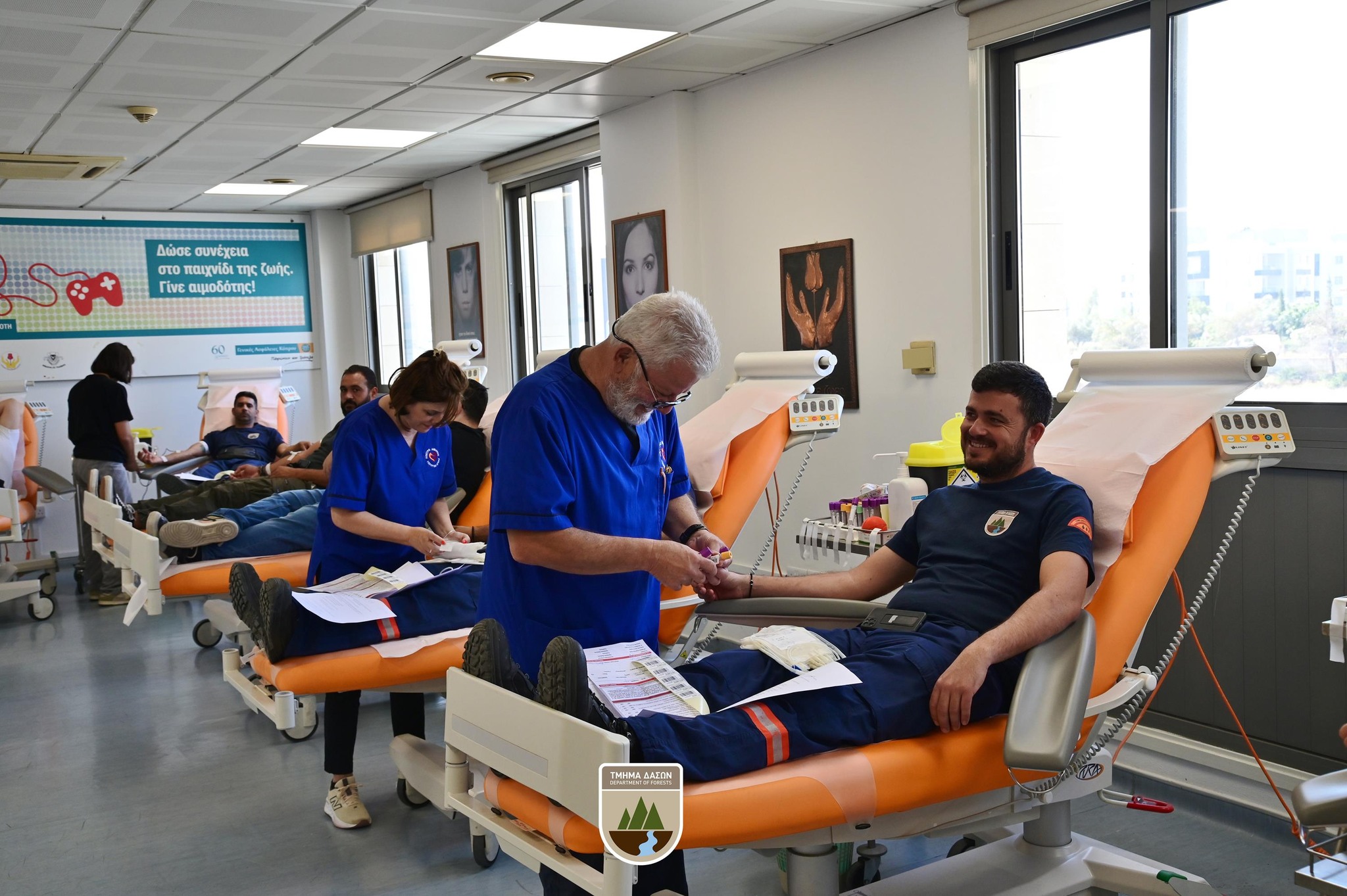
The government aims to increase the number of regular blood donors to ensure the security of its blood supply, Health Minister Neophytos Charalambides said on Saturday.
He said his ministry is launching an initiative, in collaboration with “competent bodies and organisations”, with the aim of “encouraging the participation of workers in organised blood donations”, following cabinet’s approval of the new “national blood strategy” last week.
As such, he called on businesses and their workers to “support” the initiative, with the drive focused on thalassaemia patients, as Cyprus has one of the highest thalassaemia carrier rates in the world, believed to be around 15 per cent.
Thalassaemia patients require regular blood transfusions as genetic mutations prevent their bodies from making sufficient quantities of normal haemoglobin, the protein in red blood cells which carries oxygen to organs and tissues.
Given the high rate of carriers, it has been estimated that there are around 650 people suffering from thalassaemia in Cyprus.
Charalambides on Saturday said that “blood sufficiency and advances in [thalassaemia] treatment are linked to the same basic human expectation”, which, he said, is “that people with thalassaemia be able to continue their lives without the uncertainty of the next transfusion and without their care being a constant challenge”.
‘Psychological and social support’ needed for thalassaemia patients
Away from the matter of blood transfusions, he said that scientific developments in the treatment of thalassaemia expand therapeutic possibilities and create new expectations, and as such “the state’s responsibility is to examine how this progress can be safely integrated into care packages and made accessible to those who need it”.
He added that “the need to care for people living with thalassaemia is not limited to medical treatment of the condition”, but that instead, “psychological and social support should be part of the care, while reliable information for patients and their families is essential”.
This, he said, is so they “are aware of the available options” to them and “can participate effectively in the decisions which concern them”.




Click here to change your cookie preferences