
The agriculture ministry has set out its priorities for 2026, announcing that addressing water scarcity and developments in Akamas were amongst its key priorities, Agriculture Minister Maria Panayiotou said on Wednesday.
“Cyprus is going through the worst prolonged drought it has ever had, with 2025 being the worst year since 1901,” Panayiotou said.
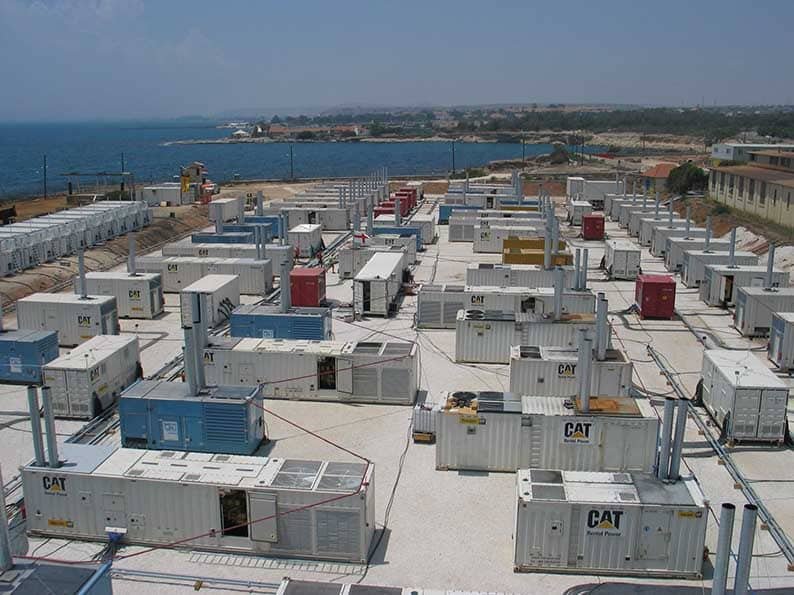
To combat water scarcity, the government will implement relevant measures, with a continuous focus on desalination.
This, she said, included the creation of at least seven desalination projects in Limassol, Paphos and Famagusta.
Meanwhile, a budget of €200 million has been allocated to upgrade the existing network and for the purchase of desalinated water, with more than €140m being spent on the latter.
“This is the largest amount ever given for the purchase of desalinated water,” she said.
In addition, registration procedures to establish small private desalination units have been simplified, while funding made available to local district organisations (EOAs) aimed to enhance efforts for minimising water losses.
Panayiotou’s announcement was, however, met with scepticism by committee chairman and Green’s MP Charalambos Theopemptou.
He raised the issue of salt dispersal through desalination plants, warning of a decrease in fish numbers, which he said has been recorded in areas where such facilities were installed in the past.
Responding to Theopemptou’s concern, Panayiotou countered that strict regulations were in place, and stressed that the decrease in fish population was “more general”.
Environment department director Theodoulos Mesimeris added that examinations to analyse the cumulative effects of brine accumulation would be conducted to ensure timely response. He also said that a study is currently being carried out to determine whether the brine could be used in other ways.
DISY MP Savia Orphanidou raised the question of whether water cuts were to be expected and asked whether the government had considered cloud seeding as a means of combatting water scarcity.
While Panayiotou emphasised that current projects were aimed at avoiding cuts, she acknowledged that there were some mountain communities, which could not be connected to the desalination network.
She stressed, however, that a relevant study was underway to determine which communities could be included.
The water development department’s deputy director, Elena Foinikaridou, highlighted that a total of 29 communities in west Nicosia were expected to join the network during the second phase of the Vasilikos-Nicosia pipeline project, with an implementation stipulated by 2030.
In regard to cloud seeding projects, Panayiotou said that the ministry had been in contact with experts in Israel and the United Arab Emirates, and that the efficiency of the measure could not be confirmed at this point.
AKEL MP Nikos Kettiros pointed to the effects of water scarcity on local farmers, stressing they needed to weigh the planting of future crops with available water resources.
Panayiotou responded that the relevant information was provided in early autumn, adding that farmers had already been informed about the crops and respective quantities they could cultivate under current conditions.
“We are working simultaneously on the measures that need to be implemented now and the permanent solution to the problem,” the minister said, noting a study to review the national water policy until 2050 was underway.
Kettiros then went on to ask about measures intended to regulate the use of swimming pools.
“It is not possible for hundreds of thousands of tonnes of water to be in swimming pools at a time when agriculture is suffering,” he said.
Panayiotou said that talks were underway with the urban planning department, and that the possibility of using seawater in swimming pools was being examined, as is the case in other countries.
The discussion then moved on to future plans for the protected Akamas area.
Panayiotou emphasised that a new road network project would be submitted to the Council of Ministers within the month, and that developments were “moving forward with a reduced environmental footprint”.
She added that progress is being made on hiring park rangers and implementing operating rules, and that the projects are set to be completed by the initially outlined date of 2027.





Click here to change your cookie preferences