
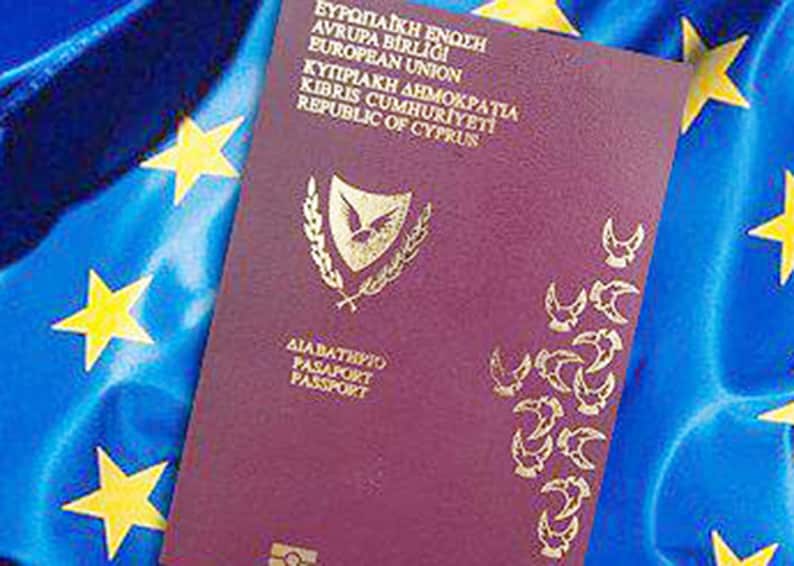
The cabinet has been stripped of the authority to grant citizenship to foreign investors, under a law passed on Thursday during the last regular session of the House plenary this year.
The last session saw parliament vote on dozens of bills.
Amid the at-times heated debate, the issue garnering most attention was the now-defunct citizenship-by-investment programme, also known colloquially as the ‘golden passports’.
Under a law passed, the cabinet no longer has the power to grant citizenships, such as those given under the controversial citizenship-by-investment scheme.
The scheme itself had been scrapped in November 2020, in the wake of an undercover expose aired by the Al Jazeera news network. But the regulations giving the cabinet the authority to grant Cypriot passports had stayed in place.
They have now been repealed. As such, the cabinet may not grant citizenship to foreign nationals or their spouses or children in exchange for investing in Cyprus. It also cannot grant ‘honourary citizenship’ – for example to children of Greek nationals who fell during the hostilities of 1974, or to foreign nationals who excel in the arts.
The changes were deemed necessary to halt the infringement proceedings launched by the EU against Cyprus over the latter’s citizenship-by-investment programme.
On the House floor, Akel MP Aristos Damianou said the change was necessary due to “coercion” from the EU.
But it goes too far, in that the Cypriot government now lacks the authority to grant honourary citizenships.
“Today, we are presiding over the memorial service for the golden passports,” remarked Damianou.
A clean-up of the previous administration’s “mess” was long overdue, he added.
The MP recalled how over the years 7,329 persons got a Cypriot passport through the citizenship-by-investment scheme. Of these, 3,522 were investors – some of whom “never even showed up in Cyprus” – and the rest were family members.
“The programme may have somewhat contributed to the economy, but it caused irreparable damage to the Republic.”
Disy deputy Nikos Sykas blamed the abolition of the citizenship-by-investment programme on the prior excesses of the Akel administration of 2008 to 2013.
Independent MP Costis Efstathiou noted that every state has the “sovereign right” to grant honourary citizenship and to naturalise foreign nationals. Cyprus, he said, has now lost that right.
“And the Europeans, who are forcing us to abolish the law, are blind to the scandals happening in the European Commission itself,” he quipped – evidently alluding to the recent fraud investigation implicating Federica Mogherini, the former top diplomat for the EU.
In other business on Thursday, the House by a majority vote accepted the president’s referral of a law regarding MOT inspections.
Weeks ago, parliament had passed a government bill providing for an increase in the MOT fees for certain types of vehicles.
The fees in question had remained unchanged since 2007.
The original text of the bill also said that MOT fees would be revised “at regular intervals”.
But in passing the legislation, MPs had tinkered with it, replacing the regular intervals with “every eight years”.
Because of this change, President Nikos Christodoulides refused to sign off on the law and sent it back to parliament, asking that the “every eight years” be stricken.
The president argued that parliament does not have the authority to force the executive branch of government to carry out administrative acts or specify the timeframe for such administrative acts.
Acceptance of the president’s referral now means that the “every eight years” reference has been removed, and the law providing for higher MOT fees applies.
The House plenary also passed an amending law readjusting the allocation of parliamentary seats for the districts.
Based on the new distribution, Paphos district gains one parliamentary seat – going from four to five – and Nicosia loses one, dropping from 20 to 19.
The adjustment was necessary due to changes in the number of registered voters in those districts.
In addition, parliament ratified the agreement between Cyprus and Lebanon delineating the two countries’ respective exclusive economic zones.
The deal had been signed in Beirut on November 26 by President Christodoulides and Lebanon’s transport minister Fayez Rasamny.





Click here to change your cookie preferences